


Software teams ship more often than they used to. Every release adds code that needs checking, and manual regression runs get longer with each sprint. Test automation takes over the repeat work. A healthy suite runs on every commit and flags a broken flow within minutes.
Getting there takes effort. Scripts need owners, flaky tests need fixes, and the suite needs updates whenever the product changes. Many teams bring in a specialist to handle this. Providers differ in engagement model, tech stack, and team size. This guide covers twelve companies worth a look and shows how to choose between them.
How We Selected the Best QA Automation Companies
We built this list from each company's own website and service pages. We looked at six things:
- The frameworks and technologies the team works with
- The range of automation services, from framework design to maintenance
- CI/CD and workflow integration
- Industry and application experience
- Engagement models
- US presence or a record of serving US clients
Where a site gave little detail, we kept the description short and said so. Figures such as team size and years in business come from the companies themselves. The list is grouped loosely by service style and carries no ranking. Services change, so confirm current details with each provider.
Kualitatem
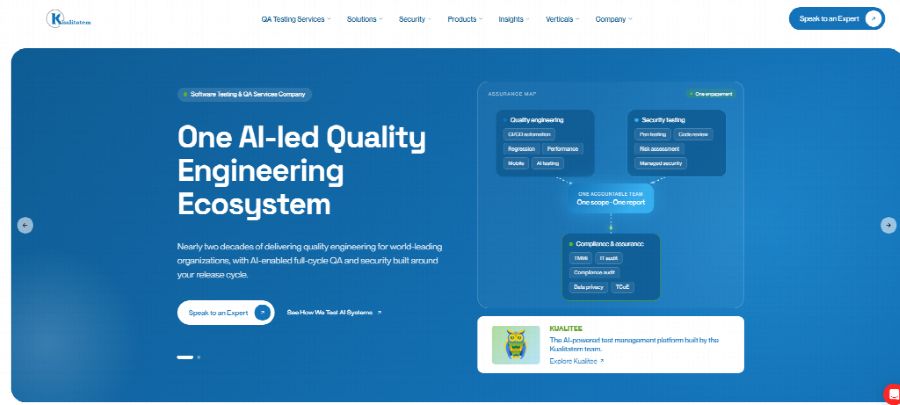
Kualitatem is a software QA and testing provider with 500+ projects delivered across nine industry verticals. Its automation testing services cover custom framework development, functional, regression, web, mobile, API, cross-browser, performance, and data validation testing. The company also offers you an end-to-end automation, and can also support the AI-assisted and low-code/no-code approach to minimize repetitive testing activities.
Kualitatem is equipped with tools for web automation including Selenium, Playwright, Cypress, and Appium, Espresso, XCUITest for mobile applications. Its engineers create reusable automation frames and do it modular and data-driven. Automated tests can be part of the CI/CD pipeline using Jenkins, GitHub Actions, GitLab CI, and/or Azure DevOps, enabling teams to run the tests throughout the development and release process.
In addition to the development of test scripts, Kualitatem also offers automation consulting, framework maintenance, and test suite optimization. It can help with both new automation deployments and enhancements to existing test suites. It is a good choice for companies that want to have their applications and development platforms automatically supported in the long term.
ScienceSoft
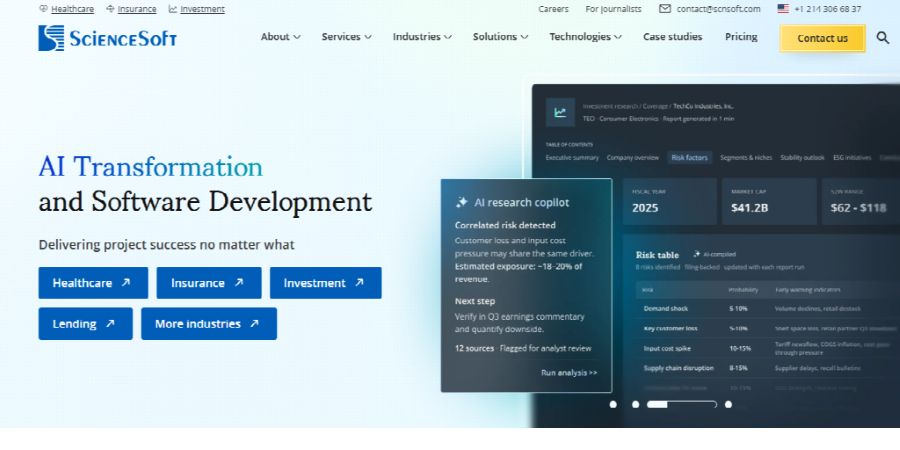
ScienceSoft is headquartered in McKinney, Texas. The company says it has done software testing since 1989 and test automation since 2001. Its automation work starts with a feasibility study and ROI analysis, then moves to framework design, tool selection, and scripting. That first step is sensible for teams unsure whether automation will pay off. ScienceSoft also builds software, so it fits projects that need testing and development support from one vendor.
QA Wolf
QA Wolf sells managed end-to-end automation. Its tests run on open source Playwright for web and Appium for mobile, and the company says this keeps them portable. QA Wolf builds and maintains the tests and files verified bugs in Jira or Linear. It fits product teams that want coverage while keeping the in-house team small.
QualityLogic
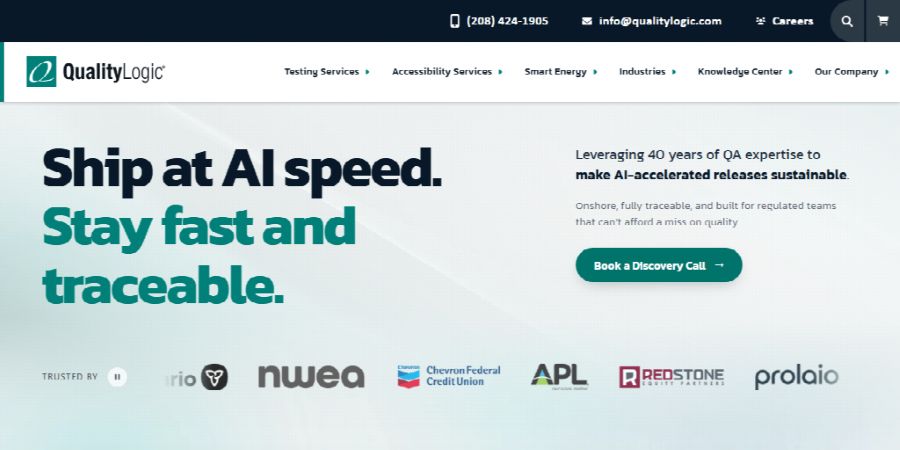
QualityLogic is based in Boise, Idaho, and says it has tested software since 1986. It reports 150+ US-based experts working onshore. Services include test automation, performance testing, and specialized areas such as digital accessibility, interoperability, and smart energy standards like IEEE 2030.5 and OpenADR. It is a good fit for projects with standards or compliance requirements.
QASource
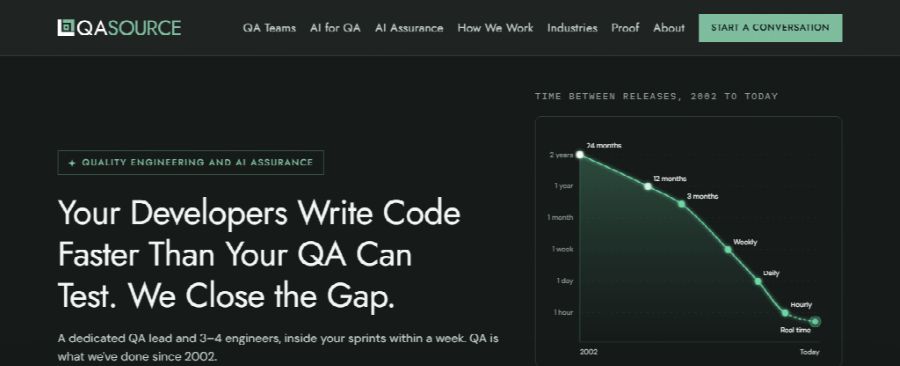
QASource builds dedicated QA teams. A typical team starts with a QA lead and three or four engineers working inside your sprints. Its services include test automation and AI-assisted test design, and its offices include Pleasanton, California. It also offers a two to three week QA assessment that produces a written finding and a coverage baseline. That assessment is a low-commitment way to test the working relationship.
BugRaptors
BugRaptors has a corporate office in Emeryville, California, and a test lab in Mohali, India. Its engineers work with Selenium, WebdriverIO, Cypress, and Playwright, and it has two proprietary frameworks, RaptorVista and MoboRaptors. The company says it has 200+ ISTQB-certified testers. The service menu is wide, so ask which areas it would staff on your project.
Abstracta
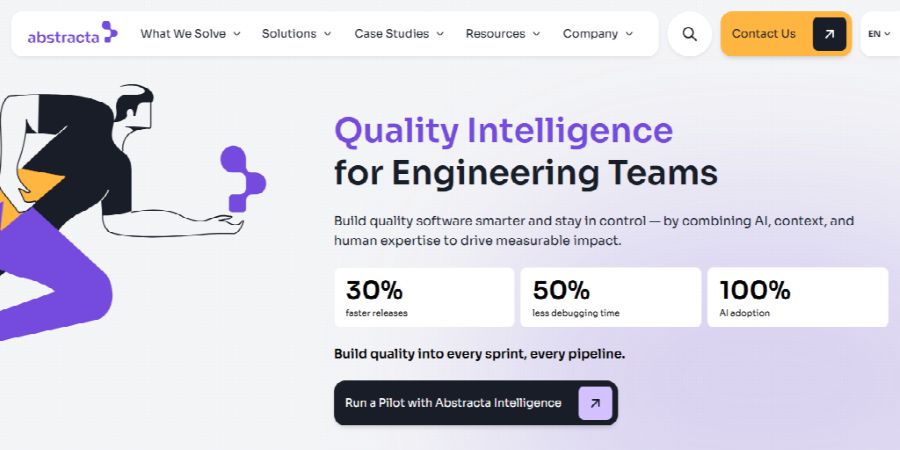
Abstracta says it has nearly 20 years of experience in quality engineering. Its services cover test automation, performance, mobile, accessibility, and security testing, along with testing for AI systems. The company lists phone lines in the US, Canada, and four Latin American countries. It suits teams that want to improve their quality practice as well as add scripts.
DeviQA
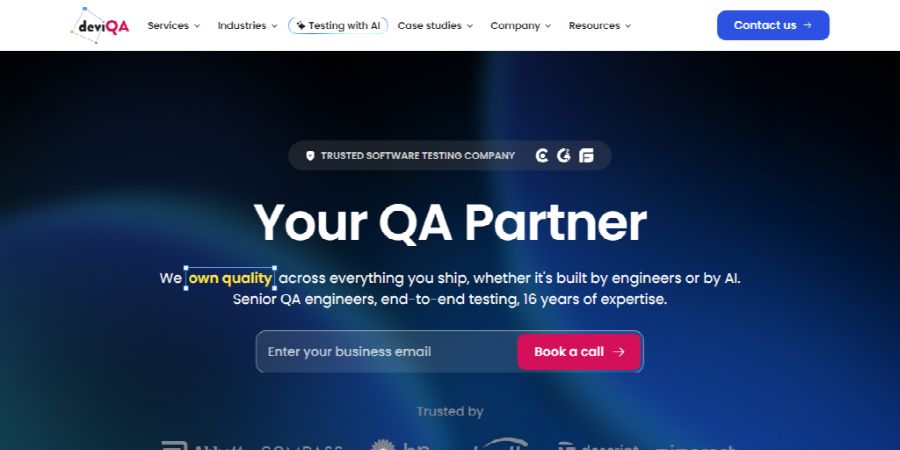
DeviQA offers QA outsourcing, dedicated teams, and test automation consulting. Its frameworks include Playwright, Cypress, Selenium, Appium, and k6. The company claims 300+ QA engineers and 16+ years in business. Its case studies show US clients, and its site describes global delivery. Growing teams that want embedded QA engineers should check time-zone overlap early.
QA Mentor
QA Mentor is headquartered in New York and says it was established in 2010. It offers QA consulting, automation framework design, and testing services. Its engagement models include dedicated team, fixed price, time and material, and hybrid. It has centers of excellence in Ukraine and India and says it tests in the client's time zone.
Testlio
Testlio runs managed, crowdsourced testing on its LeoCore platform, using real devices and real users. It reports coverage of 600k+ devices across 150+ countries. Its listed services include regression, functional, accessibility, localization, and payment testing. Automation sits outside its listed core, so treat Testlio as a complement to an automation suite when device and region coverage matter.
QA Madness
QA Madness is based in Warsaw, Poland, and works with clients globally. Its automation service covers regression, smoke, API, end-to-end, and CI/CD testing. The frameworks on its site include Playwright, Cypress, Selenium, Appium, RestAssured, and k6, and pipelines run through Jenkins, GitHub Actions, GitLab CI, and CircleCI. Teams can hire a dedicated QA team or individual engineers, and a free 30-minute QA audit is on offer. US teams should plan for the time difference.
Mercury Development
Mercury Development is a software company with a US business entity and four development labs worldwide. Its homepage describes manual testing, automated test frameworks, and CI-ready QA processes. The site gives limited detail on platforms and tools, so ask for specifics on web, mobile, API, and backend coverage and on framework choices. QA sits next to development work, which suits teams that want testing and engineering in one delivery process.
Comparison of the Top QA Automation Companies
The table gives a quick view of how the providers differ. "Best fit" is editorial guidance and carries no guarantee of results.
| Company | Key Strength | Best Fit |
|---|---|---|
| Kualitatem | QA and automation testing services | Businesses seeking external QA expertise |
| ScienceSoft | Software testing and engineering | Complex software projects |
| QA Wolf | Managed end-to-end automation | Teams seeking managed automation |
| QualityLogic | Specialized QA services | Projects with specific testing requirements |
| QASource | Outsourced QA support | Teams needing additional QA capacity |
| BugRaptors | Software testing services | Businesses seeking external testing support |
| Abstracta | Quality engineering | Teams improving testing practices |
| DeviQA | QA outsourcing | Growing development teams |
| QA Mentor | QA consulting and testing | Businesses needing flexible QA support |
| Testlio | Managed testing | Applications requiring broad device or platform coverage |
| QA Madness | Automated testing and QA services | Teams seeking automation integrated with development workflows |
| Mercury Development | Automation across web, mobile, and backend systems | Businesses needing QA support across multiple application types |
Our Picks: Enterprise vs. Startup
| Enterprise | Startup | |
|---|---|---|
| 1 | Kualitatem | QA Wolf |
| 2 | ScienceSoft | Kualitatem |
| 3 | QualityLogic | QA Madness |
Why this order
- Kualitatem, enterprise #1: Its page lists TMMi Level 5, ISO 27001, and ISO 9001. It also covers web, mobile, API, and CI/CD automation, with maintenance as a service. Banking and healthcare appear among its industries. Those credentials are the strongest enterprise case on the list.
- ScienceSoft and QualityLogic, enterprise #2 and #3: ScienceSoft has a Texas HQ, ISO 27001, and a feasibility study that checks ROI. QualityLogic works onshore and positions itself for regulated teams.
- QA Wolf, startup #1: It manages the whole loop on open source tools, so a small team needs no automation hires.
- Kualitatem, startup #2: It builds the framework, wires it into CI/CD, and maintains it. The section tells readers to ask for a start timeline, since the page gives none.
- QA Madness, startup #3: It states a 3 to 5 day start and a free 30-minute audit.
How to Choose the Right QA Automation Company?
Six checks cover most of the decision. Raise each one in your first call with a vendor.
Technology compatibility. Confirm the team works with your stack and your preferred frameworks. A Playwright specialist gives limited help if your suite runs on another tool.
CI/CD integration. Tests should run in your pipeline on every commit or pull request. Ask which tools the provider has used, such as Jenkins, GitHub Actions, or GitLab CI.
Test maintenance. Every suite breaks as the product changes. Ask who fixes flaky tests, how fast, and whether that work sits inside the price.
Test coverage. Start with your critical user journeys and the regression areas that cause the most incidents. A good proposal maps to these first.
Communication. Look for named owners, a regular reporting rhythm, and a clear path for raising failures.
Scalability and cost. Check that the engagement can grow or shrink with your release plan. Compare the yearly total, including maintenance, in place of the monthly rate.
Before you sign, request a written scope, a list of deliverables, the reporting format, and success metrics such as regression cycle time or escaped defects. A pilot on one product area gives real evidence at low cost.
Final Thoughts
The right provider depends on your stack, release frequency, in-house skills, and quality goals. A managed service suits a team that lacks automation engineers. A dedicated team suits a team that wants embedded help. A specialist suits a project with compliance needs. Compare providers on evidence such as a pilot, references, and a clear scope. Price and rankings are weaker signals than fit. Run a small pilot with your top two choices and let the results decide.

