

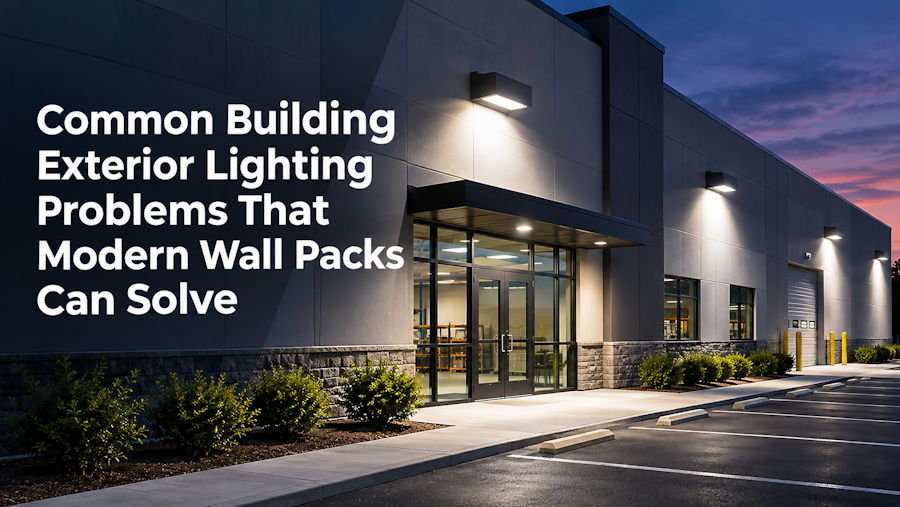
A poorly illuminated building exterior can create more problems than most property owners realize. Dark entrances, uneven lighting, excessive glare, and frequent fixture failures can affect security, accessibility, energy consumption, and the overall appearance of a commercial property. Whether it is a warehouse, office building, retail store, or industrial facility, exterior lighting plays an important role in keeping outdoor spaces functional and welcoming after sunset.
Traditional exterior lighting systems often struggle to deliver consistent illumination while maintaining reasonable operating costs. Aging fixtures, outdated technologies, and inefficient placement can make these challenges even more noticeable. Modern LED Wall Pack Lights offer a practical solution by combining efficient illumination, durable construction, and improved light distribution. Understanding the common problems these fixtures address can help building owners make better decisions when upgrading their outdoor lighting systems.
Dark Corners and Poor Visibility Around Buildings
One of the most common exterior lighting problems is inadequate illumination around building entrances, loading docks, walkways, and service areas. Poor visibility can make navigation difficult for employees, customers, and delivery personnel, particularly during nighttime operations.
Dark corners can also create areas where unauthorized activity is harder to notice. While lighting alone cannot guarantee security, properly illuminated surroundings can improve visibility for surveillance cameras and people monitoring the property.
Modern wall pack fixtures provide controlled illumination across exterior surfaces and surrounding ground areas. Their optical designs help direct light toward locations where visibility matters most.
Strategically installing fixtures near entrances, pedestrian routes, and loading areas can reduce poorly illuminated spaces. Property managers should also consider mounting height, fixture spacing, and nearby obstructions to achieve more consistent coverage.
Uneven Lighting That Creates Uncomfortable Outdoor Spaces
Exterior lighting systems sometimes produce bright patches surrounded by darker areas. This uneven distribution can make outdoor environments uncomfortable and create difficulties when moving between different lighting levels.
For example, a brightly illuminated doorway next to a dark walkway may force pedestrians to adjust their vision repeatedly. Similar problems occur around parking areas, loading zones, and building perimeters when fixtures are installed without considering their coverage patterns.
Modern wall packs are available with different beam distributions designed to illuminate specific areas more effectively. Some provide broad coverage for open spaces, while others concentrate illumination along walls or pedestrian routes.
Choosing the correct distribution helps create smoother transitions between illuminated areas. A professional lighting layout can also determine appropriate fixture spacing and mounting positions, reducing unnecessary overlap and improving overall uniformity.
Excessive Glare From Poorly Designed Fixtures
Brightness is important for exterior lighting, but excessive brightness does not automatically improve visibility. Poorly positioned fixtures can produce uncomfortable glare that affects pedestrians, drivers, and nearby occupants.
Traditional wall-mounted lights sometimes expose the light source directly to approaching individuals. This can make it difficult to see surrounding objects, particularly when the fixture is positioned at eye level or aimed toward traffic.
Modern LED Wall Pack Lights often feature optical systems, shielding, and housing designs that help control unwanted glare. Full cutoff and other shielded configurations can limit upward light and reduce direct exposure to bright light sources.
Proper fixture selection is especially important for commercial buildings near roads, residential neighborhoods, and pedestrian areas. The goal should be comfortable, useful illumination rather than simply installing the brightest available fixture.
High Electricity Bills From Outdated Exterior Lighting
Exterior lighting can contribute significantly to a commercial property's electricity expenses, particularly when fixtures operate throughout the night. Older metal halide and high-pressure sodium systems may consume more energy than necessary for the illumination they provide.
As these systems age, their performance can decline, leaving property owners paying substantial electricity costs while receiving less effective lighting.
Modern LED technology generally delivers more useful light per watt than many traditional lighting technologies. This efficiency allows property managers to maintain suitable illumination while potentially reducing electricity consumption.
Additional savings may come from intelligent lighting controls. Photocells can automatically activate fixtures at dusk and switch them off at dawn, while scheduling systems and compatible occupancy sensors can reduce unnecessary operation.
However, selecting the correct wattage remains essential. Installing fixtures with excessive output can waste energy and create glare, even when the technology itself is efficient.
Frequent Maintenance and Unexpected Fixture Failures
Replacing exterior lighting fixtures can become expensive when buildings have numerous mounting locations or difficult access points. Maintenance teams may need ladders, lifts, or specialized equipment to service fixtures positioned high above ground level.
Traditional lighting systems may require periodic lamp replacement, ballast maintenance, and other repairs. Unexpected failures can also leave important areas without adequate illumination until maintenance work is completed.
Modern LED wall packs typically offer longer operating lifespans than many conventional lighting solutions. Their solid-state construction eliminates the need for traditional replaceable lamps and reduces certain common maintenance requirements.
Nevertheless, LED fixtures are not completely maintenance-free. Drivers, seals, and electronic components can eventually fail, especially under harsh operating conditions.
Selecting quality fixtures with appropriate thermal management, reliable components, and suitable warranties can help minimize service interruptions and long term maintenance expenses.
Damage From Rain, Dust, and Extreme Weather
Outdoor lighting fixtures face continuous exposure to environmental conditions. Rain, wind, airborne dust, humidity, and temperature changes can gradually affect their performance.
Water entering a poorly sealed fixture may damage electrical components, while accumulated dust can reduce light output or interfere with heat dissipation. In coastal or industrial environments, corrosion can create additional problems.
Modern exterior wall packs are designed with protective housings, sealed optical compartments, and weather-resistant materials. Many models carry ingress protection ratings that indicate their resistance to dust and water exposure.
Property owners should choose fixtures based on actual installation conditions rather than assuming every outdoor light provides the same protection.
For example, buildings in coastal environments may benefit from corrosion-resistant finishes, while industrial facilities may require fixtures designed to withstand dust, vibration, or more demanding environmental conditions.
Light Pollution Affecting Nearby Properties
Poorly controlled exterior lighting can send unwanted illumination into neighboring buildings, residential windows, and the night sky. This problem is particularly common when older fixtures distribute light in multiple directions without adequate shielding.
Excessive light spill can create complaints from nearby residents and may conflict with local outdoor lighting regulations.
Modern wall packs can help address these concerns through directional optics and shielded designs. Full cutoff fixtures are particularly useful when property owners want to minimize upward illumination.
Careful mounting positions and appropriate brightness levels can further reduce unwanted light trespass. Lighting designers should also consider property boundaries, surrounding land uses, and applicable local requirements.
A well-planned system illuminates the intended area without unnecessarily affecting neighbouring spaces.
Poor Security Camera Visibility at Night
Security cameras depend on suitable lighting conditions to capture useful images. When exterior lighting is uneven, cameras may struggle with dark areas, harsh shadows, or excessive brightness.
A fixture positioned directly within a camera's field of view can also create glare that reduces image clarity.
Modern LED Wall Pack Lights can provide consistent illumination that supports camera performance when fixtures are positioned appropriately. Selecting suitable color temperature, brightness, and distribution can help improve the visibility of people, vehicles, and surrounding objects.
However, lighting requirements vary depending on camera technology. Some systems use infrared illumination, while others depend heavily on visible light.
Coordinating lighting placement with camera locations helps avoid unnecessary glare and improves the effectiveness of the overall security setup.
Outdated Lighting That Reduces Building Appeal
Exterior lighting contributes to how a commercial property looks after dark. Aging fixtures, mismatched light colors, and inconsistent brightness can make even a well maintained building appear outdated.
Modern wall packs offer cleaner housing designs and a range of color temperatures that can complement different architectural styles.
Neutral white lighting may suit office buildings and retail properties, while other applications may benefit from warmer or cooler illumination depending on their functional requirements.
Consistent fixture styles and coordinated lighting levels can create a more professional appearance across entrances, exterior walls, and surrounding pedestrian areas.
Property owners should consider architectural compatibility alongside technical performance when selecting replacement fixtures.
Limited Control Over Outdoor Lighting Schedules
Many older exterior lighting systems operate through basic switches or fixed schedules. These arrangements can leave lights operating unnecessarily during daylight hours or fail to provide adequate illumination when conditions change.
Modern LED fixtures can be paired with photocells, timers, occupancy sensors, and compatible building management systems.
These controls allow lighting operation to respond more closely to actual needs. For example, fixtures can maintain suitable illumination during active business hours and operate at reduced output during periods of limited activity where safety requirements permit.
Advanced controls may also help facility managers identify operating problems and manage lighting schedules across multiple buildings.
Choosing compatible fixtures and controls during installation can make future lighting adjustments easier and more cost effective.
Conclusion
Building exterior lighting problems extend beyond insufficient brightness. Uneven illumination, glare, excessive energy consumption, frequent maintenance, weather damage, and unwanted light pollution can all affect the functionality and appearance of commercial properties.
Modern wall pack lighting addresses many of these challenges through efficient LED technology, improved optical control, durable construction, and flexible operating options. However, successful results depend on selecting appropriate fixtures and designing the system around the building's specific requirements.
By evaluating existing lighting problems and choosing suitable LED Wall Pack Lights, property owners can create exterior environments that are more comfortable, easier to maintain, and better suited to everyday commercial operations.

