

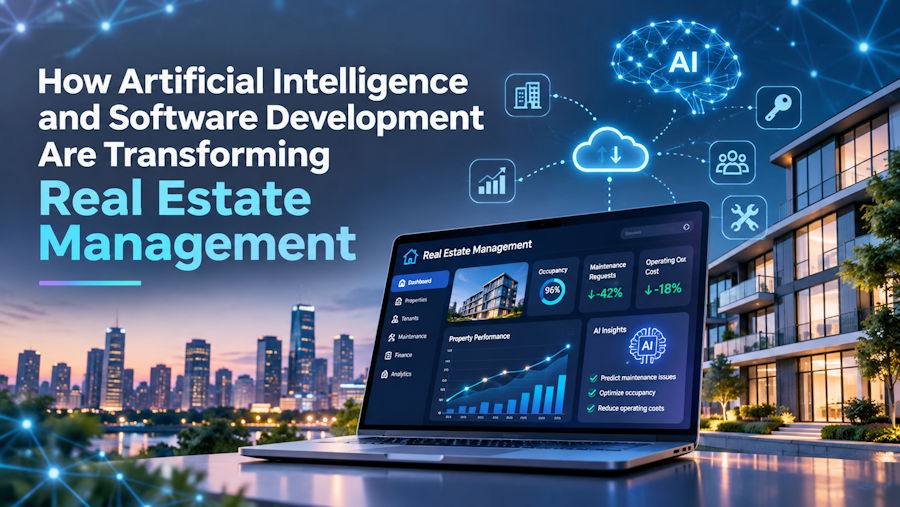
Managing a property can feel like running several businesses from the same desk. Rent payments need tracking, maintenance requests arrive at inconvenient moments, and important documents seem to multiply whenever someone needs one quickly. A buyer exploring resources such as adviseretax.com/real-estate-buyer-advisory may also be thinking ahead to how a property will operate after the purchase. Artificial intelligence and purpose-built software are making that question easier to answer. They can organize routine work, highlight emerging problems, and give property managers more time to focus on the people and buildings they look after.
A Property Office That Keeps Track of the Details
Consider an ordinary Monday morning. There are three maintenance emails, two lease renewals, an unpaid invoice, and a tenant asking about a payment. Sorting these tasks manually takes time, especially when information sits in different spreadsheets and inboxes.
Modern property management software brings records into one place. It can track payments, organize lease dates, assign work orders, and send timely reminders. AI features can help categorize incoming messages or summarize lengthy notes, allowing a manager to identify what needs attention first.
The improvement is often quite practical: fewer repeated searches, clearer responsibilities, and less information disappearing into someone's inbox. A useful system also leaves a record that another team member can understand.
Maintenance Gets Smarter Before Things Break
Anyone facing a failed water heater on a busy weekend knows the value of early warning. Connected sensors can monitor conditions such as leaks, unusual temperatures, or equipment operation. When combined with historical repair records, analytical software may identify patterns worth investigating.
Predictive maintenance tools are particularly useful in larger buildings, where equipment generates enough reliable data for meaningful analysis. A system might flag a pump that is running outside its usual range or suggest an inspection based on recurring faults.
Technology still needs professional judgment. An alert cannot tell a technician everything about the condition of a building, and poorly configured sensors can create false alarms. Used carefully, these tools help managers prioritize inspections, coordinate contractors, and plan maintenance budgets with fewer surprises.
Tenant Communication Feels Less Like Telephone Tag
A tenant wants to report a leaking faucet. Another needs a copy of a lease. Someone else has a question about a scheduled inspection. A digital portal can provide one consistent place for those requests, including updates on their progress.
AI assistants can answer straightforward questions, direct requests to the correct department, and help staff draft responses. This can be especially helpful outside office hours, when a simple acknowledgment reassures a tenant that the message has arrived.
People should remain reachable, particularly for emergencies, disputes, or sensitive matters. An automated reply that misunderstands an urgent leak is hardly a triumph of efficiency. The best systems make communication easier to follow while preserving human responsibility for important decisions.
Rental Pricing Gains a Wider View
Setting a rental price involves more than copying the advertised rate of the nearest property. Location, condition, amenities, seasonal demand, vacancy levels, and comparable listings all influence what a market may support.
Data analysis tools can gather these signals and present possible pricing ranges. Some platforms estimate demand and how different prices might affect occupancy. That gives a property manager additional context before reviewing a lease or marketing an available unit.
The numbers deserve scrutiny. Data may be incomplete, outdated, or unrepresentative of a particular building. Pricing tools must also be used in ways that comply with competition, housing, and fair treatment rules. A recommendation is useful when its assumptions can be understood and challenged.
Software Development Connects the Moving Parts
A real estate business may already use separate systems for accounting, maintenance, leasing, and customer communication. Each might do its job well, yet the team still spends hours copying details from one application to another.
Thoughtful software development can connect these tools through supported integrations or create workflows tailored to the organization. For example, an approved maintenance job could automatically update its status, notify the tenant, and pass the related invoice into an accounting review queue.
Custom solutions make the most sense when a business has distinctive processes that standard platforms cannot handle efficiently. For simpler needs, a well-configured existing product may be less expensive to maintain. The question is which approach solves a genuine operational problem without building another layer of complexity.
Financial Reporting Becomes More Useful Day to Day
Property performance can change long before an annual report reveals it. Rising maintenance costs, delayed payments, and frequent vacancies can gradually affect cash flow while an owner remains focused on headline rental income.
Modern dashboards pull together income, expenses, occupancy, and work order information. AI-assisted analysis can help highlight unusual spending patterns or summarize trends across a portfolio. Forecasting tools can also explore scenarios, such as the effect of a planned renovation or a temporary vacancy.
These reports depend on accurate records. Software cannot correct every mislabeled expense or missing transaction automatically. Managers still need reconciliations, sound accounting practices, and professional guidance on financial or tax questions. Better visibility starts with trustworthy inputs.
Security and Fairness Belong in the Design
Property software handles personal information, including contact details, payment records, and sometimes documents that require especially careful treatment. Adding AI introduces further questions about who can access information and how it will be processed.
A responsible technology plan includes appropriate permissions, encryption, backups, retention rules, and checks on third-party services. Teams should also review AI outputs for errors and avoid relying on automated judgments in sensitive housing decisions.
Fairness matters as much as convenience. A screening or communication system can produce harmful outcomes if its data or rules reflect inappropriate assumptions. Human oversight, testing, and clear appeal processes help keep the technology accountable to the people affected by it.
The Future Is Built Around Better Decisions
The most useful property technology usually earns its place quietly. A maintenance request reaches the right contractor sooner. A manager spots an expense trend before it becomes a budget problem. A tenant finds the document needed without three follow-up calls.
Start by identifying the tasks that repeatedly create delays, then assess which tools can improve them. Look for reliable integration, manageable costs, employee training, and clear evidence that the system saves time or improves service.
Artificial intelligence and software development offer real opportunities to make property operations more organized and responsive. Their lasting value comes from combining capable tools with sound processes and people who understand the properties they manage.

