

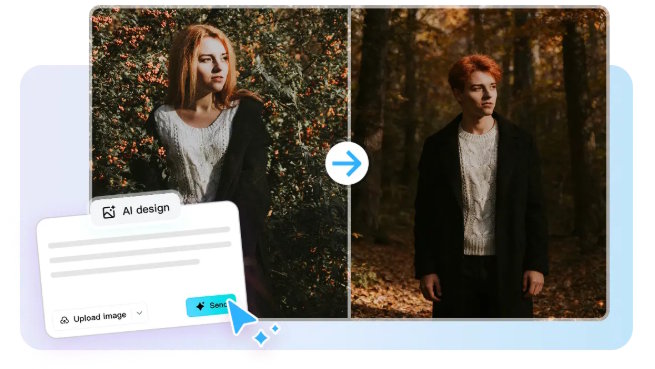
In today’s digital age, the way we create and enhance images has evolved tremendously. What once required hours of manual editing can now be accomplished through advanced tools designed for efficiency and precision. Among these innovations, two technologies stand out: image to image AI and 4K image upscaler. Both have revolutionized the way professionals and enthusiasts approach visual content, offering new opportunities for creativity, restoration, and refinement.
Understanding image to image AI
At its core, image to image AI is a process where artificial intelligence interprets an existing image and transforms it into a new version based on specified parameters. Unlike traditional editing, which involves direct manipulation of pixels or layers, image to image AI leverages deep learning models to understand patterns, textures, and objects within an image. This allows it to generate outcomes that are not only realistic but also aligned with artistic intent.
One practical application is style transfer. For instance, a user can take a photograph and transform it to mimic the brushstrokes of famous painters, converting a simple snapshot into a piece of digital art. Similarly, it can be used to modify environmental features, such as turning a daytime scene into a nighttime view, or enhancing architectural visuals by adding textures and shadows that were absent in the original image.
Another significant use of image to image AI is in the field of restoration. Old, damaged photographs can be reconstructed by filling in missing details and correcting color degradation. Unlike manual restoration, which is time-consuming and requires significant skill, AI-driven restoration automates the process while maintaining authenticity.
Benefits beyond creativity
The advantages of image to image AI extend beyond aesthetics. For professionals in design, advertising, and media production, it reduces workflow times and eliminates repetitive tasks. For content creators, it opens up avenues for experimentation without the fear of making irreversible changes to the original image.
Additionally, the accessibility of these AI tools has grown, making them usable for both experts and beginners. With intuitive interfaces, users can achieve impressive results by simply uploading an image and selecting desired transformations. This democratization of technology has lowered the barrier to high-quality visual production.
Enhancing resolution with a 4K image upscaler
While AI can modify and enhance images creatively, there is also a need to improve image clarity and resolution. This is where a 4K image upscaler comes into play. Unlike basic resizing tools that stretch pixels and produce blurry images, a 4K image upscaler uses algorithms to intelligently reconstruct missing details, producing a sharp, high-definition version of the original.
The applications of 4K upscaling are extensive. Photographers can enlarge their work for prints without sacrificing quality, videographers can upgrade footage for modern displays, and designers can repurpose older assets for high-resolution media. In all cases, the upscaler preserves natural textures and edges, making the enlarged images look as though they were originally captured at a higher resolution.
How 4K upscaling works
A 4K image upscaler uses sophisticated AI models trained on large datasets of high- and low-resolution images. By analyzing the patterns between them, the AI learns to predict details missing from lower-resolution versions. When an image is uploaded, the upscaler evaluates the edges, colors, and textures of every element and reconstructs them in ultra-high definition.
Unlike conventional interpolation methods, which simply guess pixel placement, AI-driven upscaling generates new content that aligns with the original image’s structure. This ensures clarity without introducing unnatural artifacts, making the result suitable for professional projects, large displays, and even cinematic applications.
Combining the technologies for maximum impact
When used together, image to image AI and a 4K image upscaler create a powerful toolkit for image enhancement. Imagine an old photograph: first, image to image AI can restore faded colors, remove blemishes, and enhance details. Then, a 4K image upscaler can increase the resolution, turning a small, deteriorated image into a crisp, high-definition masterpiece suitable for printing or digital display.
This combination is particularly valuable for industries that rely heavily on visual content. Real estate professionals can generate high-resolution images of properties from sketches or low-quality photographs. Artists and designers can experiment with multiple versions of an image and then upscale the best result for presentation. Even social media creators can benefit, producing content that stands out on high-definition screens.
Tips for effective use
To make the most of these technologies, consider a few best practices:
- Start with quality inputs: While AI can enhance images significantly, higher-quality originals yield better results.
- Experiment gradually: Apply transformations in stages to maintain control over the outcome.
- Combine tools thoughtfully: Use image to image AI for creative modifications, followed by 4K upscaling to maximize clarity.
- Keep context in mind: Ensure that modifications enhance the image purpose, whether for artistic, professional, or archival use.
Conclusion
The digital imaging landscape is evolving at an unprecedented pace. Tools like image to image AI and 4K image upscaler are no longer niche technologies they are essential instruments for anyone working with visuals. By understanding their capabilities and applying them strategically, users can unlock new levels of creativity and quality.
From restoring cherished memories to producing high-resolution marketing materials, these technologies offer both artistic and practical value. The future of image enhancement is not just about automation it’s about empowering creators to transform their vision into reality with unprecedented precision.
As digital media continues to demand higher quality and more innovative visuals, leveraging image to image AI alongside a 4K image upscaler ensures that creators remain at the forefront, turning ordinary images into extraordinary experiences.

