

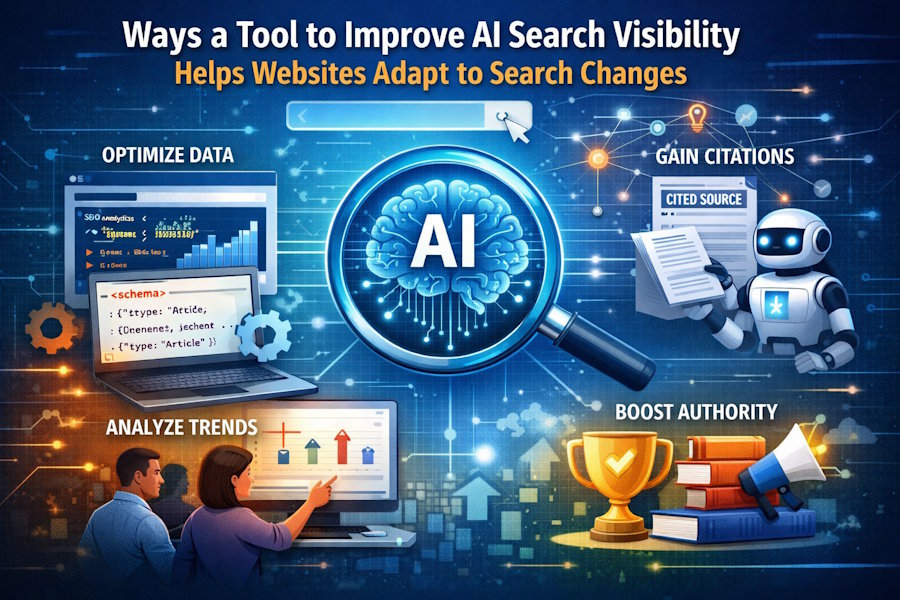
Recognizing the Evolution Beyond Traditional SEO
The way people find information online is changing. For a long time, getting a website to show up high in search results meant following specific SEO rules. If your page ranked well, users would click through to your site. This was a pretty straightforward system. Now, things are different. We're seeing more search impressions, but fewer clicks. This means content might be seen, but it's not always leading to website visits. The old methods aren't enough anymore.
This shift means success in search is no longer just about rankings. It's about being recognized and referenced by new systems. Think about how often you get an answer directly from a search engine without needing to click a link. That's the change we're talking about. It's a big deal for anyone trying to get their website noticed.
This new landscape requires a different approach. We need to look beyond just keywords and backlinks. The focus is moving towards how your brand or information is presented and trusted by AI systems. Understanding this evolution is the first step to adapting.
The Unique Nature of AI-Driven Search Responses
AI search is different from what we're used to. Instead of just a list of links, AI tools often provide direct answers. These answers are put together from many different sources. Your content might be part of that answer, but the user might never visit your site to see it. This is a big change from the traditional "ten blue links" model.
These AI responses can be very helpful for users. They get information quickly without having to sift through multiple pages. However, for website owners, this means their content is being used, but they aren't getting the traffic they used to. It's a trade-off that affects how we think about visibility.
The core idea is that AI synthesizes information. This means your brand's presence is now judged by its inclusion and accuracy within these synthesized answers, not just its position on a results page.
Identifying Gaps in AI Search Presence
So, how do you know if you're missing out? One way is to look at your analytics. Are your impressions going up while your clicks are going down? That's a common sign that AI is providing answers without sending users to your site. You might be visible, but not in a way that drives traffic.
Another thing to check is how your brand or topics are mentioned in AI-generated content. Are you being cited? Are you part of the answers people are getting? If not, there's a gap. This is where a tool to improve AI search visibility, such as SEOJuice, can really help.
We need to actively look for these gaps. It's not enough to assume we're being seen. We have to verify it. This means paying attention to new metrics and how AI systems are interacting with information online. Finding these gaps is key to fixing them.
Strategies for Enhancing AI Search Visibility
Leveraging Structured Data and Metadata for Clarity
AI search systems need clear signals to understand your website's content. Structured data and metadata act like signposts, guiding AI algorithms to the core information. Think of it as making your content speak the AI's language. Properly tagged content helps AI models quickly identify your site's focus, who wrote it, and how it connects to other topics. This clarity is key for AI search visibility.
When AI can easily read and interpret your content, it's far more likely to be cited. Without this organization, AI might skip over your site, even if the information is good. It’s not just about keywords anymore; it’s about making your data accessible and understandable for these new search engines.
- Schema Markup: Use schema.org vocabulary to define content types (articles, products, events). This helps AI understand context.
- Metadata Tags: Optimize title tags, meta descriptions, and header tags with relevant terms and clear descriptions.
- Internal Linking: Create logical connections between your pages to show relationships between topics.
AI systems prioritize information that is well-organized and rich in context. If AI cannot read it, then it will not cite it.
Cultivating Authority Through Content Creation
AI search is increasingly about recognizing expertise and trustworthiness. Creating content that establishes your site as a go-to resource is vital. This means producing in-depth, accurate, and original material that answers user questions thoroughly. When AI systems see your content as a reliable source, they are more inclined to include it in their responses.
Building authority isn't a quick fix; it's a long-term play. It involves consistently publishing high-quality content that demonstrates deep knowledge in your niche. This consistent output signals to AI that your website is a credible authority on the subject matter. This is a core part of improving AI search visibility.
- Original Research: Publish unique data or findings that can't be found elsewhere.
- Expert Interviews: Feature insights from recognized professionals in your field.
- Comprehensive Guides: Develop detailed articles that cover topics from multiple angles.
Ensuring Entity Consistency Across Platforms
AI search relies heavily on recognizing entities – people, places, organizations, and concepts. For your website to be visible in AI search, it's important that your brand is consistently represented everywhere online. This means using the same name, address, phone number (NAP), and brand messaging across your website, social media profiles, and any other online listings.
When AI encounters consistent information about your brand, it builds a stronger, more reliable profile. This consistency helps AI systems connect the dots and understand who you are and what you do. Inconsistent information can confuse AI, leading to lower visibility. Maintaining this entity consistency is a practical step for better AI search visibility.
- Brand Name: Use the exact same brand name everywhere.
- Contact Information: Ensure NAP details are identical across all platforms.
- Messaging: Maintain a consistent tone and core message in your descriptions.
Active Engagement on AI-Crawled Platforms
The Role of Social and Professional Networks
AI models learn from public conversations. Platforms like LinkedIn, Reddit, and Quora are where experts share ideas. Your activity on these sites directly shapes how AI search sees your brand. It’s like building a reputation in real-time. This complements other efforts to make your brand known.
Think of these networks as AI's research library. When you share good information, AI bots notice. They start to connect your name with specific topics. This is a direct way to improve AI search visibility.
Consistent, quality contributions here build trust with AI systems. It’s not just about posting; it’s about being a reliable source. This active participation is key for any website wanting to adapt to search changes.
Building Credibility Through Consistent Contributions
Sharing valuable insights regularly on AI-crawled platforms builds your brand's authority. AI algorithms look for patterns of reliable information. When you consistently post helpful content, AI systems start to see you as a go-to source. This makes your brand more likely to be mentioned in AI-generated responses.
Consider creating content series. Regular updates, like monthly research or quarterly trend reports, signal ongoing relevance. This keeps your audience interested and tells AI search that your knowledge is current. It’s a steady way to stay visible.
Producing evergreen content, resources that stay useful over time, is also smart. While trending topics get attention, solid guides and frameworks get cited repeatedly. This long-term value helps maintain your visibility as AI algorithms keep finding references to your work.
How Platform Activity Influences AI Citations
AI algorithms are good at spotting how content is shared and referenced online. When your content gets links and mentions across different platforms, AI systems recognize this pattern. This makes your work more likely to show up in AI search results. It’s a direct link between your activity and your AI search visibility.
To help AI systems understand your content better, use clear headings and summaries. Make your work easy to find and share. Offering content in different formats, like summaries or infographics, increases the chances of it being cited. This broadens your reach.
- Post helpful answers on Q&A sites.
- Share industry insights on professional networks.
- Participate in relevant online communities.
These actions create more opportunities for AI to find and cite your brand.
Monitoring and Adapting Your AI Search Strategy
Implementing a Tool to Improve AI Search Visibility
Keeping an eye on how your website shows up in AI search is a new but important task. Traditional SEO tools don't quite capture this. AI search engines don't just list links; they create answers. This means you need to watch how your brand or content is used in these generated responses. A tool to improve AI search visibility helps you see this picture clearly.
Regular monitoring helps you spot what's working and what's not. You can see if your content is being cited as a primary source or just mentioned briefly. This tells you a lot about how AI systems understand your brand's role. It's about more than just showing up; it's about showing up in the right context. This kind of insight is key for adapting your strategy.
The landscape of search is changing. What worked yesterday might not work tomorrow. Staying ahead means actively watching how AI search engines interact with your content and making smart adjustments based on what you learn. This proactive approach is vital.
Tracking Performance Across Diverse Query Types
AI search engines process questions in many ways. They handle simple factual queries, complex comparative ones, and problem-solving requests. Your website's visibility can differ greatly depending on the type of question asked. Tracking performance across these different query types gives you a fuller view.
For example, your brand might be a go-to answer for specific technical questions but absent from broader industry trend discussions. Understanding these differences helps you refine your content. You can create more content that targets the types of queries where you're currently underrepresented. This targeted approach is more effective than a general strategy.
- Informational queries (e.g., "What is AI search?")
- Comparative queries (e.g., "AI search vs. traditional search")
- Solution-seeking queries (e.g., "How to improve AI search visibility")
The Importance of Consistent Long-Term Monitoring
AI search algorithms take time to update and recognize changes. Unlike traditional search, where results can shift quickly, AI systems might need weeks or even months to fully incorporate new information about your website. This means consistent, long-term monitoring is not just helpful; it's necessary.
Short-term fluctuations can be misleading. By tracking over extended periods, you can identify genuine trends and patterns. This patience allows you to see the real impact of your efforts to improve AI search visibility. It helps you avoid making hasty changes based on temporary blips.
- Establish a baseline of your current AI search presence.
- Set a regular schedule for checking AI responses (e.g., weekly or monthly).
- Document all changes made to your content or website structure.
- Analyze trends over several months to gauge the effectiveness of your strategy.
Measuring Success in the AI Search Landscape
Evaluating the Quality of AI-Driven Traffic
Traditional metrics like page views and click-through rates don't tell the whole story anymore. AI search intercepts users earlier in their journey. We need to look at what happens before a click. This means understanding how often your brand is mentioned or cited by AI. It's about the quality of that mention, not just the quantity. Did the AI accurately represent your information? Was it a positive or neutral mention? These are the new benchmarks.
Identifying Key Indicators Beyond Clicks
Think about AI citations. When an AI directly references your content, that's a strong signal. Also, consider brand mentions – even if the AI pulls info from a third party, your brand appearing is still visibility. Share of voice in AI responses, comparing your brand against competitors for relevant queries, is another good indicator. Finally, brand sentiment in AI responses matters. Is the AI describing your brand favorably?
The shift to AI search means we're measuring a different kind of influence. It's less about direct website visits and more about being recognized as a trusted source in the broader information ecosystem.
Aligning Tracking with Evolving User Needs
AI search is all about answering questions directly. So, we need to track how well our content addresses those questions. Are we appearing in AI responses for queries related to our core offerings? Are we seen as an authority on specific topics? This requires looking at AI-influenced traffic – users who arrive on your site after interacting with an AI tool. This shows the AI is acting as a discovery engine for your brand. Tracking AI search visibility is key to adapting.
Practical Steps for AI Search Optimization
Starting with Manual Visibility Checks
Before diving into complex tools, a simple manual check goes a long way. Test your brand's presence by asking AI platforms direct questions related to your industry or services. See if your website or content appears in the generated answers. This initial step helps identify immediate gaps in your AI search visibility.
- Search for your brand name.
- Query topics you specialize in.
- Look for mentions of your products or services.
This hands-on approach provides a baseline understanding of how AI currently perceives your online footprint. It's about getting a feel for the landscape before investing heavily in optimization.
Manual checks are the first line of defense in understanding your AI search performance. They offer immediate insights without requiring specialized software.
Utilizing Available Analytics Tools
Once you have a manual baseline, explore the analytics tools already at your disposal. While traditional SEO analytics focus on clicks and impressions, AI search analytics are about how often your content is referenced or summarized. Look for tools that can track mentions or provide insights into AI-generated response content. This helps in understanding the quality of AI-driven traffic.
- Review website analytics for referral traffic from AI platforms.
- Use social listening tools to track brand mentions in AI-generated content.
- Examine content performance based on AI summarization patterns.
These tools, even basic ones, can offer data points that inform your AI search strategy. They help pinpoint which content pieces are being picked up by AI systems and why.
Scaling Tracking Efforts for Businesses
For businesses, scaling these tracking efforts is key. This involves setting up more robust monitoring systems and potentially investing in specialized AI search visibility tools. The goal is to move beyond manual checks to automated, continuous tracking. This allows for quicker adaptation to AI search changes and a more accurate measure of success.
- Implement automated AI mention tracking.
- Integrate AI performance data into broader marketing dashboards.
- Regularly review and refine AI search optimization tactics based on data.
Consistent monitoring is vital for maintaining and improving your AI search visibility over time. It ensures your brand remains discoverable as AI search continues to evolve.
Staying Ahead in the AI Search Era
The way people find information online is changing, and AI search is a big part of that. It's not just about keywords anymore; it's about being seen as a reliable source that AI systems can understand and trust. By focusing on things like consistent branding, making your content easy for AI to read, and being active where AI looks for information, you can improve your website's visibility. Keeping an eye on how your brand shows up in AI responses and making small changes as needed will help you keep up. Adapting now means your website will be in a better spot as AI search continues to grow and change how we all discover things online.

