

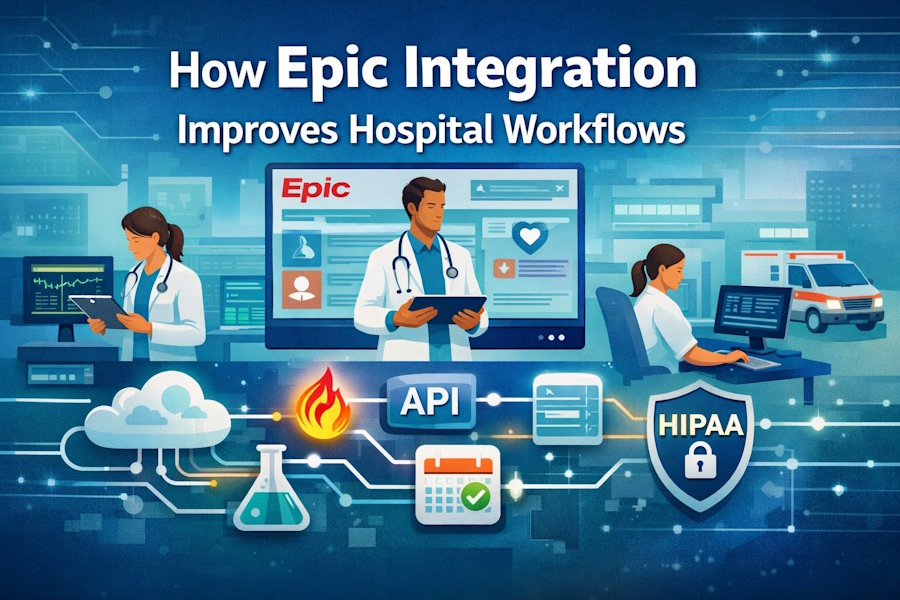
Epic integration streamlines hospital operations by connecting Epic's robust EHR platform with other systems, reducing errors and saving time for clinicians. This article explores how Epic integration, including epic systems integration and epic EHR integration, transforms workflows in modern healthcare settings.
Understanding Epic Integration Basics
Epic Systems is the leading electronic health record (EHR) platform used by over 70% of U.S. hospitals, handling billions of patient records annually. Epic integration refers to linking this system with custom healthcare software development solutions, third-party apps, and internal tools via APIs like FHIR and Epic's App Orchard marketplace. This connectivity enables seamless data flow, eliminating silos that plague legacy systems.
For healthcare providers, epic integration healthcare software development means building tailored bridges between Epic and specialized tools, such as lab systems or billing software. Hospitals benefit from real-time data exchange, which cuts down on manual entry and supports compliance with HIPAA and interoperability standards.
Custom healthcare software development companies specialize in these projects, ensuring secure, scalable solutions that fit unique hospital needs. Without integration, staff juggle multiple platforms, leading to delays and frustration.
Streamlining Clinical Workflows
One key advantage of Epic integration is optimized patient care delivery. Clinicians access unified patient records across departments, spotting trends like medication adherence or therapy progress instantly. This reduces clinical decision-making time by up to 30%, allowing more focus on direct patient interaction.
Epic EHR integration automates documentation, pulling data from connected devices like wearables or imaging tools. For instance, during rounds, nurses view live vitals synced from monitors, minimizing redundant charting. Epic systems integration with telemetry systems prevents errors, such as duplicate orders, enhancing safety.
In busy ERs, integration simplifies triage: incoming ambulance data pre-populates Epic charts, speeding assessments. Hospitals report 20-25% faster throughput, directly tying to better outcomes and higher satisfaction scores.
Enhancing Administrative Efficiency
Administrative tasks consume 40% of hospital staff time, but Epic integration flips this script. Billing teams sync claims data automatically via Epic integration, slashing rejection rates from 15% to under 5%. Revenue cycle management improves as charges post in real-time, reducing days in accounts receivable.
Scheduling becomes effortless with integrated calendars pulling from Epic's MyChart patient portal. Patients book slots online, and staff confirm via unified views, cutting no-shows by 18%. Custom healthcare software development firms craft these modules, embedding AI for predictive slotting based on historical patterns.
Epic integration healthcare software development also streamlines supply chain ops. Inventory systems link to Epic, auto-reordering based on usage data, preventing stockouts during peaks like flu season.
Boosting Interoperability and Data Accuracy
Fragmented systems breed errors. Studies show 12% of medications involve discrepancies from poor data sharing. Epic integration enforces FHIR standards for bidirectional exchange, ensuring accuracy across partners like labs or pharmacies. This epic EHR integration creates a "single source of truth," vital for population health analytics.
Hospitals using Epic's Connection Hub deploy apps from vetted developers, tested for compatibility. Custom healthcare software development companies like those offering healthcare app development services validate these links, handling edge cases like legacy EMR migrations.
For multi-site networks, integration centralizes reporting. Dashboards aggregate metrics from disparate sources, aiding accreditation audits without manual exports.
Real-World Case Studies
Consider a mid-sized hospital integrating Epic with a custom patient engagement app. Post-launch, discharge instructions embedded in Epic boosted follow-up compliance by 26%, per internal audits. Epic integration reduced readmissions, saving $500K yearly.
Another example: A large system partnered with a healthcare mobile app development company for telehealth modules. Epic systems integration enabled virtual visits with full chart access, expanding access during pandemics while maintaining workflow continuity.
These successes highlight why hospitals seek epic integration specialists ROI materializes in months through efficiency gains.
Role of Custom Development Partners
Not all hospitals have in-house expertise, so custom healthcare software development companies step in. These firms offer end-to-end epic integration healthcare software development, from API mapping to go-live support. They prioritize scalability, future-proofing against updates like Epic's annual releases.
Healthcare app development services extend to mobile fronts: doctors access Epic via secure apps, approving orders on-the-go. A healthcare mobile app development company ensures native iOS/Android compatibility, with offline modes for spotty networks.
Choosing a custom healthcare software development company with Epic certification minimizes risks. They navigate App Orchard approvals, ensuring compliant, high-performance integrations.
Technical Foundations of Epic Integration
Epic's architecture supports robust Epic systems integration through APIs, web services, and batch processing. FHIR APIs handle real-time queries, while HL7 handles legacy ties. OAuth2 secures access, logging every interaction for audits.
Custom healthcare software development involves sandbox testing in Epic's environment, simulating live loads. Developers code middleware for data transformation, resolving format mismatches seamlessly.
Healthcare app development incorporates UI/UX best practices, embedding Epic flows into intuitive dashboards. This reduces training time—staff adapts in days, not weeks.
Challenges and Solutions
Integration isn't plug-and-play; downtime risks loom. Mitigation starts with phased rollouts: pilot one department, scale hospital-wide. Custom healthcare software development companies use CI/CD pipelines for zero-disruption updates.
Data privacy demands vigilance—epic EHR integration mandates encryption and role-based access. Partners conduct penetration testing, aligning with ONC interoperability rules.
Cost barriers exist, but grants like HRSA's support upgrades. Long-term, savings from 15-20% workflow gains offset investments.
Future Trends in Epic Integration
AI amplifies Epic integration: predictive analytics forecast admissions, auto-triaging alerts. Healthcare app development services now bundle ML models, trained on Epic data for personalized care plans.
Wearables integration surges, streaming biometrics into Epic for proactive interventions. Epic systems integration with IoT platforms positions hospitals for value-based care.
Blockchain experiments secure sharing, while 5G enables edge computing for remote sites. Custom healthcare software development companies lead here, prototyping tomorrow's workflows.
Measuring Success Metrics
Track integration ROI with KPIs: order entry time (target: <2 min), error rates (<1%), and clinician burnout scores. Post-Epic integration, hospitals see 25% admin time drops, per HIMSS data.
Patient portal engagement rises 40%, correlating to HCAHPS gains. Custom healthcare software development ensures dashboards visualize these, guiding optimizations.
Partnering for Epic Success
Epic integration transforms chaos into symphony, but execution matters. Engage a healthcare app development company versed in Epic EHR integration and even Shopify B2B development services for robust supply chain extensions, ensuring bespoke results. Their expertise in custom healthcare software development guarantees workflows that evolve with your hospital.
In summary, Epic integration isn't optional—it's essential for competitive, patient-centric care. Hospitals embracing it via skilled partners like custom healthcare software development companies unlock efficiency, accuracy, and innovation.

