

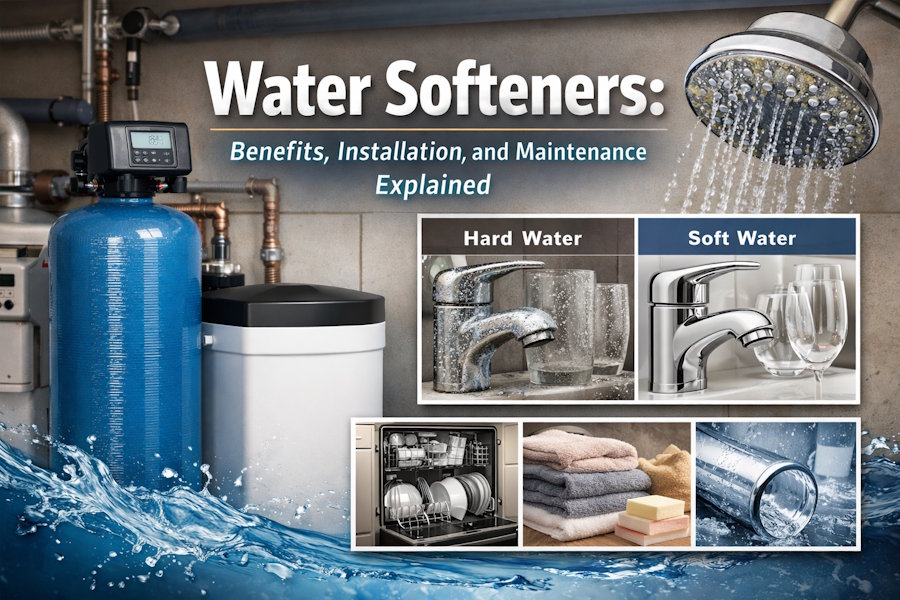
Water quality plays a crucial role in the health of a home, its residents, and the longevity of plumbing systems and appliances. Hard water, which contains high levels of calcium, magnesium, and other minerals, can lead to a variety of issues, including scale buildup in pipes, inefficient appliances, and dry skin or hair. Installing water softeners is an effective solution that addresses these problems, providing cleaner, softer water throughout the household. Water softeners not only improve the quality of water used for drinking, cooking, and bathing but also protect plumbing and household appliances from the damaging effects of mineral deposits. Understanding the benefits, installation process, maintenance requirements, and long-term value of water softeners ensures homeowners make informed decisions for a safer, more efficient, and comfortable home environment.
Understanding Hard Water and the Need for Water Softeners
Hard water is a widespread issue that affects millions of households. It contains high concentrations of minerals, primarily calcium and magnesium, which can accumulate over time in pipes, faucets, water heaters, and appliances. This accumulation, known as scale buildup, reduces water flow, decreases the efficiency of appliances such as dishwashers and washing machines, and increases energy consumption. Furthermore, hard water can leave unsightly stains on sinks, bathtubs, and shower surfaces, while contributing to dry skin, brittle hair, and irritation during bathing.
Water softeners are designed to address these challenges by removing or reducing the mineral content in water. By exchanging calcium and magnesium ions for sodium or potassium ions through a process called ion exchange, water softeners transform hard water into soft water. This process prevents scale formation, improves water flow, and provides numerous health and household benefits. For homeowners seeking long-term solutions to hard water problems, investing in water softeners is both practical and cost-effective.
Benefits of Using Water Softeners
The advantages of installing water softeners extend far beyond just preventing scale buildup. One of the most immediate benefits is the protection of plumbing systems and appliances. Soft water reduces wear and tear on pipes, faucets, water heaters, and appliances, extending their lifespan and reducing maintenance and replacement costs. Without water softeners, mineral deposits gradually clog pipes and decrease the efficiency of household systems, leading to costly repairs over time.
Softened water also enhances personal care. Bathing and showering with soft water prevents dry skin and hair caused by mineral-laden hard water. Detergents and soaps lather more effectively, allowing for cleaner laundry and dishes with less effort and fewer chemicals. This improved efficiency not only saves money on cleaning products but also supports healthier skin and hair, particularly for individuals with sensitive skin.
Another benefit of water softeners is energy efficiency. Mineral buildup in water heaters can create insulation layers that reduce heating efficiency and increase energy consumption. By using softened water, heating systems operate more efficiently, lowering utility costs and reducing environmental impact. Additionally, softened water helps maintain the appearance of fixtures, tiles, and surfaces, preventing unsightly stains and ensuring a cleaner, more appealing home environment.
Types of Water Softeners
There are several types of water softeners available, each designed to meet specific household needs and preferences. The most common type is the traditional ion-exchange water softener, which uses resin beads to remove calcium and magnesium from the water. This type is widely used due to its efficiency, reliability, and ability to treat water for the entire home.
Salt-free water softeners are another option. While technically not softening water in the traditional sense, salt-free systems prevent scale buildup by conditioning the water, keeping minerals suspended rather than allowing them to deposit on surfaces. Salt-free water softeners are often chosen by homeowners seeking a low-maintenance and environmentally friendly solution, as they do not require salt or chemicals for operation.
Dual-tank water softeners are designed for households with high water usage. These systems provide continuous soft water, even during regeneration cycles, ensuring that water is always available for use. This type is particularly useful for larger homes or properties with high water demands.
Magnetic and electronic water conditioners represent alternative approaches to softening water. While their effectiveness is sometimes debated, these systems aim to alter the physical properties of minerals in water, reducing scale formation without using salt or chemicals. Homeowners seeking minimal maintenance options may consider these solutions, though they are generally used in combination with other filtration or conditioning systems.
Installation Process for Water Softeners
Proper installation of water softeners is critical to ensure optimal performance and long-term benefits. Most water softeners are installed at the main water line entering the home, allowing treated water to flow to every faucet, appliance, and outlet. This ensures comprehensive protection and consistent water quality throughout the household.
During installation, professionals assess water pressure, plumbing layout, and hardness levels to determine the appropriate system size and configuration. Sediment pre-filters may be added to protect the softener from debris, extending the system's lifespan and maintaining efficiency. Proper placement, bypass valves, and drainage considerations are also essential to ensure smooth operation and easy maintenance.
Professional installation is highly recommended, as incorrect setup can compromise water softener performance, reduce water flow, or lead to operational problems. Trained technicians ensure that the system operates efficiently, delivers softened water consistently, and complies with manufacturer guidelines.
Maintenance of Water Softeners
Maintaining water softeners is essential for continued performance and water quality. Ion-exchange systems require periodic replenishment of salt or potassium, depending on the type of softener used. Resin beads may also require cleaning or replacement over time to maintain their ion-exchange efficiency. Regular inspection of valves, fittings, and control mechanisms ensures that the system operates smoothly and avoids leaks or malfunctions. Just as homeowners seek out the best grinder pump repair when wastewater systems back up, routine maintenance on water treatment units prevents minor wear from turning into full mechanical failures.
Salt-free systems generally require less maintenance but still benefit from periodic inspections to ensure optimal performance and prevent sediment accumulation. Dual-tank and high-capacity systems may also require professional servicing to maintain efficiency and extend lifespan.
By following recommended maintenance schedules, homeowners can ensure that their water softeners continue to provide high-quality water, protect plumbing and appliances, and deliver the full benefits of softened water year-round.
Long-Term Value of Water Softeners
While the initial cost of installing water softeners may seem significant, the long-term value far outweighs the investment. Reduced appliance wear, lower maintenance costs, energy savings, and improved water quality all contribute to significant household savings over time. Softened water also enhances the overall living experience, making daily activities such as bathing, laundry, and dishwashing more efficient and enjoyable.
Investing in water softeners is a proactive approach to managing hard water problems. It provides peace of mind, knowing that water quality is consistent, appliances are protected, and the home environment is cleaner and healthier. The combination of financial savings, personal care benefits, and household protection makes water softeners a wise and practical investment for any homeowner.
Conclusion
Water softeners are a vital solution for homes affected by hard water. By removing calcium, magnesium, and other minerals, water softeners protect plumbing, extend appliance life, improve personal care, and enhance overall water quality. Proper installation, regular maintenance, and careful selection of the right system type ensure that households receive consistent, safe, and high-quality water throughout the home. Investing in water softeners provides long-term value, energy efficiency, and peace of mind, making them an essential addition to any home seeking cleaner, softer, and healthier water.

