

Scaling software fast is every startup founder’s dream and every CTO’s headache. You’re juggling product roadmaps, fundraising decks, and the relentless hunt for senior engineers who can actually move the needle. Meanwhile, the market is not waiting. In 2026, the demand-supply gap for experienced developers in the U.S. alone is approaching 1.2 million unfilled roles, and global IT spend has crossed $6.31 trillion. If you try to hire locally at Silicon Valley speed and Bay Area salaries, you’ll burn cash before your Series B even clears the bank.
Enter the dedicated development team model, a proven way to plug vetted, full-time engineers into your product organization without the headaches of payroll, visas, or compliance in every new country you touch. The ten providers below have refined that model into an art form, helping hundreds of startups and enterprises extend their runway and deliver features faster than their competitors.
Why Dedicated Teams Are the Fast Lane to Global Scale
Collaboration via dedicated development team services might sound like just another outsourcing model until you examine what actually happens inside a growth-stage company. When you add a pre-assembled, full-time squad that sticks with you release after release, three things change immediately:
- Velocity jumps. Your in-house leads stop context switching between coding and interviewing.
- Knowledge compounds. Because engineers stay for years, domain expertise grows inside the team instead of walking out the door after each contract.
- Global talent arbitrage works in your favor. You pay market-competitive rates in the engineer’s region, not inflated local salaries, without compromising quality.
That combination explains why today, 92% of G2000 companies rely on managed development teams. It’s not just about saving money; it’s about shipping on time, attracting later-stage investment, and keeping your founders sane.
Yet success is not automatic. The dedicated model thrives only when there is a true software partnership - shared product metrics, integrated ceremonies, and mutual long-term incentives. Vendors that treat teams as ticket-takers miss the mark, while clients that treat partners as disposable contract labor undercut morale.
Methodology - How We Picked the Winners
Every list on the internet claims to show the “best dedicated development team services,” but most recycle marketing copy. We did it differently:
- Primary data. Company-supplied metrics we could verify - retention rates, average contract length, and acceptance ratios.
- Specialization. Do they dominate a region or a vertical that actually matters to scaling startups?
- Client integration model. Are they passive staff-vendors or genuine partners who co-own outcomes?
- Cultural fit. Time zone overlap, English fluency, and engineering culture aligned with Agile product teams.
- Reputation at scale. Long-term, nameable clients, plus third-party awards or certifications where relevant.
Using these filters, we whittled an initial longlist of 60 vendors down to the ten that follow. Each runs mature, managed dev teams capable of taking a product from prototype to IPO without forcing founders to reinvent their org chart mid-flight.
The 10 Providers You Should Know
Before diving into individual profiles, a quick orientation: the vendors below cover different geographies, tech stacks, and engagement philosophies. Some shine in regulated industries, others in consumer apps. Some focus on Europe, others on LATAM or globally. What unites them is a track record of building stable, high-performing squads at scale.
1. Newxel - Europe’s Speed-to-Talent Champion
Source: Newxel
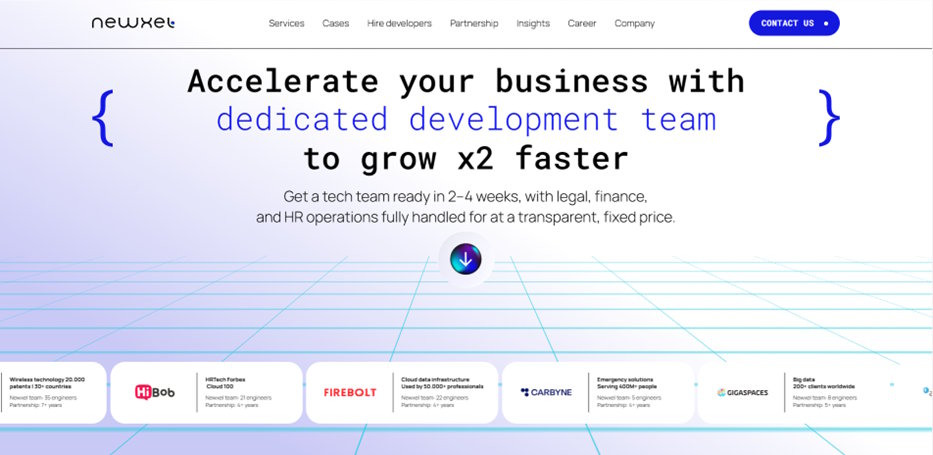
Founded in 2017, Newxel solved the classic Eastern Europe outsourcing dilemma: great engineers, but slow bureaucracy. Operating from eight hiring hubs, the company onboards full teams in 2-4 weeks, roughly 50% faster than traditional in-house hiring. An 85% candidate acceptance rate and a 98% retention figure mean you’re not refilling seats every quarter.
Newxel’s pricing is blissfully transparent: monthly rate × number of engineers, all-inclusive. HR, legal, payroll, equipment - handled. Case in point: a 24-engineer R&D team for Renesas is still going strong after seven years. When you need European talent without setting up 8 legal entities, Newxel is the plug-and-play option.
2. Mobilunity - Dedicated Teams with Hands-On Retention
Source: Mobilunity
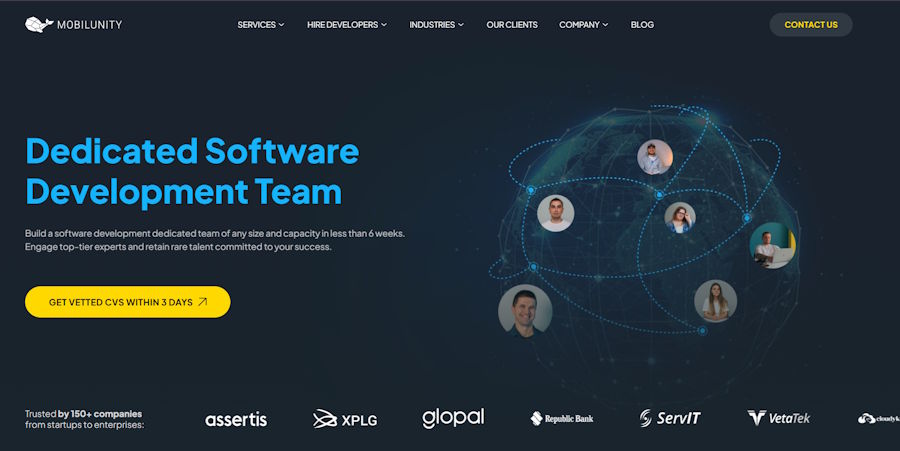
Founded 16+ years ago, Mobilunity is an Eastern European company that builds dedicated development teams for clients in 30+ countries. You stay in full control of the work, while Mobilunity handles everything around it. With 5,000+ pre-vetted experts and 150+ teams in its portfolio, the average partnership lasts 4.2 years. Vetted CVs arrive within 5 business days (often - even sooner), and a full team is usually ready in 3-6 weeks, up to twice as fast as in-house hiring.
Pricing is one rate that covers salary, payroll taxes, leave, recruitment, equipment, and office costs, saving up to 50% compared with hiring locally in the US or UK. Resource Managers handle onboarding and day-to-day admin, and the team also looks after retention through growth plans and performance reviews. Clients like Klevu and BowBridge have stayed on and added more consultants over time. If you want talent from Europe and LATAM without becoming an employer there, Mobilunity is a good fit.
3. Softjourn - Deep Vertical Expertise in FinTech & Media
Source: Softjourn
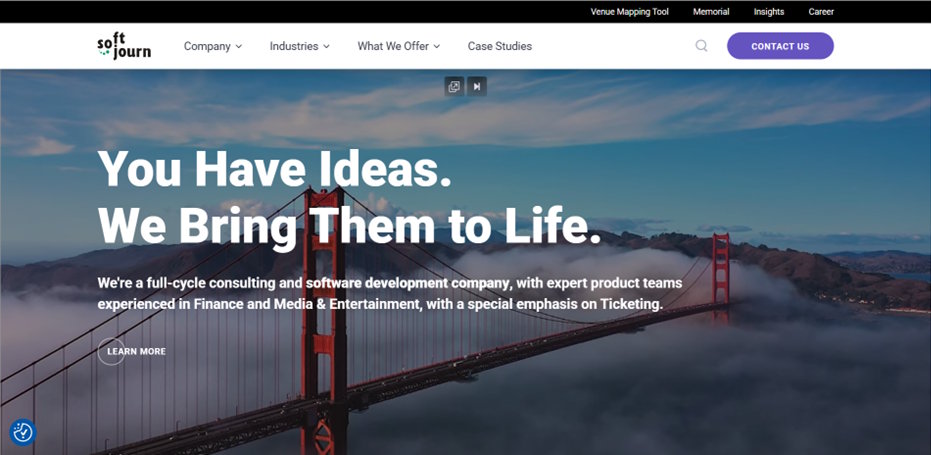
Generalists are fine for CRUD apps; regulated domains need specialists. Softjourn brings 20+ years of experience in FinTech, streaming, and ticketing. Headquartered in Silicon Valley with R&D in Ukraine, Poland, and Brazil, the firm’s 300+ engineers understand PCI compliance, real-time payment rails, and DRM headaches few generic outsourcers touch.
Their dedicated team model is flexible: you can run the squad directly or let Softjourn PMs handle day-to-day delivery. Tacit Corporation has done so for 12 years, proving that Softjourn sticks around long after the first release party.
4. Index.dev – Vetted Remote Developers for Fast Team Scaling
Source: Index.dev
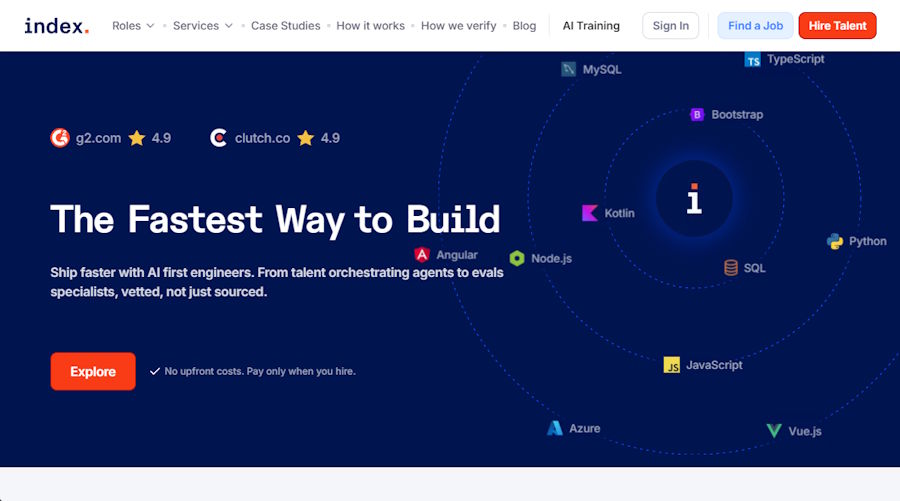
Index.dev helps companies build dedicated development teams with pre-vetted remote software engineers matched to their technical and business needs. Its talent network covers a wide range of technologies and roles, allowing startups and growing companies to expand engineering capacity without going through a lengthy traditional hiring process.
The model is particularly useful for teams that need to scale quickly while keeping developers integrated with their existing workflows and product teams.
5. Tecla - Senior LATAM Talent On-Demand
Source: Tecla
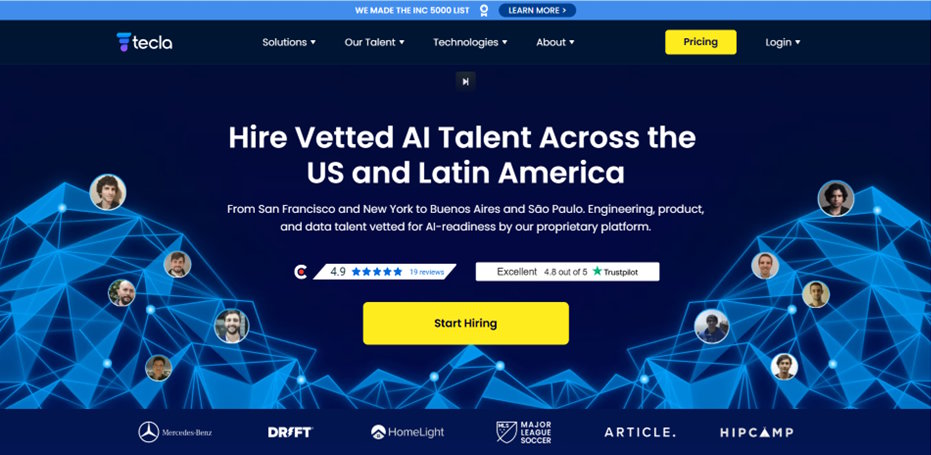
Need a senior React architect yesterday? Tecla keeps a curated network across 18 Latin-American countries and promises vetted profiles in 5 business days. The kicker is a 14-day trial period; if the engineer isn’t a fit, you drop the engagement at zero cost. That risk reversal is gold for first-time nearshore adopters.
Because Tecla handles contracts, local compliance, and retention, your only job is sprint planning. For U.S. startups wanting same-time-zone collaboration without procurement red tape, Tecla feels almost like magic.
6. Jobsity - Embed-First Nearshore Teams
Source: Jobsity
While many vendors deliver “resources,” Jobsity embeds developers so deeply that they join your Slack memes. Active in 20+ LATAM countries, the firm charges a flat monthly rate (no placement fees) and boasts developers fluent in 9+ languages who average 3 years on the same client account.
This stability matters when your architecture doc lives more in engineers’ heads than in Confluence. U.S. companies that prize cultural alignment and continuity over brute-force scaling keep coming back to Jobsity.
7. Blue Coding - Nearshore with a Build-Operate-Transfer Path
Source: Blue Coding
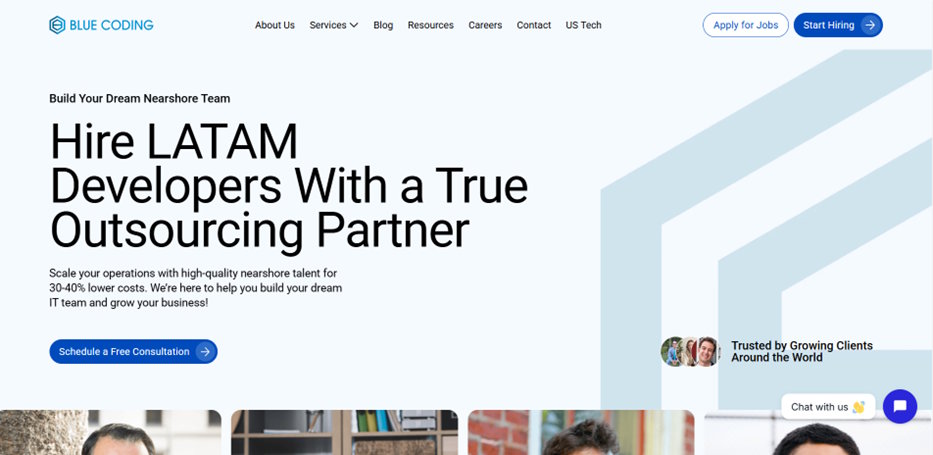
Some founders eventually want their own captive center. Blue Coding lets you test-drive that future through a structured Build-Operate-Transfer (BOT) model. They recruit, house, and manage a nearshore team; when you’re ready, you take over with zero transfer fees. Cost savings hover around 30-40% versus U.S. rates, and the talent pipeline spans fintech, e-commerce, and GIS.
For companies seeking to exit, where owning IP and payroll outright is a strategic play, Blue Coding offers a low-risk glide path.
8. Rootstack - Central America’s Enterprise Workhorse

Source: Rootstack
Rootstack started in Panama in 2011 and now counts Hyundai, Caterpillar, and Heineken on its roster. Dual ISO 9001/27001 certifications back its 95% client-satisfaction rate. Beyond staff augmentation, Rootstack fields managed teams and project-based deliveries in banking, healthcare, and government - sectors that crave documentation and compliance almost as much as new features.
If you’re a U.S. health-tech startup needing HIPAA-literate engineers who also share your time zone, Rootstack is an underrated gem.
9. UruIT (a Nortal Company) - Product-Centric Squads from Uruguay
Source: UruIT
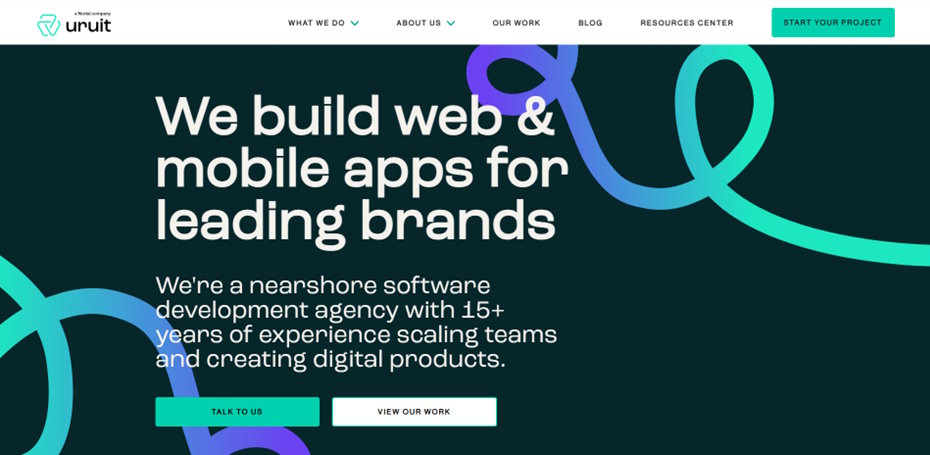
Now part of Nortal’s global network, UruIT combines boutique agility with enterprise governance. In the hiring process, they focus on “product thinking” - engineers must explain results that users see, not just pass algorithm quizzes. Delivery Centers in CST/EST+1. Developers ramp up in 2 weeks on average.
UruIT’s partnerships with Tony Robbins and Bloomberg demonstrate capacity to deliver data-heavy and consumer-grade experiences. UruIT is the right cultural fit for founders who treat design and UX as first-class citizens.
10. EffectiveSoft - AI Experts in Regulated Industries
Source: EffectiveSoft
EffectiveSoft has been coding since the Y2K era and reinventing itself with modern AI and cloud stacks. A natural partner for fintech, health tech, and logistics startups that are navigating regulatory landmines, the firm is ISO/IEC 27001:2022, GDPR, HIPAA, and CCPA compliant.
With centers in Europe and LATAM, EffectiveSoft satisfies both offshore cost savings and nearshore timezone perks. Long-term clients praise the team’s “solution mindset,” meaning they’ll push back on bad architectural decisions instead of blindly coding ticket after ticket.
Honorable mentions
BairesDev - Enterprise-Grade Nearshore Muscle

Source: BairesDev
If your board demands “vendors with Fortune 500 references,” BairesDev will top the list. Since 2009, the company has screened 2.5 million applicants yearly to keep its “top 1%” talent claim honest. With 4,000+ engineers across 50+ countries, BairesDev specializes in large, cross-functional pods that own entire product lines.
Their Agile squads drop into your Jira board within four weeks and stay for the long haul - Google, Adobe, and Johnson & Johnson can attest. For scale-ups entering hyper-growth, the ability to spin up an extra 10-person squad in the time it takes HR to post a job description is a lifesaver.
Mphasis - Global Transformation at Enterprise Scale

Source: Mphasis
When you need more than an app - think core-banking modernization or multi-cloud migration - Mphasis enters the chat. Home to 30,000+ professionals in 20 countries, the Indian-born firm anchors its dedicated team model to a “Front2Back™” framework that aligns code commits with measurable business KPIs.
Consistent recognition from Gartner and Everest Group for cloud and AI capabilities gives risk-averse boards the confidence to green-light multi-year budgets. If you’re a late-stage unicorn or Fortune 500 spin-out planning a big-bang rewrite, Mphasis can throw a bunch of PhDs at your hardest edge cases.
Quick-Glance Vendor Comparison
Below is a side-by-side snapshot to help founders shortcut the discovery process and narrow interviews to the two or three vendors that best match their scaling agenda.
|
Provider |
Region Focus |
Avg. Ramp-Up Time |
Key Strength |
Ideal For |
|
Newxel |
Europe & Israel |
2-4 weeks |
98% developer retention |
FinTech, Cybersecurity products needing EU presence |
|
BairesDev |
LATAM (Nearshore) |
3-4 weeks |
4,000+ top-1% engineers |
Enterprises & scale-ups wanting large pods |
|
Softjourn |
Global w/ EU cores |
4-5 weeks |
FinTech & Ticketing expertise |
Regulated verticals and media platforms |
|
Index.dev |
Global |
Fast matching |
Pre-vetted remote developers |
Startups & scale-ups building dedicated engineering teams |
|
Tecla |
LATAM platform |
~1 week |
14-day trial, senior-only |
Startups that need senior devs fast |
|
Jobsity |
LATAM |
1-2 weeks |
Deep embedding, flat fee |
U.S. SaaS teams valuing continuity |
|
Blue Coding |
LATAM BOT |
3-4 weeks |
Build-Operate-Transfer |
Founders planning future captive center |
|
Rootstack |
Central America |
3-4 weeks |
ISO-certified delivery |
Health, Gov, Banking needing compliance |
|
UruIT |
Uruguay & Colombia |
2 weeks |
Product-centric culture |
Design-driven SaaS products |
|
EffectiveSoft |
EU & LATAM |
4 weeks |
AI + compliance depth |
FinTech/HealthTech scale-ups |
|
Mphasis |
Global |
4-6 weeks |
Cloud & AI at enterprise scale |
Multi-year digital transformations |
The table shouldn’t replace due diligence, but should help you align shortlist candidates with board expectations and product timelines.
Choosing the Best Fit: A Founder’s Checklist
So you have a shortlist. Now what? Use this filter to identify the best dedicated development team services for your exact situation and cement a durable software partnership:
Time-Zone Overlap and Communication Cadence
A daily stand-up at 7 a.m. your time is fine for a week, but then it becomes a morale killer. Nearshore often wins here, but Europe can work if you shift sprint rituals earlier.
Retention Metrics
Anything below 90% annual developer retention should raise eyebrows. High churn destroys velocity and knowledge capital, no matter how good individual engineers are.
Domain Expertise vs. Generalist Capacity
If you operate in fintech or health, a partner steeped in compliance saves you months of edge-case misery. For greenfield SaaS, a versatile stack matters more.
Pricing Transparency
Fixed monthly rates with itemized services beat murky “time + materials” invoices. Surprise costs break trust faster than production outages.
Scalable Governance
Look for partners offering both staff augmentation and fully managed dev teams. You might start with two engineers and ramp up to an 18-person pod; switching vendors mid-scale adds risk.
Cultural Alignment
Technical brilliance is useless if knowledge is lost in translation, linguistic or cultural differences. Veterinarian for language, rituals, and conflict resolution style.
Exit Strategy
Ask early about IP ownership, contractor conversion, and BOT options. Your Series C diligence team will.
A practical approach is to assign a weight to each criterion - say, retention (25%), time-zone alignment (20%), domain expertise (20%), cost transparency (15%), cultural fit (10%), governance (5%), and exit strategy (5%). Score each vendor, multiply by weights, and let data, not anecdotes, drive the decision.
After the scoring exercise, schedule technical deep-dives where your own lead engineers pair-program with the vendor’s seniors for a half-day. You will learn more about code quality, communication style, and mutual chemistry in those four hours than in any glossy slide deck.
Remember to close every evaluation loop with feedback, even for vendors you decline. A respectful no strengthens your brand and keeps doors open for future pivots because tech journeys seldom stay linear.
Final Thoughts
Dedicated teams aren’t a silver bullet, but they are as close as it gets to cloning your best engineers without the cloning budget. Whether you’re eyeing Newxel’s rapid European staffing, Tecla’s 48-hour senior match, or Mphasis’s enterprise horsepower, the providers above have turned global talent into a predictable product. In a market where every release window is a chance to leapfrog competitors or get leapfrogged, choosing the right partner can spell the difference between scaling smoothly and scaling painfully.
Use the checklist, trust verified metrics over glossy brochures, and remember that the real goal isn’t just more hands on keyboards. It’s sustainable velocity, happier in-house teams, and a roadmap that keeps its promises. Pick wisely, and your next stand-up could feature new faces who already feel like old colleagues, releasing features that once sat in the “someday” column of your backlog.

