

Most people don't think much about their wallet until something goes wrong.
A card gets skimmed at a crowded train station. The leather starts cracking after two years. You're standing at the checkout, digging through a stuffed billfold while the line builds up behind you. At some point, the wallet you've been carrying out of habit stops making sense.
That's exactly the problem the aluminum smart wallet was built to solve — not just with a better material, but with a completely different way of thinking about what a wallet should do.
What Makes an Aluminum Smart Wallet Different?
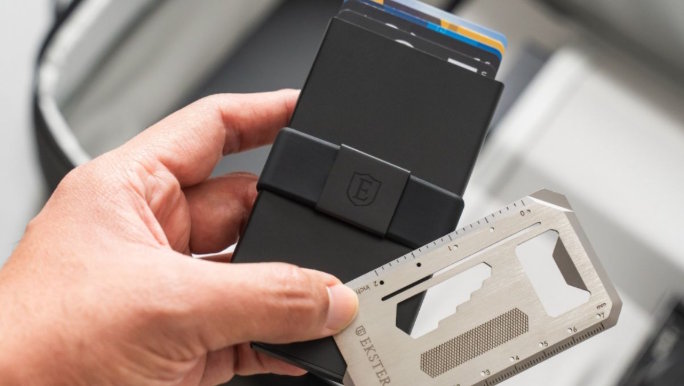
An aluminum smart wallet is a slim metal cardholder designed to sit flat in your front pocket, protect your card data automatically, and put your most-used card in your hand in under a second.
It's not a traditional wallet with a facelift. The structure, the materials, and the way it functions are all purpose-built from the ground up.
Where a standard leather wallet is essentially a folded pouch, passive, flexible, and gradually degrading with use, an aluminum smart wallet is a precision-built tool. It holds its shape, its function, and its finish for years without any maintenance required.
Ekster has taken this concept further than most. Their aluminum cardholders are machined from 100% recycled 6061 aluminum alloy, the same high-strength material used in industrial components that need to take a beating without bending. It's not the cheapest metal to work with, which is exactly why most budget wallets skip it.
The Metal Behind the Design: 6061 Aluminum Alloy
The specific grade of aluminum matters more than most buyers realize.
6061 aluminum alloy offers a combination of properties that make it well-suited for an everyday carry item: it's strong enough to resist warping under pocket pressure, light enough that you don't notice the weight, and resistant to corrosion, so the finish holds up through years of daily handling.
Compare that to the alternatives. Standard leather stretches and cracks. Fabric wallets absorb moisture and lose shape. Carbon fiber is durable but can be brittle under sharp impact. Aluminum hits a practical middle ground — rigid where it needs to be, comfortable enough to carry every single day.
Ekster's cardholders specifically use recycled 6061 aluminum, which adds a sustainability angle without compromising on material performance. The wallet you carry has less environmental cost than a conventional one, and it'll outlast it by years.
How RFID Blocking Works in a Metal Wallet
This is one of the most searched questions about aluminum wallets, and the answer is more straightforward than most people expect.
Modern credit cards, debit cards, and transit passes contain small chips that communicate wirelessly using radio frequency signals. These are the same signals that make tap-to-pay possible. The problem is that anyone with a basic RFID reader available for purchase online for very little money can scan those signals without touching your wallet, often from several feet away in a busy public space.
Conductive metals disrupt this. When aluminum surrounds your cards, it creates what's known as a Faraday cage, a barrier that absorbs and deflects electromagnetic signals, preventing external readers from getting through to your cards.
Ekster builds a dedicated RFID-blocking layer directly into the metal frame of their cardholders, rather than relying on the metal shell alone. The result is consistent, passive protection that requires nothing from you. No setup, no app, no settings to remember. Every time the wallet is closed, your data is shielded.
For people who travel regularly, commute through crowded areas, or carry multiple contactless cards, this isn't a minor feature; it's one of the main reasons to make the switch.
The Pop-Up Mechanism: Built for Speed
One feature that distinguishes a proper aluminum smart wallet from a basic metal card sleeve is the card ejection system.
Here's how it works in practice: your cards sit stacked inside the wallet. When you press a small lever on the side, a spring-loaded platform lifts the cards and fans them out in a clean arc, exposing each card individually so you can grab the one you need without pulling or digging.
Ekster's patented card ejection mechanism is calibrated so it doesn't trigger accidentally in your pocket but responds cleanly and quickly when you press it with intent. Over thousands of daily uses, the mechanism stays smooth and consistent, no loosening, no sticking.
For anyone who pays by card regularly, this changes the experience of a small transaction in a meaningful way. Tap your card, pay, and move on. No fumbling, no holding up the line.
Storage, Capacity, and Modular Add-Ons
A common hesitation before switching to a slim metal wallet is storage. How much can it actually hold?
Ekster's aluminum cardholders hold between 1 and 12 cards in the main ejector tray, depending on card thickness. For people who carry more, the expandable aluminum backplate adds extra capacity, a secondary section that fans out to hold additional cards and folded bills without significantly increasing the wallet's overall dimensions.
At its slimmest, the Ekster Cardholder Pro sits at just 0.6 inches thin — narrower than most smartphones. Even with the backplate extended to hold more cards, it stays genuinely front-pocket-friendly. No more back-pocket bulge, no more sitting at an angle.
Beyond cards, Ekster's modular system lets you attach add-ons — a coin holder, a key case, or a cash strap — depending on what your day needs. This kind of flexibility is where the "smart" label actually earns its place.
Tracking: A Wallet You Can't Permanently Lose
One of the more quietly useful features available in modern aluminum wallets is tracker card compatibility.
A tracker card is a slim Bluetooth device built to the exact dimensions of a standard credit card. It slots into your wallet like any other card and pairs with your phone, allowing you to ping the wallet's location from an app or use the Find My network to trace it if it goes missing.
Ekster sells their own Finder Cards — Apple Find My® compatible, credit card-sized trackers slide straight into any cardholder slot. If the wallet is within Bluetooth range, you can make it ring. If it's further away, the tracker uses the Find My network to pinpoint its last known location.
For frequent travelers, people who move between multiple bags, or anyone who's ever spent twenty minutes searching for their wallet before leaving the house, this feature alone is worth considering.
Are Aluminum Wallets Actually Worth Buying?
Let's answer this directly, because it's the question most people are sitting with.
An aluminum smart wallet costs more upfront than a basic leather billfold. That's true. But the cost comparison shifts when you factor in how long each one actually lasts.
A mid-range leather wallet starts showing wear within 18 months. Stitching loosens. The leather around the card slots stretches. By year three, most people are shopping for a replacement. A well-built aluminum wallet — especially one backed by a lifetime warranty like Ekster offers for Ekster+ members — doesn't have those failure points. The metal doesn't crack, stretch, or stain. The mechanism doesn't lose tension.
Where aluminum wallets deliver clearly:
- RFID protection is built in and always active — no effort required
- The slim, rigid profile is more comfortable for front-pocket carry
- Card access is noticeably faster during everyday transactions
- The material holds up far longer than leather or fabric alternatives
- Tracker card compatibility means you're unlikely to lose it permanently
Where they ask for an adjustment:
- You'll pare down to the cards you genuinely use — most people find this freeing, not limiting
- The rigid structure isn't designed for receipts or folded papers
For anyone carrying 4 to 10 cards, concerned about contactless card security, and tired of replacing wallets every few years, the switch makes practical sense.

