

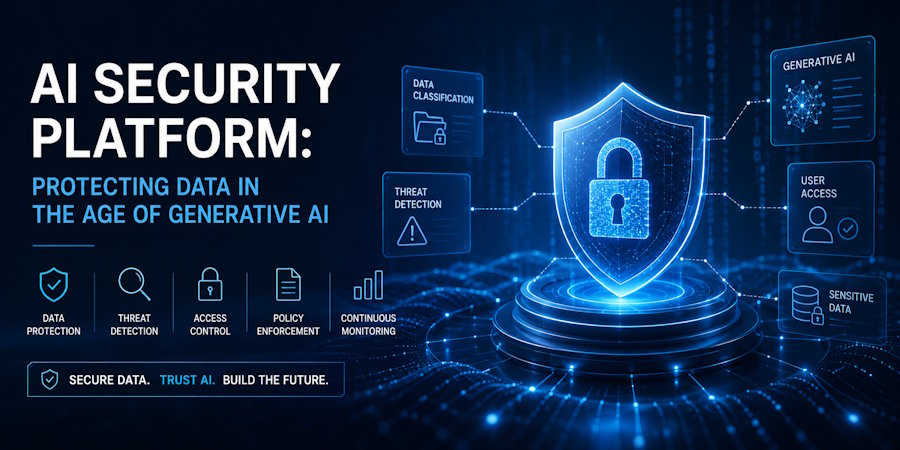
As artificial intelligence becomes deeply integrated into daily workflows, organizations are facing a new kind of security challenge. Employees interact with AI tools constantly—sharing prompts, uploading documents, and generating content—often without realizing the risks involved. This is where a modern ai security platform becomes essential. Businesses looking to strengthen ai security software capabilities are increasingly turning to solutions like iDox.ai, which help monitor and protect sensitive data in real time.
What makes this shift critical is the nature of AI itself. Unlike traditional systems, AI tools process data dynamically, often outside controlled environments. This creates new exposure points that require a different approach to security—one that is proactive, intelligent, and deeply integrated into everyday workflows.
AI Data Security Platform: A New Layer of Protection for Modern Workflows
A modern ai data security platform is designed to address risks that did not exist just a few years ago. Traditional security systems focus on stored data—databases, servers, and internal networks. However, AI introduces a new dimension where data is actively shared, transformed, and sometimes exposed through user interactions.
This is why businesses are rethinking how they approach protection.
An effective ai data security platform provides visibility into how data is being used across AI tools. It monitors interactions, detects sensitive information in real time, and applies protective measures before data leaves a secure environment. This level of control is essential in preventing accidental exposure, especially when employees are experimenting with generative AI solutions.
Another key advantage is adaptability. AI environments evolve quickly, and security systems must keep pace. Modern platforms are built to handle changing workflows, new tools, and emerging risks without requiring constant manual updates.
Data Loss Prevention Tool: Preventing Exposure Before It Happens
The concept of a data loss prevention tool is not new, but its role has expanded significantly in the context of AI. Traditional DLP systems were designed to monitor emails, file transfers, and network activity. Today, they must also account for interactions with AI models and external platforms.
This shift changes how prevention works.
Instead of focusing solely on data leaving the organization, a modern AI DLP tool focuses on behavior—what users are doing, what they are sharing, and where that data is going. It can identify when sensitive information is about to be entered into an AI system and intervene before exposure occurs.
This proactive approach is crucial. Once data is shared with an external AI model, control is often lost. Preventing that moment of exposure is far more effective than trying to mitigate the consequences afterward.
At the same time, modern tools are designed to minimize disruption. They provide protection without blocking productivity, allowing employees to use AI tools safely rather than restricting access entirely.
Information Governance Software: Bringing Structure to AI Usage
While security focuses on protection, governance focuses on control. This is where information governance software plays a key role in managing how data is handled across AI-driven environments.
As organizations adopt multiple AI tools, maintaining consistency becomes a challenge. Different teams may follow different practices, leading to fragmented workflows and increased risk. Without clear governance, it becomes difficult to track how data is used or ensure compliance with internal and external requirements.
Information governance software addresses this by creating a centralized framework for data management. It defines policies, enforces access controls, and provides visibility into how data moves across systems. This allows organizations to maintain oversight without slowing down innovation.
Another important aspect is accountability. Businesses must be able to demonstrate how data is managed, especially as regulations begin to address AI-specific risks. Governance systems provide the audit trails and reporting capabilities needed to meet these expectations.
Why AI Security Platforms Are Becoming Business-Critical
The rise of AI has shifted data security from a technical issue to a strategic one. Organizations are not just protecting systems—they are protecting workflows, decisions, and intellectual property.
A robust ai security platform enables businesses to balance innovation with control. It allows teams to leverage AI tools while ensuring that sensitive data remains protected. This balance is essential in industries where data privacy and compliance are critical.
There is also a growing awareness among customers and partners. Trust is increasingly tied to how well organizations manage data. Companies that invest in strong security and governance practices are better positioned to build long-term relationships and maintain credibility.
As a result, solutions that combine ai data security platform capabilities with advanced governance and prevention features are becoming a core part of modern IT strategies.
The Future of AI Security and Data Protection
Looking ahead, the importance of integrated security and governance will continue to grow. As AI becomes more sophisticated, so will the risks associated with it.
Future-ready organizations will rely on systems that combine real-time monitoring, intelligent automation, and centralized control. The distinction between security and governance will become less defined, with unified platforms handling both seamlessly.
In this environment, data loss prevention tool functionality will evolve beyond traditional boundaries, becoming an integral part of AI workflows. Similarly, information governance software will play a larger role in ensuring that data is not only protected but also used responsibly.
Businesses that adopt these approaches early will be better equipped to navigate the complexities of an AI-driven world.
Conclusion: Securing the Future of AI-Driven Workflows
Artificial intelligence is transforming how organizations operate, but it also introduces new risks that cannot be ignored. Managing these risks requires more than traditional security tools—it requires a new approach built around visibility, control, and real-time protection.
By implementing a modern ai security platform, supported by an advanced ai data security platform, a proactive data loss prevention tool, and structured information governance software, businesses can create a secure foundation for AI adoption.
This approach ensures that innovation and security go hand in hand—allowing organizations to move forward with confidence while keeping their most valuable data protected.

