

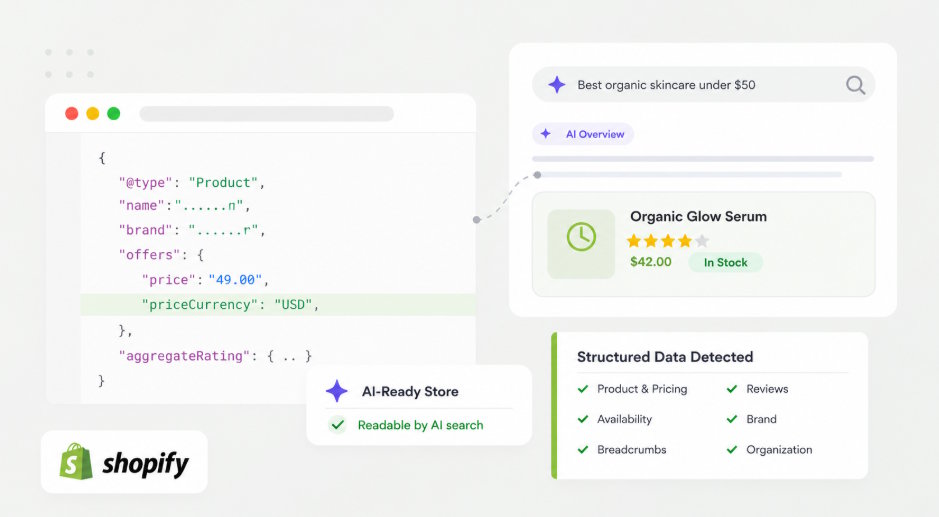
Search is not the same anymore. People are no longer just clicking through a list of blue links to find products. AI-powered search tools now compare products, answer questions, and even recommend stores directly in search results. That is why more e-commerce brands are paying attention to Shopify structured data.
By adding structured data to your Shopify store, you help search engines better understand important details like your products, pricing, reviews, and availability. This makes it easier for your store to appear in rich results, shopping recommendations, and other AI-driven search experiences that are becoming a bigger part of online shopping.
AI Search Needs Clear Information
Search engines used to focus mostly on matching keywords, but AI search is designed to understand the context and meaning behind the content.
AI systems try to interpret meaning, relationships, and context before generating answers. If your product pages only contain plain text without structured information, AI systems may struggle to identify important details like:
- Product name
- Price
- Availability
- Brand
- Reviews
- Product category
- Shipping information
Structured data solves that problem by organizing information in a format machines can easily interpret. Google explains that structured data provides explicit clues about page meaning.
Shopify also highlights that rich snippets, such as pricing, ratings, and availability, come directly from structured data markup. In simple terms, structured data helps AI understand your store without guessing.
Why Rich Results Matter for Shopify Stores
Search visibility is not only about rankings anymore. It is also about presentation. When structured data is implemented correctly, your Shopify listings can show enhanced search features such as:
- Product pricing
- Review stars
- Availability
- Breadcrumbs
- Store details
- Product images
These are commonly called rich results or rich snippets. Shopify explains that rich snippets help users compare products directly in search results. Google also confirms that structured data can make search listings more engaging and interactive.
That matters because shoppers often decide what to click before even visiting a website. A plain blue search result gives very little information. A rich result with pricing, ratings, and availability immediately builds trust and attracts attention.
Some case studies shared by Google showed measurable increases in click-through rates after implementing structured data. For Shopify stores competing in crowded ecommerce markets, that extra visibility can make a significant difference.
AI Search Relies on Structured Context
AI search systems are designed to answer questions directly. For example, users may search:
- “Best organic skincare products under $50”
- “Reliable Shopify furniture brands”
- “Affordable running shoes with good reviews”
AI systems gather information from multiple sources before generating a response. If your store lacks structured product data, your pages may not provide enough machine-readable context to become part of those recommendations.
Several SEO experts and ecommerce-focused platforms now emphasize that structured data is becoming increasingly important for AI visibility, not just traditional search rankings.
That does not mean schema markup alone guarantees AI visibility. Content quality, authority, and customer trust still matter. Beyond schema markup, working with a shopify seo agency can help align your store's technical SEO, content strategy, and structured data implementation with evolving AI search requirements. But structured data helps AI systems interpret your pages more accurately. Think of it as helping machines understand your products the same way humans do.
How Structured Data Gives Shopify Stores an AI Search Advantage
AI search systems work differently from traditional search engines. Instead of simply matching keywords, they try to understand products, brands, and customer intent before generating answers or recommendations.
This is where Shopify structured data creates a real advantage. When your store uses structured data correctly, AI systems can quickly identify important product details like pricing, availability, reviews, brand information, and product categories. That makes it easier for search engines and AI-powered platforms to understand your store content with greater accuracy.
As a result, Shopify stores with structured data are often better positioned for rich results, AI-generated summaries, product recommendations, and enhanced search visibility. Stores without proper schema markup may still rank, but AI systems have to work harder to interpret their content. In competitive ecommerce industries, that lack of clarity can reduce visibility opportunities over time.
Structured data does not replace good products or quality content, but it helps AI search systems recognize and trust your information more efficiently.
Shopify Themes Often Have Incomplete Schema
Many Shopify store owners assume their themes already handle everything automatically. That is not always true.
While some Shopify themes include basic product schema, many stores still miss important structured data elements like breadcrumbs, organization markup, FAQ schema, or updated product details. Discussions within the Shopify SEO community regularly point out that incomplete or conflicting schema is a common issue. This is where tools like a JSON Schema App become useful for e-commerce businesses.
Instead of manually writing complicated code, store owners can generate structured data more efficiently while reducing formatting mistakes and missing fields. For growing Shopify brands, this can save time while improving consistency across product pages.
Structured Data Helps Build Trust and Authority
Search engines want reliable information. Structured data helps verify important business details such as:
- Brand identity
- Product inventory
- Pricing accuracy
- Return policies
- Reviews
- Business information
Schema markup can also support Google’s understanding of website expertise, authority, and trustworthiness. That matters even more in AI-driven search environments where systems evaluate sources before generating recommendations. If multiple websites sell similar products, the one with cleaner and more understandable data may have an advantage.
Structured Data Helps Beyond Traditional Search Engines
One important thing many store owners miss is that structured data is not only for Google. AI assistants, voice search tools, shopping platforms, and other discovery systems increasingly rely on structured content to understand websites.
As search evolves, machine-readable data is becoming more valuable across the entire digital ecosystem. That is why many e-commerce SEO professionals now focus on “AI-ready” websites, not just “Google-ready” websites. Once visitors reach your store, pairing stronger visibility with a Shopify checkout upsell strategy can further improve revenue by increasing the value of each completed purchase. The goal is simple: make your store easier for both humans and machines to understand.
Conclusion
AI search is changing how e-commerce stores get discovered online. As search engines become better at understanding products and customer intent, structured data is becoming more important for Shopify stores.
By using Shopify structured data, ecommerce brands can help search engines understand their products more clearly, improve visibility in rich results, and increase their chances of appearing in AI-driven search experiences. It is not just about technical SEO anymore; it is about making your store easier for both shoppers and AI systems to understand.
FAQs
What is Shopify structured data?
Shopify structured data is code added to your store that helps search engines understand product information, reviews, pricing, availability, and other important details in a machine-readable format.
Does structured data improve Shopify SEO?
Structured data can improve how search engines interpret your content and may help your pages qualify for rich results, which can improve visibility and click-through rates.
What is JSON-LD schema markup?
JSON-LD is a structured data format recommended by Google for adding schema markup to websites. It helps organize information in a way that search engines can easily process.
Why is structured data important for AI search?
AI search systems rely on organized and understandable data to interpret products, brands, and webpages. Structured data helps AI systems process website information more accurately.
Do Shopify themes include structured data automatically?
Some Shopify themes include basic schema markup, but many stores still have incomplete or limited structured data coverage. Additional optimization is often needed.
Can a JSON-LD schema generator help Shopify stores?
Yes. A JSON-LD schema generator can simplify schema creation, reduce manual coding errors, and help Shopify stores implement structured data more efficiently across important pages.

