

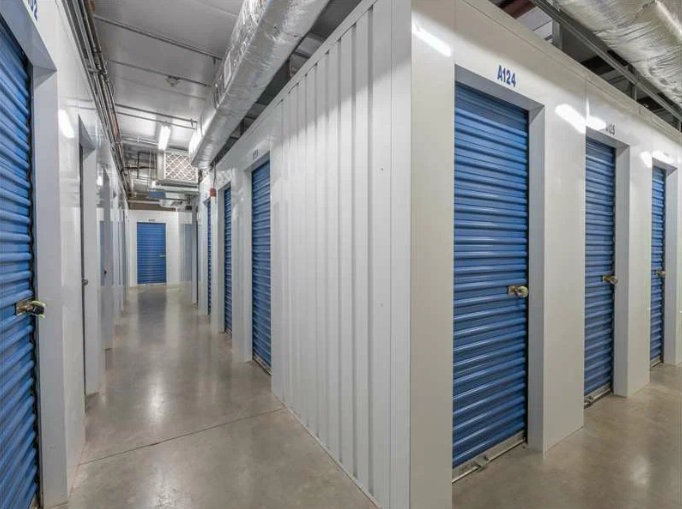
Here is something nobody warns you about when you move to Dubai. The apartment that looked huge on viewing day starts feeling small within a year, and you genuinely cannot work out where it all came from. Boxes behind the sofa. A bike parked in the hallway because the balcony is full. Winter coats you have not touched since the flight over, hogging half a wardrobe in a city that barely has a winter.
That is usually the moment someone starts typing self storage Dubai into Google. Not because they have turned into a hoarder. The place just ran out of room, and rent here is far too steep to fix that by upgrading to a bigger flat.
So this is a plain guide to the whole thing. What it costs, why the heat makes climate control a bigger deal than it sounds, how to avoid renting a unit twice the size you need, and the small print worth checking before money changes hands.
Why Does Space Disappear So Fast Here?
Because Dubai life runs in cycles, and almost every cycle leaves you with stuff and nowhere to put it.
You arrive on a one-bedroom budget. Then the family grows, or your partner moves over, or you take a six-month contract in Abu Dhabi but hold onto the Dubai lease anyway. Then the landlord books a renovation and your furniture needs somewhere to sit for two months. None of this is dramatic. It is just normal, and it keeps happening.
The usual suspects look like this:
- Expats flying home for the summer who would rather not keep paying full rent on a flat stuffed with things
- Families stuck between leases with a sofa, a fridge, and forty boxes and no van big enough
- Small businesses sitting on stock or old paperwork, nowhere near enough to justify a warehouse
- Anyone mid-renovation who needs the living room emptied yesterday
- Seasonal clutter, the gym equipment you swear you will use again, the camping gear, the box of cables
A storage unit just takes the overflow for a while. You get it back when the cycle turns again, which in this city it always does.
Is Climate Control Really Worth the Extra Money?
This is where Dubai stops behaving like everywhere else. A storage unit in Manchester sits at roughly room temperature all year. Here, a metal unit in a basic facility can push past 45 degrees by July, and the coastal humidity makes the inside of that box a genuinely hostile place. Leave the wrong things in there and you come back months later to a mess.
Climate controlled storage Dubai keeps it steady instead, usually around 18 to 24 degrees with humidity sitting near the 40 to 55 percent mark. That stable range is the whole point. It protects the things that warp, crack, melt, or quietly grow mould in the corner.
Worth paying for the cooling if you are storing:
- Wooden furniture, which splits and twists when the air keeps swinging hot and damp
- Anything electronic, because heat is brutal on batteries and screens
- Leather, handbags, shoes, all of which dry out or go mouldy
- Documents and photos that yellow, curl, and stick together
- Art, wine, instruments, anything that needs calm conditions to survive a Dubai summer
If your boxes are mostly tools, sealed plastic bins, and clothes you do not care much about, a standard unit is fine and you save the money. The calculation flips the second furniture and electronics go in. A lot of the better operators offering self storage in Dubai keep their facilities out in Al Quoz and Dubai Investment Park and list standard and climate-controlled units right next to each other, so you can match the unit to what you are actually storing rather than overpaying for cooling on a box of garden tools. Cool air for the delicate stuff, plain space for the rugged stuff. That is really all there is to it.
What Will It Actually Cost You?
Honestly, the pricing is the most confusing part, and not by accident. Some places quote weekly, some monthly, some yearly. A few hide the air-conditioning surcharge somewhere you will not see it until the first invoice lands.
The trick that cuts through all of it is to convert every quote into price per square foot per month. Same metric, every provider, instantly comparable.
In rough terms the market runs from about AED 150 for a small locker up to roughly AED 3,800 for a big climate-controlled unit. Air conditioning usually adds 20 to 30 percent. And location swings it more than people expect, with Al Quoz and Dubai Investment Park noticeably cheaper than the same square footage in Business Bay or Jumeirah. Here is the rough shape of it by size:
|
Unit size |
Roughly fits |
Standard / month |
Climate-controlled / month |
|
Locker (10 sq ft) |
Documents, seasonal bits, one bike |
AED 150 to 280 |
AED 200 to 350 |
|
Small (25 to 50 sq ft) |
A studio's worth of things |
AED 280 to 450 |
AED 400 to 600 |
|
Medium (100 sq ft) |
A furnished one-bedroom flat |
AED 500 to 750 |
AED 650 to 950 |
|
Large (160 to 300 sq ft) |
A two or three-bed home, or business stock |
AED 1,500 to 3,000 |
AED 1,800 to 3,800 |
Two numbers never make it into the advertised price, so add them yourself. First, the 5 percent VAT, which applies to storage and gets left off constantly. Second, the discount for committing. Sign for six or twelve months and most places knock 5 to 15 percent off the monthly rate. While you are at it, ask about the one-off bits too, the setup fee, the access card, the padlock you might be told to buy.
How Big a Unit Do You Really Need?
Smaller than you think. People panic and rent double what they need, picturing every single box at once.
The medium 100 square foot unit is the one Dubai rents most, and that makes sense. It holds a furnished one-bedroom flat, which covers the single most common situation in the city: an expat or a young family caught between leases, or living through a renovation.
Smaller pile? A well-packed 50 square foot unit takes a studio. Bed, small sofa, telly, the kitchen bits, a wardrobe, and fifteen to twenty boxes on top. A 10 square foot locker is plenty for paperwork, off-season clothes, and a bicycle. Go the other way and the 200 to 300 square foot bays are really business territory, stock and archives, or a whole family home's furniture. Some even fit a car if you drain it down to a quarter tank and unhook the battery first.
One last tip before you commit. List the big stuff, guess your box count, then go see a unit in person if you possibly can. An empty unit looks twice the size it really is. Five minutes standing in one saves you from paying for space you will never fill.
What Should You Check Before You Hand Over a Deposit?
The contract itself is simple. A few details just separate the easy experience from the irritating one.
- Security. CCTV running around the clock, alarms on the units, a gated site, someone actually on duty
- Access hours, which matter a lot if you plan to pop in often. Some sites are 24/7, plenty are not
- Climate control confirmed in writing, not just nodded at during the tour
- The real monthly number with VAT and any card or lock fee already included
- How long you are signing for, and what discount that buys you
- What you are not allowed to store, which usually rules out food, plants, gas cylinders, and anything flammable
Sort these out before you sign and there are no nasty surprises on the first bill, and no turning up at 9pm to grab one thing only to find the gate shut.
How Do You Pack So Nothing Turns Up Ruined?
Packing for storage is not the same as packing for a move. Your things sit completely still, in one climate, for weeks. Sometimes months. A few habits go a long way:
- Use proper boxes that are all roughly the same size, so they stack square instead of collapsing
- Heavy stuff at the bottom, fragile and light near the top, obvious but everyone forgets
- Leave a gap down the middle so you can reach the back without dragging everything out
- Cover wooden furniture with something that breathes, not plastic. Plastic traps damp and that is the whole problem
- Get mattresses and sofas up off the floor on a pallet or a couple of boards
- Label boxes on more than one face, because you will only ever see one side of them
For the delicate things the climate-controlled unit does most of the work. Smart packing handles the rest. Toss a few silica gel packs into boxes of documents or electronics too. They cost almost nothing and soak up the moisture that sneaks in every time the door opens.
Pulling It Together
Self storage is one of those services you ignore completely until the week you really need it, and then it quietly fixes a problem that rent never could. The decisions are not hard once you strip the noise out. Rent for what you actually own, not what you are afraid you own. Pay for cooling only when your stuff genuinely needs it. Read the full price with VAT and fees in it, not the headline rate. And pick a place whose hours and security suit how you plan to use it. Get that right and an overstuffed apartment turns calm again without you overspending to make it happen. Storing a studio's worth of furniture for the summer, or clearing space before the family grows, the right self storage unit in Dubai is cheaper and far less hassle than most people expect going in.

