

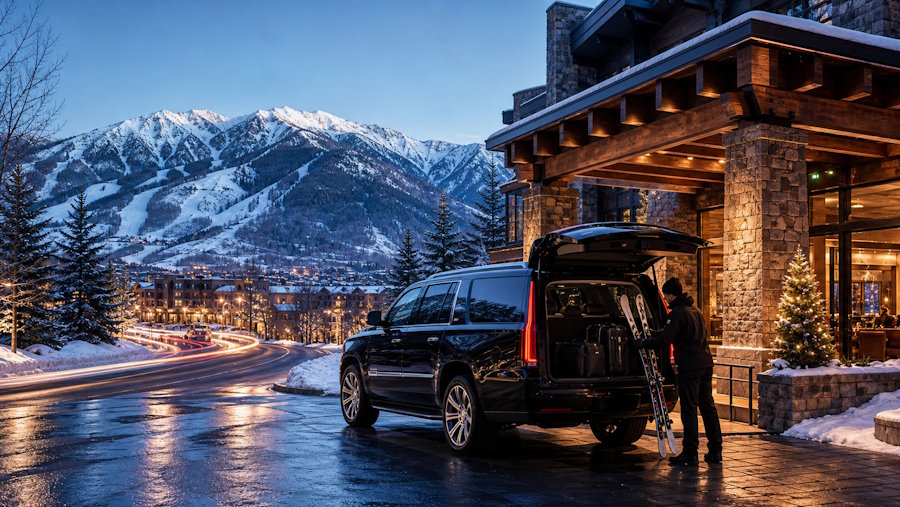
When people think about Aspen, they usually picture snow-covered peaks, upscale dining, and a steady rhythm of seasonal events. But there’s another layer to the experience that often goes unnoticed until you’re there—how you actually move through the town.
Aspen isn’t built like a typical city. Its roads, elevation, and seasonal traffic patterns create a unique environment where transportation decisions can significantly influence how smooth—or stressful—your trip becomes. That’s why more travelers are paying closer attention to options like a car service Aspen solution, not just as a luxury, but as a practical part of planning.
A Town Defined by Movement and Timing
Aspen operates on timing. Ski lifts open and close on schedule, restaurants fill quickly, and events often run on tight timelines. Missing a reservation or arriving late can mean reshuffling an entire day.
At the same time, the town’s infrastructure doesn’t always make quick adjustments easy. Limited parking, narrow roads, and peak-season congestion can add unexpected delays.
This combination of high demand and limited flexibility creates a situation where transportation becomes more than just a background detail—it becomes a key factor in how well everything else works.
The Shift Away from Reactive Travel
For years, many travelers approached transportation reactively. They would arrive, then figure out how to get around. In some destinations, that approach still works. In Aspen, it often leads to unnecessary complications.
A growing number of visitors are shifting toward a more proactive approach—planning transportation in advance to avoid last-minute decisions. This change reflects a broader trend in travel behavior: reducing uncertainty wherever possible.
Choosing a structured option like a car service Aspen setup allows travelers to align their transportation with their itinerary from the beginning, rather than adjusting plans along the way.
The Role of Environment in Travel Decisions
Aspen’s environment plays a major role in shaping transportation needs. Weather conditions can shift quickly, especially during winter months. Snow, ice, and reduced visibility can turn even short drives into more complex tasks.
For those unfamiliar with mountain driving, these conditions add an extra layer of stress. Navigating winding roads while managing weather-related challenges requires focus and experience.
This is one reason many travelers choose to step away from driving altogether. Removing that responsibility allows them to experience the environment without having to manage it.
Simplifying Transitions Between Activities
A typical day in Aspen might include multiple stops—morning skiing, an afternoon break, an evening dinner reservation. Each transition requires coordination.
Without a plan, these transitions can become fragmented:
- Waiting for availability
- Searching for parking
- Adjusting timing based on delays
With pre-arranged transportation, movement between locations becomes more fluid. Instead of treating each trip as a separate task, the entire day flows more naturally.
This continuity is often what transforms a good trip into a smooth one.
Group Dynamics and Coordination
Traveling alone is one thing. Traveling with a group introduces a different set of challenges. Coordinating multiple people, schedules, and preferences can quickly become complicated.
Transportation plays a central role in keeping everything aligned. When everyone relies on separate rides or vehicles, timing gaps can appear. People arrive at different times, plans shift, and communication becomes more complex.
A centralized solution simplifies this dynamic. Keeping a group together reduces confusion and ensures that plans stay on track.
Technology Meets Planning
Digital tools have made it easier to organize travel logistics. Booking platforms, scheduling apps, and real-time updates allow travelers to plan ahead with greater accuracy.
Accessing information through sources associated with this company provides an opportunity to review services, understand options, and coordinate transportation before arrival.
This level of preparation reduces the need for improvisation once the trip begins. Instead of reacting to circumstances, travelers can move through a pre-planned structure.
Redefining Convenience
Convenience used to mean availability—being able to find a ride when needed. Today, convenience is increasingly defined by reliability and predictability.
In a destination like Aspen, where demand can exceed supply during peak times, availability alone isn’t always enough. Knowing that transportation is already arranged removes a layer of uncertainty.
This shift in definition reflects broader changes in how people approach travel. Efficiency and peace of mind are becoming just as important as cost.
The Experience Between Destinations
It’s easy to focus on destinations—the restaurant, the ski slope, the event venue. But the moments in between also shape the overall experience.
A stressful ride, a delayed pickup, or a confusing route can disrupt the flow of the day. On the other hand, a smooth transition allows each part of the trip to connect naturally.
Transportation, in this sense, becomes part of the experience rather than just a means to an end.
Choosing a car service Aspen approach helps ensure that these in-between moments support the trip instead of interrupting it.
Planning for Peak Seasons
Aspen’s busiest periods—particularly during winter—bring increased demand across all services. Transportation availability can become limited, and wait times can extend.
Planning ahead during these periods is especially important. Securing transportation before arrival helps avoid last-minute challenges and ensures that schedules remain intact.
Even during quieter seasons, having a plan in place provides consistency. It allows travelers to focus on activities rather than logistics.
A More Intentional Approach to Travel
Modern travel is moving toward intentionality. Instead of leaving details to chance, more people are designing their trips with structure and purpose.
Transportation is a key part of that design. It connects every activity and influences how smoothly the day unfolds.
Exploring options through resources linked to this company allows travelers to integrate transportation into their plans rather than treating it as an afterthought.
This integration creates a more cohesive experience.
When Movement Becomes Effortless
The ideal travel experience is one where movement feels effortless. You arrive where you need to be, when you need to be there, without unnecessary complications.
In Aspen, achieving that level of ease often requires planning. The combination of environment, demand, and infrastructure makes transportation a central part of the equation.
A well-organized approach—whether through scheduled rides or dedicated services—removes friction from the journey.
And when that friction disappears, the focus shifts back to what brought you there in the first place.

