

The rapid advancement of generative artificial intelligence is transforming how businesses operate, innovate, and compete. Organizations across industries are adopting AI-powered solutions to automate repetitive tasks, improve customer engagement, generate content, streamline workflows, and enhance decision-making. As demand for AI applications continues to grow, many companies are turning to external technology partners to help design and implement customized solutions. Businesses planning to integrate AI capabilities into enterprise CMS platforms may also look to hire kentico developer professionals with experience in customization, integrations, and scalable web development. However, choosing the right development vendor can be a challenging process, especially in a market filled with providers offering similar services and promises.
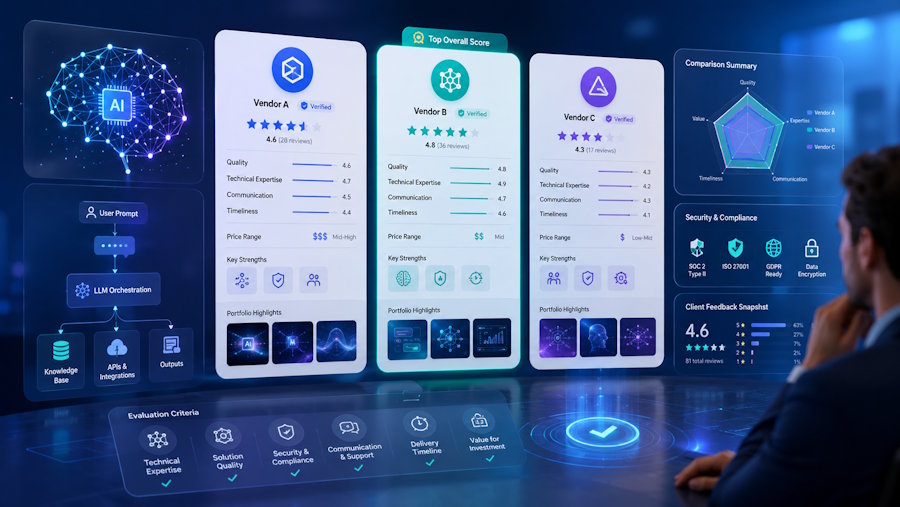
When evaluating custom generative AI development services, many decision-makers use Clutch as a trusted resource for comparing technology vendors. Clutch is a well-known B2B review platform that provides verified client feedback, detailed company profiles, project portfolios, and service rankings. By reviewing independent customer experiences and documented project outcomes, businesses can gain a clearer understanding of a vendor’s capabilities before committing to a partnership.
Why Businesses Use Clutch to Evaluate AI Vendors
Selecting a technology partner involves more than comparing prices or reviewing marketing materials. Organizations need confidence that a provider can successfully deliver complex AI projects while meeting business objectives, timelines, and quality standards.
Clutch helps businesses assess vendors through:
- Verified customer reviews
- Service specialization information
- Industry expertise profiles
- Project case studies
- Team size and technical capabilities
- Client satisfaction ratings
- Market reputation indicators
This information provides valuable transparency and helps reduce uncertainty during the vendor selection process.
The Growing Demand for Generative AI Solutions
Generative AI has evolved far beyond simple chatbots and content generators. Modern organizations are using AI to solve a wide range of business challenges.
Examples include:
- Automated customer support systems
- Intelligent knowledge management platforms
- AI-powered document processing
- Personalized recommendation engines
- Content generation tools
- Software development assistants
- Data analysis and reporting solutions
Because every organization has unique goals and operational requirements, many businesses require customized solutions rather than off-the-shelf products.
Key Factors to Consider When Comparing Vendors
Not all AI development providers offer the same level of expertise, experience, or service quality. Businesses should evaluate vendors based on several important criteria.
Technical Expertise
Generative AI projects often involve multiple technologies and disciplines. Leading vendors typically possess expertise in:
- Large language models
- Natural language processing
- Machine learning engineering
- Cloud infrastructure
- Data engineering
- API development
- Software architecture
Strong technical capabilities are essential for building scalable and reliable AI solutions.
Industry Experience
Industry-specific knowledge can significantly improve project outcomes. Providers that understand the unique challenges of a particular sector are often better equipped to deliver effective solutions.
For example:
- Healthcare organizations require compliance-focused AI systems.
- Financial institutions prioritize security and risk management.
- Retail businesses focus on personalization and customer insights.
- Manufacturing companies often seek automation and predictive analytics.
Industry expertise helps reduce implementation risks and accelerate deployment.
Portfolio and Case Studies
Clutch profiles often include examples of completed projects. Reviewing these case studies can provide insight into a vendor's problem-solving approach, technical capabilities, and ability to deliver measurable business value.
Organizations should look for projects that resemble their own requirements in terms of complexity, scale, and objectives.
Understanding Client Reviews
One of Clutch's most valuable features is its collection of verified client feedback. Reviews often reveal information that may not be apparent from company websites or sales presentations.
Key areas to evaluate include:
Communication
Successful AI projects depend heavily on effective communication. Clients frequently praise vendors that:
- Provide regular updates
- Set realistic expectations
- Explain technical concepts clearly
- Respond promptly to questions
- Address challenges proactively
Project Management
Strong project management helps ensure that deliverables remain on schedule and within budget.
Reviews often highlight whether vendors:
- Meet deadlines
- Manage resources effectively
- Maintain transparency
- Adapt to changing requirements
Technical Performance
Client feedback can provide valuable insight into the quality and reliability of the delivered solution.
Post-Launch Support
Generative AI systems require ongoing monitoring, optimization, and maintenance. Positive reviews regarding support services often indicate a reliable long-term partner.
Questions to Ask Before Hiring an AI Vendor
Before making a final decision, businesses should conduct detailed discussions with shortlisted providers.
Important questions include:
- What types of generative AI projects have you completed?
- Which AI models and technologies do you specialize in?
- How do you approach data security and privacy?
- What is your development methodology?
- How do you handle scalability requirements?
- What support services are available after deployment?
- How do you measure project success?
The answers can help determine whether a vendor is a suitable fit for both technical and business requirements.
Common Challenges in Generative AI Projects
Even experienced vendors face challenges during implementation. Understanding these risks can help businesses prepare more effectively.
Data Quality Issues
Generative AI systems rely heavily on accurate and well-structured data. Poor-quality information can negatively impact performance and reliability.
Common issues include:
- Incomplete datasets
- Duplicate records
- Inconsistent formatting
- Outdated information
Integration Complexity
AI applications often need to connect with existing business systems such as:
- CRM platforms
- ERP systems
- Customer support tools
- Internal databases
- Analytics software
Smooth integration is essential for maximizing business value.
Security and Compliance
Organizations must ensure that sensitive data remains protected throughout development and deployment.
Security considerations include:
- Data encryption
- Access controls
- Compliance requirements
- Audit capabilities
- Governance policies
User Adoption
Even the most advanced solution may fail if employees do not understand how to use it effectively. Training and change management play important roles in successful implementation.
Emerging Trends in Generative AI Development
The generative AI market continues to evolve rapidly. Several trends are shaping vendor capabilities and customer expectations.
AI Agents
Businesses are increasingly interested in intelligent systems capable of performing complex tasks with limited human intervention.
Multimodal Applications
Modern AI solutions are expanding beyond text generation to include images, audio, video, and structured data processing.
Enterprise Knowledge Platforms
Organizations are integrating AI with internal knowledge bases to improve productivity and information accessibility.
Responsible AI
Companies are placing greater emphasis on transparency, accountability, fairness, and ethical AI practices.
Hybrid Architectures
Many successful solutions combine generative AI capabilities with traditional software systems to improve reliability and performance.
Warning Signs to Watch For
Businesses should remain cautious when evaluating potential AI development partners.
Potential red flags include:
- Unrealistic promises regarding AI capabilities
- Lack of relevant project experience
- Poor communication during initial discussions
- Limited transparency regarding methodologies
- Weak security practices
- No clear post-launch support strategy
Identifying these warning signs early can help avoid costly mistakes.
Building a Successful Long-Term Partnership
Selecting a vendor should be viewed as the beginning of a collaborative relationship rather than a one-time transaction.
Organizations can improve outcomes by:
- Defining clear objectives
- Establishing measurable success metrics
- Maintaining regular communication
- Encouraging knowledge transfer
- Planning for continuous improvement
Strong partnerships often produce better long-term results than purely transactional engagements.
Conclusion
Generative AI is creating significant opportunities for organizations to improve efficiency, drive innovation, and enhance customer experiences. However, achieving meaningful results requires selecting the right development partner. Clutch provides a valuable platform for evaluating vendors through verified reviews, project portfolios, and detailed company information.
When comparing custom generative AI development services, businesses should focus on technical expertise, industry experience, communication quality, scalability, security practices, and ongoing support. By taking a structured approach to vendor evaluation and prioritizing long-term business objectives, organizations can increase their chances of building successful AI solutions that deliver measurable and sustainable value.

