

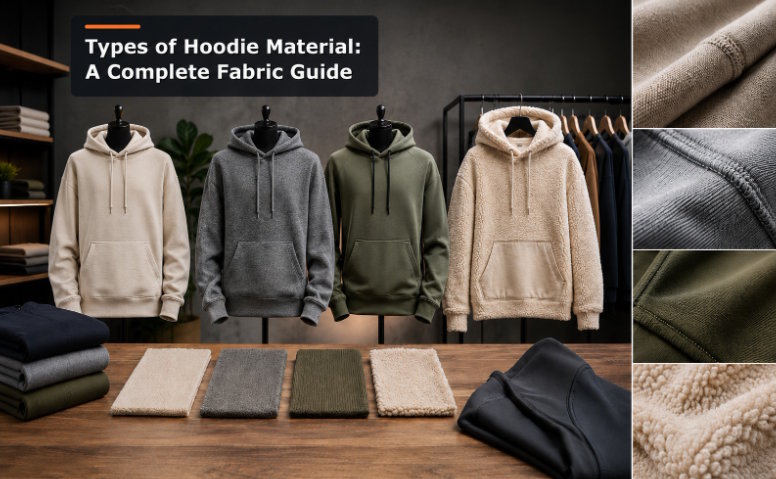
Hoodies are among the most versatile garments in modern clothing. They are used for fashion, sportswear, branding, corporate merchandise, streetwear, fitness apparel, and promotional clothing. However, the fabric is what determines whether a hoodie feels comfortable, performs well, lasts long, and appeals to buyers.
Hoodie materials affect comfort, warmth, breathability, durability, texture, appearance, print quality, and overall product value. For brands and buyers, understanding hoodie fabrics is essential when creating or choosing personalized clothing.
This guide explores the most common hoodie materials, their properties, applications, and how to choose the best fabric for your clothing products.
Why Hoodie Materials Matter
The material used in a hoodie has a direct impact on its functionality, comfort, and market appeal. Choosing the right fabric helps ensure the final product meets customer expectations and performs well for its intended use.
Here is how fabric influences the overall quality of a hoodie:
- Improves comfort and softness
- Adds warmth and insulation
- Enhances breathability and moisture control
- Supports printing, embroidery, and customization
- Affects durability and shape retention
- Influences the final cost, especially depending on GSM and fabric type
Types of Hoodie Materials
Below are the most common hoodie materials used in fashion, sportswear, streetwear, corporate apparel, and promotional clothing.
Cotton
Cotton is a natural fabric widely used for hoodies because of its softness, comfort, breathability, and casual feel. It is also a popular choice for brands looking for an affordable and print-friendly hoodie material.
Properties
- Soft and comfortable
- Highly breathable
- Suitable for all-day wear
- Natural and eco-friendly
- Ideal for printing
Applications
- Fashion clothing
- Casual wear
- Promotional garments
- Everyday hoodies
Cotton-Polyester Blend
A cotton-polyester blend combines the comfort of cotton with the durability of polyester. This makes it one of the most practical materials for hoodies, especially when brands need a balance of softness, strength, and cost efficiency.
Common cotton-polyester blend ratios include:
- 80% cotton / 20% polyester
- 60% cotton / 40% polyester
- 50% cotton / 50% polyester
Properties
- Highly durable
- Resistant to shrinkage
- Resistant to wrinkles
- Good shape retention
- Cost-effective
- Comfortable for daily use
Applications
- Sports uniform hoodies
- Athletic team apparel
- Retail garments
- Corporate clothing
- Promotional apparel
Fleece
Fleece is a soft, warm, and insulating fabric commonly used for winter hoodies and cold-weather apparel. It is available in different forms, including polyester fleece, cotton fleece, and blended fleece.
Properties
- Lightweight
- Excellent heat retention
- Soft and comfortable
- Brushed texture
- Warm and cozy
- Appealing casual look
Applications
- Winter wear
- Outdoor clothing
- Athletic garments
- Cold-weather hoodies
French Terry
French terry is a knitted fabric with a smooth outer surface and a looped interior. It is lighter than fleece while still offering comfort, warmth, and breathability. This makes it a strong choice for transitional seasons and lifestyle apparel.
Properties
- Breathable
- Comfortable
- Lightweight compared to fleece
- Moisture-absorbing
- Durable and long-lasting
- Clean and stylish appearance
Applications
- Sports clothing
- Fashion apparel
- Lightweight lifestyle hoodies
- Spring and fall garments
Polyester
Polyester is a synthetic fabric commonly used in performance apparel. It is especially popular for athletic, fitness, and sportswear hoodies because of its durability, moisture control, and resistance to stretching and shrinking.
Properties
- Highly durable
- Quick-drying
- Moisture-wicking
- Resistant to stretching
- Resistant to shrinking
- Suitable for performance wear
Applications
- Performance garments
- Sports clothing
- Fitness apparel
- Athletic uniforms
- Activewear hoodies
Tri-Blend Fabric
Tri-blend fabric combines three materials, usually cotton, polyester, and rayon. This blend creates a soft, lightweight, and stylish fabric often used for premium hoodie collections and contemporary streetwear.
Properties
- Lightweight
- Exceptionally soft
- Comfortable to wear
- Excellent drape
- Stylish appearance
- Good fit and flexibility
Applications
- Premium clothing lines
- Lifestyle clothing
- Fashion brands
- Contemporary streetwear
Organic Cotton
Organic cotton is a sustainable hoodie material produced with fewer chemicals than conventional cotton. It is a suitable option for brands focused on eco-conscious fashion, premium apparel, and environmentally responsible clothing.
Properties
- Environmentally responsible production
- Reduced chemical usage
- Soft texture
- Breathable
- Eco-conscious appeal
Applications
- Premium hoodie collections
- Sustainable fashion brands
- Eco-friendly clothing lines
Recycled Polyester
Recycled polyester is made from recycled plastic bottles or discarded synthetic materials. It offers many of the performance benefits of standard polyester while helping reduce environmental impact.
Properties
- Durable
- Sustainable alternative to virgin polyester
- Supports performance apparel
- Helps reduce plastic waste
- Suitable for active and casual wear
Applications
- Eco-friendly garments
- Athletic clothing
- Casual apparel
- Office wear
- Homewear
- Outdoor performance hoodies
How to Choose the Best Hoodie Material
The best hoodie material depends on the purpose of the garment, the target customer, the budget, and the level of customization required. Here are some simple guidelines:
- Choose cotton for softness, breathability, print quality, and everyday use.
- Choose a cotton-polyester blend for durability, comfort, cost efficiency, and versatility.
- Choose fleece for warm, cozy, cold-weather hoodies.
- Choose polyester for performance, moisture control, durability, and athletic wear.
- Choose French terry for lightweight comfort, texture, and transitional seasons.
- Choose tri-blend fabric for premium softness, drape, and modern streetwear appeal.
- Choose organic cotton or recycled polyester for sustainable and eco-friendly hoodie collections.
How to Source Hoodie Materials
There are several ways to find high-quality hoodie materials for your apparel products:
- Work with a reliable custom hoodie manufacturer to create fully customized hoodies or select the most suitable fabrics for your project.
- Approach fabric suppliers or textile brands that sell raw and finished materials.
- Research local and international factories that produce hoodie fabrics from scratch.
Conclusion
Hoodies are essential garments in both fashion and athletic apparel, but the quality of a hoodie depends heavily on the material used. The right fabric should be comfortable, soft, durable, warm, breathable, well-structured, and suitable for customization.
Cotton, cotton-polyester blends, fleece, French terry, polyester, tri-blend fabric, organic cotton, and recycled polyester all offer different benefits depending on the intended use. By understanding their properties and applications, brands can choose better materials, improve product quality, attract customers, and create hoodies that perform well in the market.

