

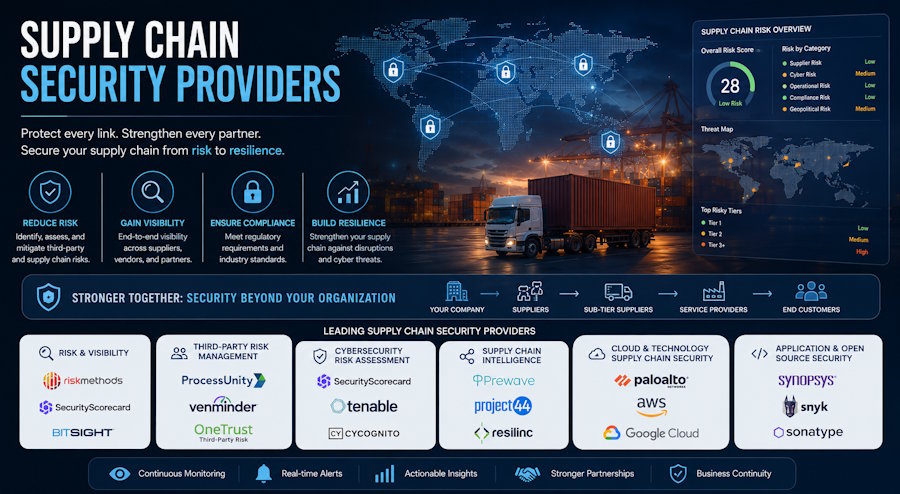
Supply chain security providers are essential for protecting your business from various risks. They help identify vulnerabilities throughout your supply chain, tackling threats like cyberattacks, theft, and natural disasters. Their services include risk assessments, real-time monitoring, and staff training to guarantee your operations run smoothly. When choosing a partner, consider their experience, technology capabilities, and client feedback. Want to know more about how to safeguard your supply chain? There's much more to explore.
Identifying Risks: Why Supply Chain Security Is a Must
When you consider the complexity of modern supply chains, it's clear that identifying risks is vital for maintaining security. Each link in the chain presents potential vulnerabilities, from suppliers to logistics.
You need to assess these risks regularly to protect your operations. Implementing robust security measures helps you minimize disruptions and safeguard sensitive data.
Understanding the nuances of your supply chain allows you to pinpoint weaknesses and prioritize improvements. By recognizing these risks early, you can adapt your strategies and guarantee resilience.
Ultimately, proactive risk identification not only secures your supply chain but also enhances your overall business performance.
What Threats Do Supply Chain Security Solutions Tackle?
A thorough understanding of the risks in your supply chain sets the stage for addressing specific threats that security solutions target.
These threats include cyberattacks, where hackers exploit vulnerabilities in your systems, and physical theft, which can occur at any point from production to delivery.
Counterfeit products also pose a significant risk, potentially damaging your brand's reputation.
Moreover, disruptions from natural disasters or geopolitical events can jeopardize your operations.
Top Services Supply Chain Security Providers Offer
Supply chain security providers offer a variety of essential services designed to safeguard your operations. These include risk assessments to identify vulnerabilities, surveillance systems for real-time monitoring, and robust incident response planning to tackle potential breaches.
Furthermore, they provide training programs for your staff to recognize and respond to security threats effectively. Supply chain mapping helps you understand your network, while compliance audits guarantee you meet industry regulations.
Many providers also offer technology solutions, like encryption and access controls, to protect sensitive data. By leveraging these services, you can enhance your security posture and secure smoother, safer operations.
Choosing Your Supply Chain Security Partner: Key Considerations
Selecting the right supply chain security partner can greatly impact your organization's resilience against threats.
First, assess their experience and expertise in your industry. Look for a partner with proven success in mitigating risks specific to your supply chain.
Next, evaluate their technology capabilities; they should leverage cutting-edge solutions to enhance security.
Communication is key, so make certain they offer clear and timely updates.
Consider their flexibility in adapting to your needs and their commitment to proactive risk management.
Ultimately, check client testimonials and case studies to gauge their reliability.
Choosing wisely today can safeguard your supply chain tomorrow.
The Future of Supply Chain Security: Trends to Watch
As organizations face increasing threats in today's interconnected world, understanding the future of supply chain security becomes essential.
You should keep an eye on trends like advanced analytics, artificial intelligence, and blockchain technology. These innovations can enhance visibility, improve risk assessment, and streamline processes.
Furthermore, as cyber threats grow, companies must prioritize cybersecurity measures and collaborate closely with partners.
Sustainability is also gaining traction, pushing organizations to adopt ethical sourcing and eco-friendly practices.
Frequently Asked Questions
How Do I Assess My Current Supply Chain Security Level?
To assess your current supply chain security level, review your policies, identify vulnerabilities, evaluate risk management strategies, and conduct regular audits.
Engage your team for insights and guarantee compliance with industry standards.
What Certifications Should Supply Chain Security Providers Have?
You should look for certifications like ISO 28000, CTPAT, and PCI DSS.
These guarantee providers meet industry standards for security, risk management, and compliance, giving you confidence in their ability to protect your supply chain.
How Much Should I Budget for Supply Chain Security Services?
You should budget between 5% to 15% of your overall supply chain costs for security services.
Factors like company size, complexity, and specific security needs will influence the final amount you decide on.
Can Small Businesses Afford Supply Chain Security Solutions?
Yes, small businesses can afford supply chain security solutions.
Many providers offer scalable options tailored to your budget.
Investing in security now can prevent costly disruptions and enhance your overall business resilience down the line.
What Is the Typical Implementation Timeline for These Services?
Typically, you can expect a timeline of four to eight weeks for implementation.
This includes evaluating your needs, customizing solutions, and training staff.
Factors like complexity and size may influence the exact duration.
Conclusion
In today’s interconnected world, securing your supply chain isn’t just an option; it’s essential. By understanding the risks and choosing the right solutions, you can protect your business from potential threats. Remember to evaluate your providers carefully, keeping an eye on emerging trends to stay ahead. With the right partner, you’ll enhance not just your security, but also your overall efficiency and resilience. Don't wait—take proactive steps to safeguard your supply chain today!

