


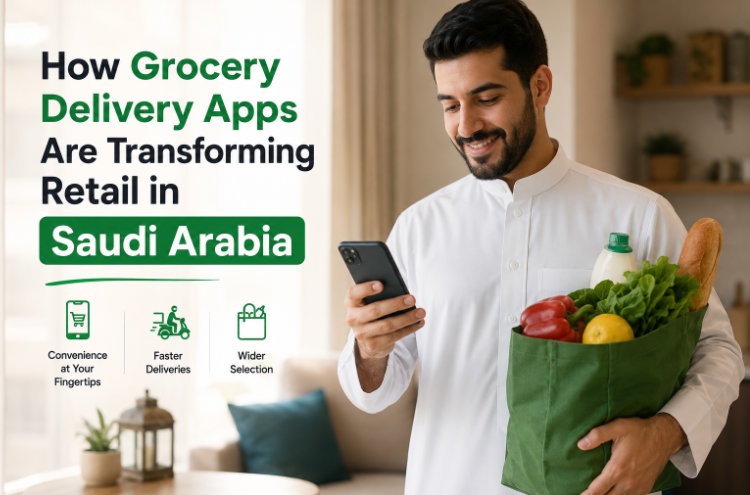
Over the past few years, the demand for online grocery delivery in the Kingdom of Saudi Arabia has grown at a remarkable pace. It feels like it expanded fast, driven by rapid urbanisation, a young and tech-savvy population and the Kingdom's Vision 2030 push towards digital transformation, and grocery delivery has changed from a simple convenience into a daily routine for households across Riyadh, Jeddah, Dammam, and everywhere in between.
This rise in demand has also created a real need for an experienced grocery app development company that can deliver solid, scalable platforms suited to the local context. By leveraging a robust Grocery eCommerce Development Solution, businesses can create seamless digital shopping experiences that meet the evolving expectations of modern consumers. In practice, a grocery app development company focuses on building mobile applications where shoppers can browse, choose, and pay for groceries online while enjoying convenient doorstep delivery—a service that has become even more valuable in Saudi Arabia, where the intense summer heat often makes in-store shopping less appealing.
In this article, we kind of take a closer look on how grocery delivery apps are shaping the Saudi retail landscape, what business models are available for entrepreneurs, and what the future is going to hold for this fast growing sector.
Why Grocery Delivery Apps Are Thriving in Saudi Arabia
Saudi Arabia's grocery e-commerce space has benefited from multiple local factors. High smartphone penetration, frequent use of digital payments like Mazda and Apple Pay, and government initiatives that back e-commerce infrastructure have all created a favourable environment for online grocery platforms. It feels like everything aligns, honestly but still, it matters.
Some of the main benefits that push adoption include :
1.Ease of use for customers — Saudi consumers can browse and order groceries with just a few taps, saving valuable time, especially for working professionals and families in hectic cities like Riyadh and Jeddah.
2.Consistent sales generation - The convenience factor translates directly into higher order frequency , and better customer retention for businesses, honestly.
3.Real-time inventory visibility - Customers can see live stock levels and product availability, so the annoyance of unavailable items at checkout gets reduced.
4.A modern shopping experience - With help from advanced tech, businesses can stand out from traditional hypermarkets and grocery stores, and speak more clearly to a younger, digitally native crowd.
5. Wider customer reach - Through apps, businesses can serve customers across entire cities or regions, well beyond the natural footprint of a single physical store. This is a major advantage in a country as geographically large as Saudi Arabia.
6.Data-driven decision-making - Analytics tools assist businesses in understanding customer behavior, and preferences, which leads to more effective marketing and steadier stock planning.
7.Optimized delivery routes - Advanced algorithms assist delivery fleets to route more smoothly through busy city areas, which leads to quicker turnaround times even when demand spikes, like during Ramadan.
8.Long term cost efficiency - Even if the first spend on app development feels heavy, companies often end up with strong returns because day to day operational costs get lower over time.
Why choosing the right grocery app development partner matters
Letting a specialized agency handle the app development means business owners can keep their attention on core work, while the technical build is managed by professionals. This usually results in fewer mistakes and quicker time to market, without all that extra back and forth.
Also, it helps to remember that most modern grocery delivery platforms operate as multi vendor marketplaces. This approach noticeably lowers operational intricacy, and it gives a cleaner buffer for error compared with running a conventional single outlet supermarket.
Depending on which target customers are in view and how the market is positioned, grocery delivery apps in Saudi Arabia can be shaped around multiple business models. Getting clear on these models is essential for any entrepreneur or even an established retailer who wants to enter or expand within this space, really.
1. Inventory Model
This style tends to fit best when the business focuses on one product category, like dairy, fresh produce, or bakery items. The company keeps strong control over the supply chain by buying directly from suppliers and also running its own warehouse.
A well-known example around here is companies working in a way similar to Danube or Tamimi Markets, they handle large-scale procurement and storage first, then move everything to end customers. In general this structure tends to bring a better profit margin but yes it does need a significant start up spend, warehousing logistics and administration included. For firms that want long term expansion dreams in the Saudi e grocery space, that approach can feel really rewarding.
2. The Hyper Local Model
Hyper local delivery has become one of the most discussed ideas in Saudi e commerce, and it changes grocery buying from planned batch deliveries into something immediate and on demand. With fast urban growth in cities like Riyadh and Jeddah, hyper local platforms, where orders are picked then delivered within an hour, are getting better at matching the expectations of time sensitive Saudi shoppers.
This model works especially well for businesses trying to serve dense residential zones and walled compounds, where speed and ease are usually the key reason people decide to buy, rather than anything more fancy.
3. Multi-Vendor Marketplace Approach
In this approach, customer orders are routed automatically to the closest participating outlet using the customer location data, not from one single central warehouse. Then, via an internal logistics web, the items are moved over to the customer doorstep.
This has worked really well in Saudi Arabia. Platforms with a structure like HungerStation and Nana, link shoppers with a broad roster of local grocers and hypermarkets. Businesses that choose this often keep separate outlet branding for each partner store, which helps maximise conversion, while giving customers more selection.
4. Online Selling Model
The online selling model has become one of the more preferred approaches for generating steady revenue in the on-demand grocery space. Revenue streams under this model generally include merchandising, seller commissions, subscription services for routinely purchased items, promotional placements, service charges, and membership programmes too.
This model is especially beneficial for businesses looking to build recurring income by selling their own private-label products alongside items sourced from well-known food suppliers and e-commerce partners. Working with an experienced ecommerce development partner also enables retailers to create scalable digital shopping experiences, streamline operations, and enhance customer engagement. This is an approach that Saudi retailers are increasingly adopting to strengthen customer loyalty and drive long-term growth.
Choosing the Right Business Model: Key Considerations
Business owners in Saudi Arabia often end up weighing a few different elements before they settle on the right structure for their grocery app. Some key points are:
- Estimating your business’s value , and figuring out where you position yourself in the competitive Saudi grocery market
- Validating product-market fit, ideally with help from an experienced mobile app development partner who knows the local market really well
- Trying it out with a focused customer set before doing a full-scale launch, and then shaping the support strategy around what you learn
- Speaking with investors or industry leaders to get deeper insight into the local grocery and retail segment, and not just opinions
- Giving early customers special discounts and loyalty offers to build early momentum, and keep them engaged
- Running a sharp go-to-market push that points at specific neighbourhoods, compounds, and catchment zones first before expanding to the whole city
- Planning carefully here really decides the long-term outcomes of a grocery delivery venture, especially in a competitive and fast-changing place like Saudi Arabia
Future Trends Shaping Saudi Arabia's Grocery App Industry
Looking ahead, a number of trends are set to influence the next phase of expansion for grocery delivery apps across the Kingdom:
Subscription based grocery services are getting traction, especially for the everyday staples like eggs, dairy, and fresh vegetables. It's just a convenience that busy families want more and more when they’re juggling work and home life across Saudi Arabia’s fast expanding urban centres.
At the same time, sustainability and ethical shopping are rising too, connected with the environment targets mentioned under Vision 2030. More Saudi shoppers are leaning toward sustainable packing and responsibly sourced goods, so a lot of online grocery retailers are pushing ethical sourcing plus eco friendly packaging as part of how they present their brand.
Localisation, and an Arabic first design, will keep mattering a lot. The best platforms deliver a smooth bilingual experience, use product categories that feel culturally relevant (particularly near Ramadan and Eid) and also include payment options that match the way Saudi customers prefer to pay.
Building a Standout Grocery App: Key Features to Consider
Honestly, understanding consumer behaviour is still one of the main parts of keeping a grocery delivery business going strong. When you integrate artificial intelligence directly into the app it can make the whole shopping journey better, mostly because personalised product recommendations start appearing in a more relevant way, and it also helps with customer retention, which then pushes repeat sales.
Another area that feels worth looking at is voice technology, because it can make the service easier to access and more convenient. This matters for a wider set of users, for example older customers who may prefer voice based navigation instead of typing things over and over.
If you look further ahead, there is also the connection between grocery apps and smart home appliances, like smart refrigerators that can automatically suggest reordering when low stock items are detected. This kind of setup is an exciting chance to embed grocery platforms more deeply into customers' daily routines, not just during a single purchase.
No matter which features end up being put in, keeping a steady and genuinely useful connection with customers is still one of those core things when you want to run a grocery delivery business that can last in Saudi Arabia.
Conclusion
The idea behind a grocery delivery app is not brand new, but the real difference shows up when a platform keeps moving forward, and when it localises in a careful way. In a market that changes quickly like Saudi Arabia, it is continuous improvement plus good localisation that tends to separate the winners from everyone else. Even beyond that, the choices around the business model matter, and then there is the part about AI driven personalisation and practical sustainability. Companies that pay attention to what local shoppers expect, and adjust in time, are usually the ones that end up thriving.
As Saudi Arabia keeps pushing toward a more digitally enabled retail scene through Vision 2030, working with the right grocery app development company will stay a key step for businesses trying to secure their portion of a market that is growing fast.

