

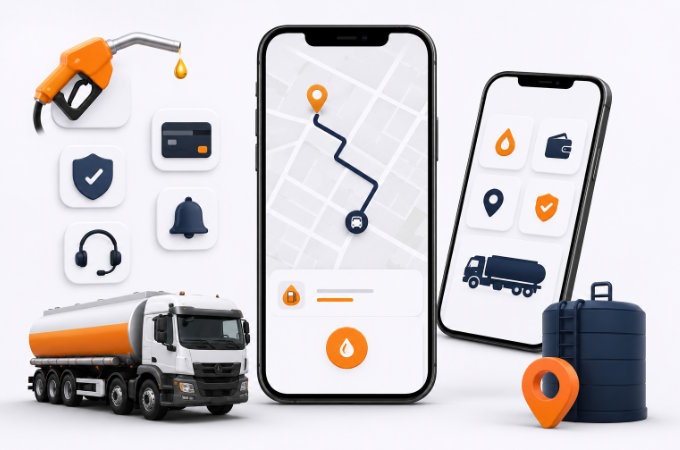
Imagine running out of fuel while driving through a remote highway or managing a commercial fleet where every minute of downtime translates into lost revenue. These situations have made on-demand fuel delivery more than just a convenience—it's becoming an essential service across the United States.
As customer expectations continue to evolve, simply delivering fuel isn't enough. Users now expect real-time tracking, instant payments, scheduled deliveries, transparent pricing, and a seamless digital experience from start to finish. At the same time, businesses need tools that simplify dispatching, manage fleets efficiently, and maintain complete operational visibility.
The difference between an average fuel delivery app and a market-leading one often comes down to the features it offers. Choosing the right functionality from the beginning can improve customer satisfaction, streamline operations, and create a scalable business that stands out in a competitive market.
Why Features Matter More Than Ever
Building a fuel delivery platform isn't just about adding as many features as possible. Every functionality should solve a real business problem or improve the customer experience. From ordering fuel in a few taps to helping drivers optimize routes and enabling administrators to monitor deliveries in real time, every feature plays a role in business success.
Working with an experienced Fuel Delivery App Development Company helps businesses identify which features deliver the highest value instead of investing in unnecessary functionality.
Customer Panel Features Every Fuel Delivery App Must Include
To develop a fuel delivery app, you will need top-notch customer panel features, which is what we are going to talk about here:
1. Simple Registration & Login
The first interaction with your app should be effortless. Lengthy registration forms often discourage new users before they even place their first order.
Allow users to create an account using:
- Mobile number
- Email address
- Google Sign-In
- Apple ID
- Biometric authentication
The quicker customers can access your app, the faster they can request fuel whenever they need it.
2. Real-Time Fuel Ordering
A fuel delivery app should make ordering as easy as ordering food online. Customers should be able to select their fuel type, specify the required quantity, choose their vehicle, and confirm the delivery location—all within a few taps.
Keeping the ordering process simple reduces drop-offs and improves the overall user experience.
3. Live GPS Location Detection
Accurate delivery locations are critical in fuel delivery.
Instead of asking users to type long addresses, integrate GPS technology that automatically detects their location. Users should also be able to adjust the pin manually, save multiple addresses, and label frequent destinations like Home, Office, or Warehouse.
This not only improves convenience but also minimizes delivery errors.
4. Multiple Fuel Options
Not every customer drives the same vehicle, which is why your app should support different fuel categories.
Some common options include:
- Regular Gasoline
- Premium Gasoline
- Diesel
- DEF (Diesel Exhaust Fluid)
- Commercial Fleet Fuel
Displaying real-time pricing for each fuel type also builds customer confidence before checkout.
5. Scheduled Fuel Deliveries
Many US customers don't always need fuel immediately.
Fleet managers, businesses, and even individual vehicle owners often prefer scheduling deliveries in advance.
Your app should allow customers to:
- Schedule deliveries for a later date
- Select preferred delivery windows
- Create recurring weekly or monthly orders
- Modify or cancel scheduled deliveries
This feature is particularly valuable for commercial customers who rely on uninterrupted operations.
6. Emergency Fuel Requests
Running out of fuel is rarely planned.
A dedicated Emergency Fuel option lets customers request priority delivery whenever they're stranded.
To improve the experience, include:
- Priority dispatch
- Estimated arrival time
- Live driver tracking
- Emergency support contact
This single feature can become one of your application's biggest competitive advantages.
7. Live Order Tracking
Customers shouldn't wonder where their fuel is.
Once an order is confirmed, they should receive real-time visibility into every stage of the delivery process.
Display updates such as:
- Driver assigned
- Driver en route
- Estimated arrival time
- Delivery in progress
- Order completed
Live tracking builds trust while reducing customer support inquiries.
Driver Panel Features That Improve Delivery Efficiency
Drivers are the backbone of any fuel delivery business, and equipping them with the right tools improves productivity, reduces delays, and ensures safe deliveries.
A trusted Mobile App Development Company Denver can build driver-centric solutions with smart navigation, route optimization, and real-time delivery management to maximize operational efficiency.
1. Delivery Request Management
Drivers should have access to a centralized dashboard displaying:
- Assigned orders
- Upcoming deliveries
- Completed deliveries
- Customer details
- Delivery priority
This helps eliminate confusion while improving daily efficiency.
2. Smart Route Optimization
Traffic congestion, road closures, and inefficient routes can significantly increase fuel consumption and delivery times.
Integrating AI-powered route optimization enables drivers to:
- Find the fastest routes
- Avoid traffic congestion
- Reduce unnecessary mileage
- Complete more deliveries each day
For businesses operating across multiple US cities, this feature directly impacts profitability.
3. Built-In Navigation
Switching between different navigation apps wastes valuable time.
Instead, integrate navigation directly into the driver application with features like:
- Turn-by-turn directions
- Traffic alerts
- Alternative routes
- Accurate ETA calculations
Drivers stay focused without constantly changing applications.
4. Delivery Verification
Since fuel is a regulated commodity, every completed delivery should be properly documented.
Verification methods can include:
- One-Time Password (OTP)
- Customer signature
- QR code verification
- Geo-location confirmation
- Delivery photos
These records help resolve disputes while improving accountability.
5. Driver Availability Status
Drivers should easily update their work status throughout the day.
Status options like:
- Available
- Busy
- On Delivery
- Offline
Allow dispatchers to assign deliveries more efficiently and prevent scheduling conflicts.
6. Earnings Dashboard
Providing drivers with complete transparency over their earnings improves motivation and trust.
The dashboard can display:
- Daily income
- Weekly earnings
- Incentives
- Bonuses
- Completed deliveries
- Pending payouts
Real-time financial visibility helps drivers track their performance without relying on manual reports.
Admin Panel Features That Keep Operations Running Smoothly
While customers focus on convenience and drivers prioritize efficiency, the admin panel serves as the control center of your entire fuel delivery business. It provides complete visibility into daily operations, helping businesses manage resources, monitor performance, and make informed decisions.
1. Centralized Dashboard
A well-designed dashboard gives administrators a bird's-eye view of everything happening across the platform.
It should display:
- Active orders
- Completed deliveries
- Available drivers
- Fuel inventory
- Daily revenue
- Customer activity
Having all critical business metrics in one place enables faster decision-making and better operational control.
2. Customer Management
Understanding customer behavior is essential for improving retention and delivering personalized services.
An effective customer management system should allow admins to:
- View customer profiles
- Track order history
- Manage saved addresses
- Handle support requests
- Monitor loyalty program participation
These insights help businesses identify repeat customers and create targeted promotional campaigns.
3. Driver Management
Managing a growing delivery workforce manually can become overwhelming.
The admin panel should provide tools to:
- Add or remove drivers
- Verify licenses and certifications
- Assign delivery zones
- Monitor performance
- Track attendance
- Review customer ratings
This ensures every delivery is handled by qualified personnel while maintaining service quality.
4. Fleet Management
For businesses operating multiple fuel delivery vehicles, fleet visibility is critical.
A fleet management module should include:
- Vehicle tracking
- Maintenance schedules
- Fuel tank capacity
- Vehicle availability
- Service reminders
Proactive fleet monitoring minimizes downtime and helps prevent unexpected operational disruptions.
5. Fuel Inventory Management
Running out of fuel inventory can result in delayed deliveries and dissatisfied customers.
The system should provide real-time updates on:
- Fuel stock levels
- Storage capacity
- Refill alerts
- Fuel consumption trends
- Inventory reports
With accurate inventory management, businesses can avoid shortages while optimizing storage costs.
Conclusion
A successful fuel delivery app is more than just a platform for placing orders—it's a complete ecosystem that connects customers, drivers, and administrators through intelligent technology. By combining user-friendly interfaces, operational tools, AI-driven capabilities, and essential integrations, businesses can deliver a seamless experience while improving efficiency and profitability.
As the demand for on-demand fuel delivery continues to grow across the US, investing in the right feature set from the outset can help your business stand out, build customer loyalty, and scale with confidence. Prioritizing features that solve real-world challenges today will position your platform for long-term success in an increasingly competitive market.

