

Introduction
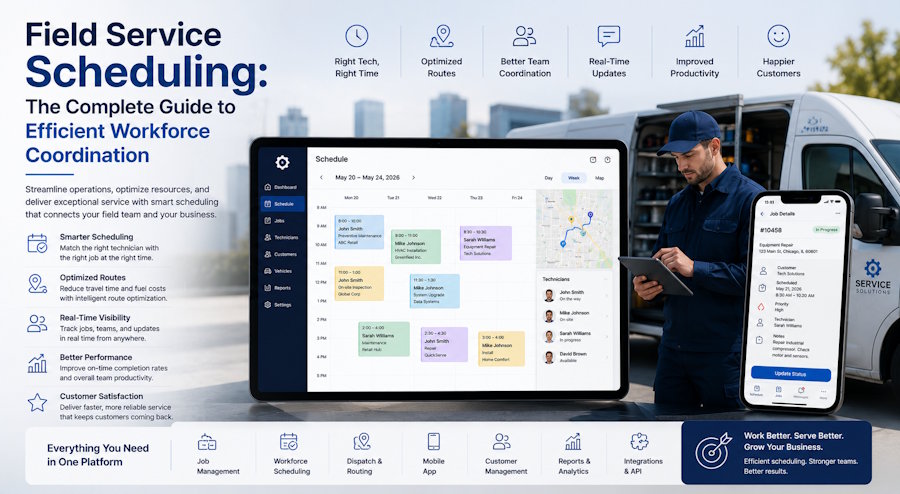
Managing technicians across multiple job sites requires careful planning and constant communication. As businesses grow, coordinating appointments, assigning the right technicians, and responding to unexpected service requests becomes increasingly challenging. Manual scheduling methods often lead to missed appointments, inefficient routes, and reduced productivity. This is where field service scheduling becomes essential.
Effective field service scheduling helps businesses organize daily operations by assigning the right technician to the right job at the right time. It improves workforce coordination, reduces travel time, and ensures that service requests are completed efficiently. By using structured scheduling processes, organizations can enhance operational performance while delivering a better customer experience.
Whether supporting maintenance, repairs, inspections, or installations, field service scheduling plays a vital role in maximizing technician productivity and maintaining smooth field operations. This guide explains its importance, key features, benefits, best practices, and future trends.
What Is Field Service Scheduling?
Field service scheduling is the process of planning, assigning, and managing work for technicians who perform services outside the office. It involves organizing appointments based on technician availability, skill level, job priority, and geographic location.
A well-designed field service scheduling process helps businesses avoid scheduling conflicts, reduce idle time, and ensure that field employees receive clear instructions before every assignment. It also provides managers with greater visibility into daily operations.
Why Field Service Scheduling Matters
Efficient field service scheduling is essential for businesses that rely on mobile workforces. Poor scheduling can result in delayed arrivals, missed appointments, unnecessary travel, and dissatisfied customers.
Businesses benefit from effective field service scheduling because it helps them:
- Improve technician productivity
- Optimize daily workloads
- Reduce scheduling conflicts
- Minimize travel time
- Enhance communication
- Increase customer satisfaction
By improving scheduling accuracy, organizations can complete more jobs while maintaining consistent service quality.
Key Components of Field Service Scheduling
Technician Availability
Successful field service scheduling starts with understanding technician availability. Assignments should be balanced according to work hours, current workload, and existing appointments.
Skill-Based Assignment
Different jobs require different levels of expertise. Matching technicians with assignments based on their qualifications improves service quality and increases first-time completion rates.
Job Prioritization
Emergency repairs often require immediate attention, while preventive maintenance and routine inspections can be scheduled in advance. Effective field service scheduling ensures both urgent and planned work are managed efficiently.
Route Optimization
Grouping appointments by location reduces travel time and fuel costs while allowing technicians to complete more jobs during the workday.
Real-Time Schedule Updates
Unexpected cancellations, emergencies, or delays require flexible scheduling. Real-time updates allow managers to adjust technician assignments quickly without disrupting operations.
Benefits of Field Service Scheduling
Increased Workforce Efficiency
Organized scheduling allows technicians to spend more time performing service work and less time waiting for assignments or traveling unnecessarily.
Better Customer Experience
Reliable appointment times and faster response rates help build customer trust and satisfaction.
Improved Resource Utilization
Balanced scheduling ensures workloads are distributed fairly while maximizing the productivity of every technician.
Reduced Operational Costs
Optimized schedules reduce overtime, unnecessary travel, and administrative effort, helping businesses operate more efficiently.
Enhanced Team Communication
Clear schedules and instant updates improve collaboration between dispatchers, managers, and field technicians throughout the day.
Best Practices for Effective Field Service Scheduling
Plan Work in Advance
Schedule recurring maintenance and routine service visits ahead of time to create a balanced workload and avoid last-minute conflicts.
Prioritize Critical Service Requests
Urgent jobs should receive immediate attention without disrupting the overall schedule whenever possible.
Review Technician Workloads Daily
Regularly evaluate assignments to ensure work is distributed evenly and resources are being used effectively.
Reduce Travel Time
Assign technicians to nearby service locations whenever practical to increase productivity and lower transportation costs.
Monitor Scheduling Performance
Track appointment completion rates, technician utilization, response times, and scheduling efficiency to identify opportunities for continuous improvement.
Industries That Benefit from Field Service Scheduling
Many industries depend on field service scheduling to coordinate mobile workforces efficiently.
HVAC Services
Maintenance teams organize inspections, repairs, and preventive maintenance using structured scheduling processes.
Plumbing Services
Emergency repairs and routine appointments are coordinated effectively through organized schedules.
Electrical Services
Electricians manage installations, inspections, and repair work while receiving timely assignment updates.
Facility Maintenance
Maintenance departments coordinate repairs and inspections across multiple properties with greater efficiency.
Equipment Maintenance
Organizations servicing industrial equipment rely on field service scheduling to improve maintenance planning and technician utilization.
Common Challenges in Field Service Scheduling
Even well-organized businesses face scheduling challenges. Effective field service scheduling helps overcome these obstacles.
Emergency Service Requests
Unexpected repairs require immediate technician availability while maintaining existing appointments.
Last-Minute Cancellations
Canceled appointments can create scheduling gaps unless replacement work is available.
Traffic and Travel Delays
Road conditions can affect arrival times, making efficient route planning an important part of scheduling.
Communication Breakdowns
Without timely updates, office staff and technicians may experience confusion regarding assignments or schedule changes.
Uneven Work Distribution
Poor workload balancing can leave some technicians overloaded while others remain underutilized.
Future Trends in Field Service Scheduling
Technology continues to transform field service scheduling through automation and intelligent planning. Artificial intelligence, predictive analytics, cloud-based platforms, and real-time data are helping businesses create more efficient schedules with minimal manual effort.
Future scheduling systems are expected to automatically recommend technician assignments based on travel time, expertise, workload, and historical performance. These innovations will improve operational efficiency while enabling businesses to respond faster to changing customer demands.
Conclusion
Effective field service scheduling is the foundation of successful field operations. By organizing technician assignments, optimizing travel routes, balancing workloads, and improving communication, businesses can increase productivity while delivering dependable service.
From reducing operational costs and improving technician efficiency to enhancing customer satisfaction and supporting long-term growth, field service scheduling offers significant value across many industries. Organizations that adopt structured scheduling practices and modern digital tools will be better positioned to streamline operations, improve service quality, and achieve sustainable success in today's competitive field service environment.

