

Nobody celebrates a supply chain that runs exactly as expected.
Products arrive on time. Inventory stays under control. Suppliers deliver what they promised. Customers get their orders without delays. When everything works, it barely gets noticed.
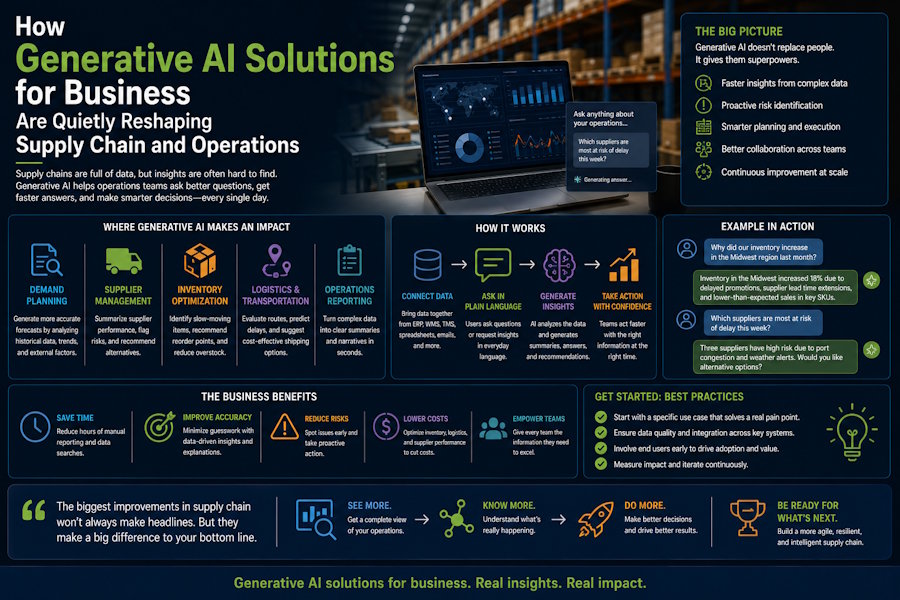
But behind those smooth operations are thousands of decisions being made every day. Which supplier should be prioritized? Why did inventory spike this week? Which shipment is most likely to be delayed? This is where generative AI solutions for business are changing the way operations teams work. Not by replacing people, but by helping them find answers faster, spot risks earlier, and make better decisions with the data they already have.
The Biggest Improvements Often Stay Behind the Curtain
Supply chains aren’t short on data. They’re short on time.
Operations teams deal with information flowing in from ERP systems, warehouse management software, procurement platforms, logistics providers, spreadsheets, emails, and supplier portals. Piecing all of it together can take hours before anyone is ready to act.
Generative AI helps shorten that process. Instead of digging through reports, planners can ask questions in plain language and receive summaries, explanations, or recommendations within seconds.
That shift may not grab headlines, but it changes how teams spend their day. Less time gathering information means more time solving problems.
Turning Data Into Decisions Instead of Dashboards
Businesses have invested heavily in dashboards over the past decade. While dashboards are useful, they still require people to interpret the data and connect the dots.
Generative AI adds another layer by explaining what the numbers actually mean.
Imagine asking:
- Why did order fulfillment slow down this week?
- Which suppliers are contributing to the highest delays?
- What inventory is at risk of becoming excess stock?
- Which regions are seeing unexpected demand?
Instead of manually comparing reports across multiple systems, teams receive a clear explanation that brings relevant information together.
That makes decision-making faster, especially when timing matters.
Small Tasks Add Up Faster Than You Think
A large portion of operational work isn’t complex. It’s repetitive.
Procurement teams summarize supplier meetings. Warehouse managers prepare shift reports. Logistics teams draft shipment updates. Analysts compile weekly performance summaries. Operations leaders review hundreds of pages of documentation before making decisions.
Generative AI can take care of much of that routine work by helping create:
- Supplier performance summaries
- Procurement documentation
- Inventory reports
- Shipment status updates
- Internal operational reports
- Meeting notes and action items
The goal isn’t to replace expertise. It’s to reduce the administrative work that slows experienced teams down.
Better Planning Starts With Better Context
Every disruption creates a ripple effect.
A delayed shipment can affect production schedules. A supplier issue can create inventory shortages. Unexpected demand can strain warehouse capacity.
The challenge isn’t always finding the data. It’s understanding the impact quickly enough to respond.
Generative AI helps operations teams connect information across systems, identify patterns, and surface insights that might otherwise take hours to uncover.
Instead of reacting after problems grow, businesses have more opportunities to respond early.
Human Judgment Is Still the Advantage
Despite all the excitement around AI, supply chain decisions still depend on people.
Technology can analyze historical trends, summarize operational data, and identify potential risks. It can’t replace the experience of someone who understands supplier relationships, customer priorities, or unexpected market conditions.
The strongest organizations use AI to support planners rather than make decisions for them.
Think of it as another experienced analyst on the team. It can gather information quickly, highlight what deserves attention, and provide context, while people remain responsible for the final call.
Choosing Solutions That Fit the Business
As generative AI becomes more common, businesses are becoming more selective about how they implement it.
Rather than focusing on the newest model or the longest list of features, they’re asking practical questions:
- Will this integrate with our ERP and warehouse systems?
- Can it work with our existing operational data?
- How is sensitive business information protected?
- Can recommendations be explained and audited?
- Will employees actually use it in their daily work?
These questions often determine whether an AI initiative succeeds or becomes another underused technology investment.
Looking Ahead
The most meaningful changes in supply chain operations rarely happen overnight. They happen through hundreds of small improvements that help teams work faster, make better decisions, and spend less time searching for information.
That’s why generative AI is finding its place in operations. Not because it replaces experienced professionals, but because it helps them focus on the work that requires judgment, collaboration, and strategic thinking.
As businesses continue to modernize their operations, the organizations seeing the greatest value will likely be the ones that treat AI as a practical business tool rather than a headline-worthy experiment.
Businesses looking to put these ideas into practice are increasingly working with partners like BayOne, whose generative AI expertise helps organizations improve operations with solutions built around real business needs.

