

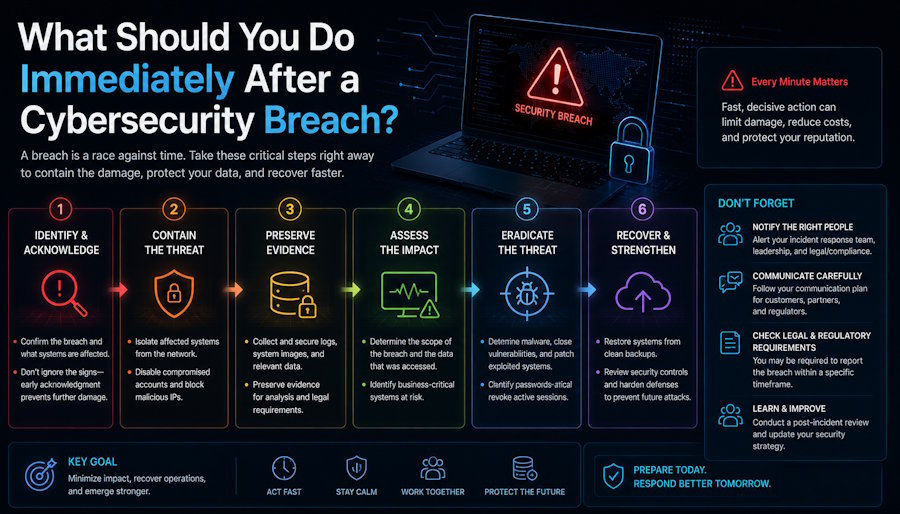
A cybersecurity breach can happen without warning. The first few hours often determine how much damage is contained and how quickly normal operations can resume.
Acting with a clear plan helps reduce disruption and protect sensitive information. Knowing the right steps after a breach allows businesses to respond calmly instead of making costly decisions under pressure.
Why a Fast Response Matters After a Cybersecurity Breach
Every minute counts once a breach is discovered, especially when malware spreads between computers on the same network. A structured response helps businesses contain threats faster, protect critical systems, and begin recovery before the incident causes further disruption.
- Limits the spread of malicious activity.
- Protects sensitive business information.
- Reduces operational downtime.
- Preserves important evidence.
- Supports regulatory compliance.
- Restores employee confidence.
- Speeds up system recovery.
Immediate Steps to Take After a Cybersecurity Breach
A structured response reduces confusion during a stressful situation. Addressing the incident in the correct order helps contain the threat while protecting valuable business data.
Isolate Affected Systems
Disconnect compromised devices from the network as soon as possible. Quick isolation prevents attackers from moving deeper into connected systems.
Rapid containment reduces the chance of additional devices becoming infected while investigators begin identifying the source of the incident.
Confirm the Scope of the Breach
Not every alert represents a widespread compromise. Determine which systems, user accounts, and data have been affected before taking broader action.
A careful assessment provides accurate incident visibility, allowing recovery efforts to focus on the highest priority assets first.
Notify Your Internal Response Team
Bring together IT personnel, management, and other key decision makers immediately. Everyone should understand their responsibilities before recovery begins.
Clear communication supports coordinated decision making and reduces confusion while technical teams work to contain the incident.
Preserve Evidence
Avoid deleting files or reformatting affected devices too early. Digital evidence helps investigators understand how attackers gained access.
Maintaining forensic integrity improves incident analysis and may support insurance claims, legal requirements, or future security improvements.
Reset Compromised Credentials
Usernames and passwords should be considered exposed unless confirmed otherwise. Reset affected accounts immediately using strong password policies.
Enabling multi factor authentication provides another layer of protection against unauthorized access after the initial breach.
Scan for Malware
Run comprehensive security scans across affected systems before reconnecting them to the production network. Hidden malware can remain active after initial cleanup.
Using trusted detection tools improves threat identification and helps remove malicious software before business operations resume.
Contact Cybersecurity Specialists
Some incidents require advanced expertise beyond internal IT resources. Professional responders can investigate, contain, and recover systems more efficiently.
Businesses that engage cybersecurity services gain experienced support for incident response, threat containment, and long term security improvements.
Long Term Actions That Strengthen Future Security
Recovering from a breach is only the beginning. Every incident offers valuable lessons that can strengthen security and reduce future risk.
-
Review the Root Cause
Understanding exactly how attackers entered the network helps prevent the same weakness from being exploited again. Root cause analysis provides valuable direction for future improvements.
A detailed investigation identifies technical gaps, process failures, and overlooked risks. These findings help strengthen defenses and reduce the likelihood of similar attacks.
-
Update Security Policies
Outdated policies often contribute to preventable incidents because threats continue to evolve. Security policy reviews help businesses align procedures with today's digital risks.
Clear documentation creates consistent security standards across every department. Employees understand expectations better and follow approved practices with greater confidence.
-
Train Employees
Many successful cyberattacks begin with phishing emails or social engineering attempts. Employee awareness training helps staff recognize warning signs before mistakes happen.
Regular education encourages safer daily habits and improves decision making. Well informed employees become an important layer of protection against cyber threats.
-
Strengthen Endpoint Protection
Every laptop, desktop, and mobile device represents a potential entry point for attackers. Endpoint security reduces exposure by protecting devices across the organization.
Modern protection detects unusual behavior, blocks malicious activity, and alerts administrators quickly. This reduces the chance of threats spreading across business systems.
-
Test Backup Systems
Reliable backups make recovery much faster after ransomware or unexpected system failures. Backup testing confirms that important files can actually be restored when needed.
Routine verification uncovers hidden problems before an emergency occurs. Businesses gain confidence knowing recovery plans will work when critical systems fail.
-
Monitor Network Activity
Continuous monitoring helps identify suspicious behavior before it develops into a larger security incident. Network visibility allows faster detection of unusual system activity.
Proactive monitoring reduces response times and provides valuable insight into emerging threats. Early alerts allow security teams to contain incidents more effectively.
-
Review Incident Response Plans
Every organization should maintain a documented response plan that employees understand. Incident preparedness helps teams respond quickly during stressful situations.
Regular testing improves coordination between departments and identifies weaknesses before a real attack occurs. Practice makes emergency response faster and more organized.
Warning Signs That Should Never Be Ignored
Some indicators appear long before a major cybersecurity incident develops. Recognizing these warning signs allows businesses to respond before attackers cause significant damage.
- Unexpected password changes without user approval.
- Unusual login activity from unknown devices or locations.
- Unknown software installations appearing on company devices.
- Slow network performance without an obvious technical cause.
- Disabled security tools or antivirus protection unexpectedly.
- Suspicious email activity involving unknown attachments or links.
- Unauthorized file access outside normal business operations.
- Unexpected account lockouts affecting multiple employees.
Conclusion
A cybersecurity breach demands a fast and organized response. Isolating affected systems, preserving evidence, and engaging experienced cybersecurity professionals can significantly reduce business disruption. Just as important, reviewing the incident and strengthening security afterward helps protect the organization against future attacks while keeping employees and critical data secure.

