

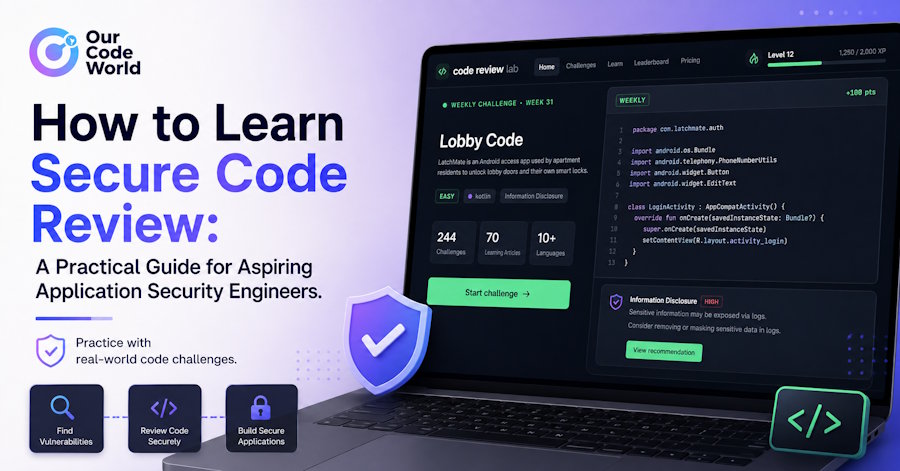
Modern applications are built with millions of lines of code, third-party libraries, APIs, and complex user interactions. While automated security tools can detect many common issues, they cannot always understand the logic behind an application or identify hidden security weaknesses.
This is why secure code review has become an important skill for developers and application security engineers.
Learning how to review source code from a security perspective helps you discover vulnerabilities before attackers find them. It also helps teams build safer applications by improving security during the development process instead of fixing problems after deployment.
For anyone starting a career in application security, mastering secure code review requires more than reading security documentation. You need to practice analyzing real code, understanding attack patterns, and learning how vulnerabilities appear inside applications.
What Is a Secure Code Review?
Secure code review is the process of examining an application's source code to identify security vulnerabilities, unsafe practices, and weaknesses that could lead to attacks.
Traditional code reviews usually focus on:
- Code quality
- Performance
- Maintainability
- Functionality
Security code reviews focus on questions like:
- Can an attacker bypass authentication?
- Is user input handled safely?
- Are sensitive credentials exposed?
- Can permissions be abused?
- Is data protected properly?
For example, a login feature may work correctly from a user perspective, but a security reviewer may discover that:
- Passwords are stored incorrectly
- Sessions are not protected
- Authentication checks can be bypassed
- Error messages reveal sensitive information
These small mistakes can become serious security problems.
Why Should Application Security Engineers Learn Code Review?
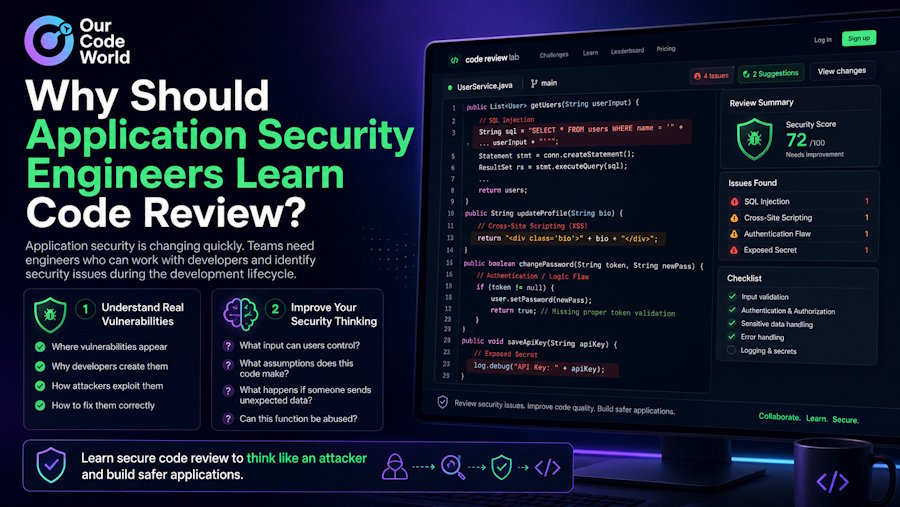
Application security is changing quickly. Companies no longer want security teams that only perform penetration tests after software is complete. They need engineers who can work with developers and identify security issues during the development lifecycle.
Learning secure code review helps you:
Understand Real Vulnerabilities
Security concepts become easier when you see how vulnerabilities exist inside actual code.
Instead of only learning definitions of SQL injection, XSS, or authentication flaws, code review teaches you:
- Where vulnerabilities appear
- Why developers create them
- How attackers exploit them
- How to fix them correctly
Improve Your Security Thinking
Good security engineers think like attackers.
When reviewing code, you learn to ask:
- What input can users control?
- What assumptions does this code make?
- What happens if someone sends unexpected data?
- Can this function be abused?
This mindset is valuable for both defensive and offensive security roles.
Start With Programming Fundamentals
Before reviewing code, you need a basic understanding of programming.
You do not need to become a senior software engineer, but you should understand:
- Variables and data types
- Functions and classes
- APIs
- Databases
- Authentication systems
- Framework structures
Popular languages for security professionals include:
JavaScript and TypeScript
Useful for:
- Web applications
- Node.js security
- Frontend vulnerabilities
- API testing
Python
Useful for:
- Security automation
- Scripts
- Backend applications
- Security tools
Java, Go, C#, and Kotlin
Useful for understanding:
- Enterprise applications
- Mobile applications
- Large production systems
The more languages you understand, the easier it becomes to recognize insecure patterns.
Learn Common Security Vulnerabilities
A strong code reviewer understands common vulnerability classes.
The OWASP Top 10 is a good starting point because it covers many common application security risks.
Important areas include:
Injection Vulnerabilities
Injection occurs when attackers can send malicious input that changes how an application behaves.
Examples:
- SQL Injection
- Command Injection
- NoSQL Injection
During review, check:
- How input enters the application
- Whether queries use safe methods
- Whether user data is validated
Authentication Problems
Authentication protects user accounts, but mistakes can create serious risks.
Review:
- Password storage
- Login processes
- Session handling
- Password recovery systems
- Multi-factor authentication
Access Control Issues
Many security problems happen because users can access resources they should not.
Check:
- User permissions
- Admin functionality
- API authorization
- Object-level access controls
Sensitive Data Exposure
Applications often handle valuable information.
Review:
- API responses
- Logs
- Configuration files
- Database storage
- Encryption methods
Learn by Practicing Real Code
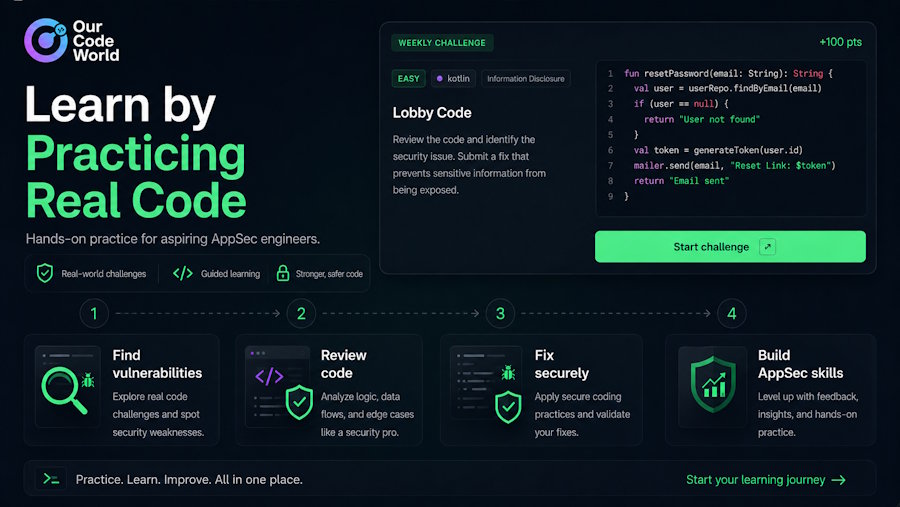
Reading security articles is useful, but practical experience builds real skill.
Many beginners struggle because they only study vulnerability definitions without practicing code analysis.
The best approach is to review vulnerable applications and identify problems yourself.
Platforms like Code Review Lab help developers and security engineers practice through realistic security challenges. Instead of only watching videos, learners analyze code snippets, locate vulnerabilities, and understand why specific fixes are required.
This type of hands-on security training helps build the same skills required in real application security jobs.
How to Practice Secure Code Review Effectively
Follow a structured approach when reviewing code.
Step 1: Understand the Application
Before searching for vulnerabilities, understand:
- What the application does
- Who uses it
- What data it handles
- Which technologies are involved
Step 2: Find User-Controlled Input
Attackers usually control some type of input.
Look for:
- Forms
- API requests
- File uploads
- URL parameters
- Headers
Then follow that data through the application.
Step 3: Review Security-Critical Areas
Spend more time checking:
- Authentication
- Authorization
- Database operations
- File handling
- Payment systems
- External integrations
Step 4: Understand the Fix
Finding a vulnerability is only half the job.
A good security engineer explains:
- Why it is dangerous
- How attackers could exploit it
- How developers can fix it
Use Security Tools to Improve Your Reviews
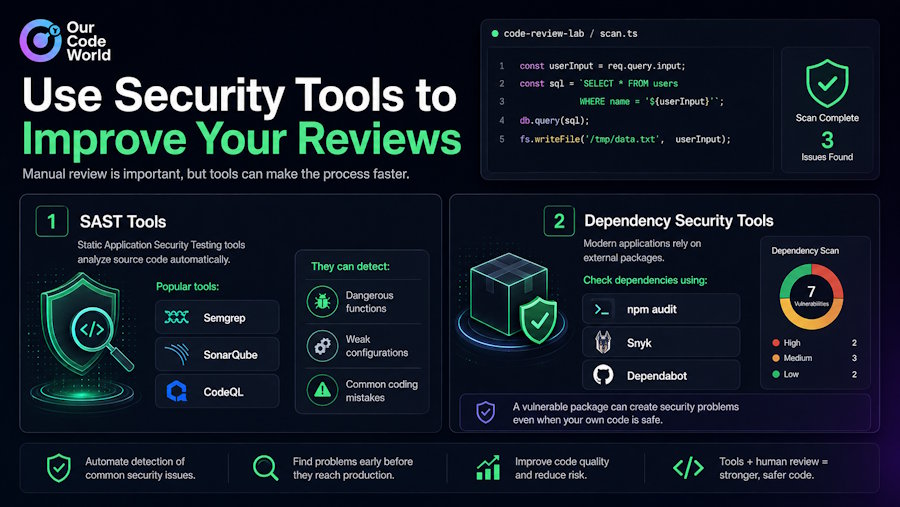
Manual review is important, but tools can make the process faster.
Useful security tools include:
SAST Tools
Static Application Security Testing tools analyze source code automatically.
Examples:
- Semgrep
- SonarQube
- CodeQL
They can detect:
- Dangerous functions
- Weak configurations
- Common coding mistakes
Dependency Security Tools
Modern applications rely on external packages.
Check dependencies using:
- npm audit
- Snyk
- Dependabot
A vulnerable package can create security problems even when your own code is safe.
Build Your Skills With Challenges and Projects
The fastest way to improve is consistent practice.
Create a learning routine:
Daily Practice
Spend 15–30 minutes reviewing security challenges.
Weekly Learning
Study:
- A vulnerability report
- A CVE
- A security patch
Monthly Projects
Review:
- Open-source applications
- Personal projects
- Vulnerable practice applications
Prepare for Application Security Jobs
Companies hiring AppSec engineers usually look for practical skills.
Important abilities include:
- Reading multiple programming languages
- Finding vulnerabilities
- Explaining security risks
- Understanding secure development practices
- Working with developers
Your portfolio can include:
- Security write-ups
- Vulnerability reports
- Code review examples
- GitHub security contributions
Final Thoughts
Secure code review is one of the most valuable skills for anyone entering application security. It connects software development knowledge with cybersecurity expertise.
The best way to learn is not only by reading about vulnerabilities but by practicing with real examples, reviewing code, and understanding how security mistakes happen.
Start with programming basics, learn common vulnerabilities, practice regularly, and use practical platforms designed for security learning.
With consistent effort, secure code review can become a powerful career skill that helps you become a stronger developer, security engineer, or DevSecOps professional.

