


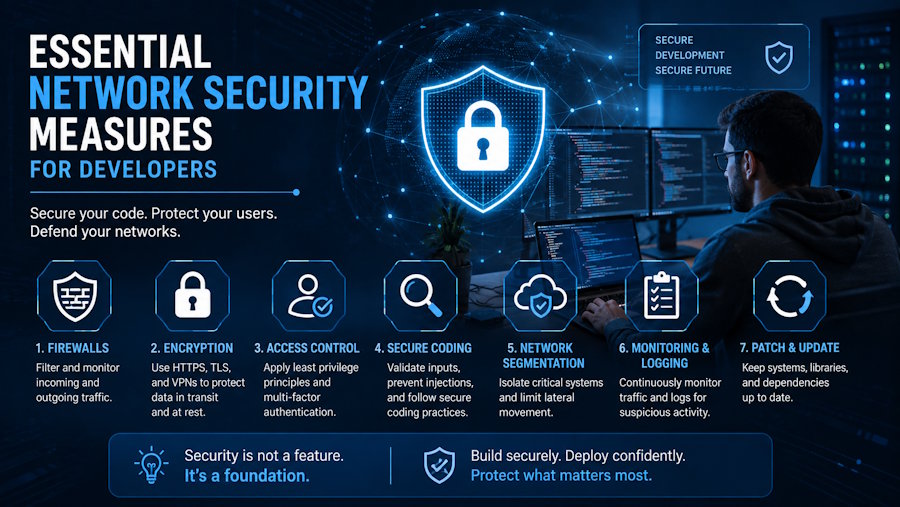
Modern apps rely on many connected systems. Developers need to protect the code and how systems talk to each other.
Building strong security means thinking ahead at every stage. Simple setup steps can stop big data leaks before they happen.
Enforcing Access Controls Across Environments
Unrestricted system access creates immediate vulnerabilities for software projects. Working alongside reliable network support services helps development teams maintain strict access policies across local and cloud environments. Developers should give users only the access they need for their tasks.
Role-based access stops unauthorized users from changing server code. Limiting internal communication helps block attackers from moving between systems. Strong identity checks keep unauthorized tools off the network.
Test environments must stay completely separate from live systems. Test data should never include real customer logins or unencrypted personal info. Keeping them apart prevents bugs in testing from exposing sensitive data.
Privileged account passwords need regular updates to prevent attacks. Automated key management reduces mistakes during password changes. Never store passwords in source code; that creates major security risks.
Implementing Cryptographic Standards for Traffic
Encrypting data as it moves keeps user info safe from interceptors. Use secure protocols on all API connections to protect web traffic. Teams should phase out old encryption and switch to modern ones.
A national standards agency released three post-quantum encryption standards for public use. Adopting them early helps protect against future threats. Automated certificate tools keep security up to date without manual work.
Developers should set strong protocol options to block downgrade attacks. Disabling older protocols stops attackers from forcing weaker connections. Secure session tokens should always carry strict flags to prevent cross-site exposure.
Encryption needs regular updates as security standards change. Security teams should check certificate expiration dates and replace outdated methods before they become a risk. Automated tools can spot weak setups and keep protection consistent across systems.
Encryption isn't just about moving data. It also helps maintain user trust by keeping sensitive information secure across apps, devices, and networks. When you pair modern encryption with good access controls, you get a much stronger defense against today's cyber threats.
Securing Application Interfaces and Traffic
APIs are a main way user data comes into a system. Unprotected APIs let automated scripts flood servers with harmful requests. Teams need to limit how many requests each user can make.
Input validation stops malicious code from reaching databases. Developers should check every request before processing it. Strong schema checks help reject unexpected data.
Third-party integrations also need close attention. External webhooks should use cryptographic signatures to verify they're real. Validating signatures prevents attackers from sending fake notifications.
Error messages should not leak internal system details. Stack traces with file paths should never appear on user screens. Use detailed logs for debugging and send only basic error messages to users.
API security needs constant attention because threats change as apps evolve. Developers should watch for unusual traffic and check anything that looks off before it becomes a bigger problem. Rate limits, login controls, and encryption keep communication secure, even during traffic spikes.
Regular security testing helps find weaknesses before attackers do. Teams can check API permissions, test login flows, and confirm sensitive data is protected. A well-secured API creates safer connections between apps, users, and outside services.
Active Threat Hunting and Monitoring
Continuous monitoring gives engineering teams a real-time view of network traffic. Automated logs flag unusual patterns that could mean someone is probing the system. By using managed network security services, businesses gain stronger monitoring and threat detection to identify suspicious activity early. Early detection helps engineers stop threats before they cause major damage.
A cybersecurity report found that 58% of organizations now handle threat hunting internally instead of outsourcing. In-house teams know their own code and traffic flows better. Integrated tools help them respond to security issues quickly.
Centralized log aggregation helps teams connect events across multiple services. Scattered logs make it nearly impossible to track attackers moving between servers. Standard formats make it easier to scan logs for suspicious activity.
- Configure automated alerts
- Log all network authentication attempts
- Review cloud routing tables
- Monitor outbound application traffic
Building Zero Trust Architecture in Pipelines
Old security methods don't stop attackers once they get inside. Strict access controls limit how far threats can spread. Teams need to check identities constantly, both inside and outside the network.
Microsegmentation splits the network into smaller zones. If one part gets breached, the others stay protected. Zero trust limits movement between systems.
Automated security scanners check network settings before updates go live. They catch open ports and weak permissions early. This prevents security gaps from building up over time.
Every internal service request needs authorization. Never trust traffic just because it came from inside the network. Explicit checks protect services from attackers moving sideways.
Modern access management helps organizations control sensitive information. Role-based permissions give employees access only to what they need.
This lowers the risk of accidental exposure and limits damage from hacked accounts. Regular audits help teams find and remove outdated permissions.
Managing Network Ports and Firewall Rules
Open network ports are easy targets for scanning tools. Teams should close unused ports in every environment. Default rules should block all incoming traffic unless there's a specific reason to allow it.
Firewall rules need regular checks to clean up temporary test rules. Leftover rules can create hidden paths for attackers. Centralized firewall management helps keep policies consistent across cloud systems.
Keep management traffic separate from public traffic. Remote admin tools should use VPNs, not open internet ports. That limits exposure to password guessing attacks.
Monitor firewall logs to spot scanning patterns. Automatically block IPs that keep trying unauthorized ports. This keeps your defenses responsive.
Security is an ongoing job, not a one-time task. Teams that build security into daily coding create much stronger software.
Good access rules and steady monitoring protect your systems for the long haul. Small daily choices turn your code into a solid defense against threats.
Strong thinking skills help you adapt when industries shift. Seeing issues from different angles helps leaders make smarter calls.
Research and group projects sharpen problem-solving skills that work beyond school. These skills help managers spot opportunities, solve problems, and plan ahead. Good reasoning leads to career growth and stronger leadership.
Making Security A Core Development Practice
Good security starts early. Use access controls, encryption, and zero trust. Monitor everything. These habits help teams build apps that can handle today's threats.
Want more security and dev tips? Visit our blog for simple advice and strategies to build safer apps.

