

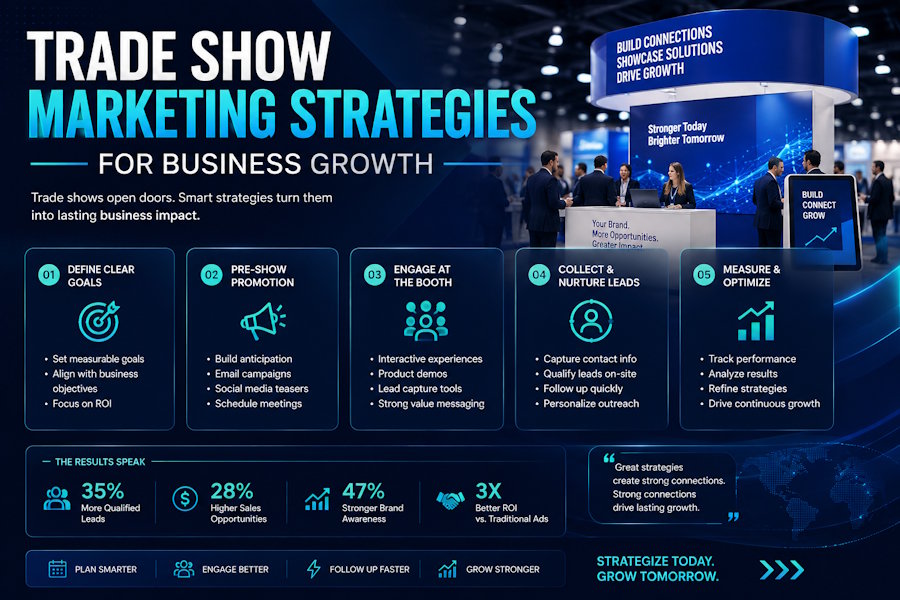
Effective trade show marketing strategies help businesses increase brand awareness, attract qualified leads, build stronger customer relationships, and create new opportunities for growth. A well-planned trade show presence allows companies to connect with their audience in a more personal way while showcasing their products and services in a memorable environment. To achieve strong results, businesses need more than just a booth they need a complete strategy that covers planning, promotion, engagement, and follow-up.
Why Trade Show Marketing Matters for Business Growth
Trade shows remain a valuable marketing channel because they create opportunities for direct interaction that digital campaigns often cannot provide. While online marketing helps businesses reach large audiences, exhibitions allow companies to demonstrate their offerings, answer questions in real time, and create meaningful connections with potential buyers.
A successful trade show presence can help businesses:
- Build direct relationships with potential customers through face-to-face conversations.
- Create memorable brand experiences that leave a lasting impression.
- Generate high-quality leads from attendees who are already interested in the industry.
- Increase credibility by presenting products and expertise in a competitive marketplace.
Trade shows also provide valuable insights into customer preferences and competitor activity. By speaking directly with attendees, businesses can better understand market needs and improve their future marketing decisions.
How to Create a Successful Trade Show Marketing Strategy
A strong trade show marketing strategy starts with clear goals and careful preparation. Businesses should treat the event as part of a larger marketing plan rather than a one-time promotional activity.
Key steps include:
- Define measurable trade show goals: Decide whether the main objective is generating leads, increasing brand awareness, launching a product, or building partnerships.
- Identify the target audience and ideal visitors: Research attendees to ensure the event attracts people who are most likely to become customers.
- Select the right events for business objectives: Choose trade shows that match the company’s industry, audience, and growth goals.
- Plan promotional activities before, during, and after the show: Use email, social media, and other channels to create awareness and maintain engagement.
- Prepare staff training and lead collection methods: Ensure team members understand messaging, customer interactions, and how to capture valuable visitor information.
Careful planning helps businesses maximize their investment and create a consistent experience from the first announcement to post-event communication.
How to Design an Effective Trade Show Booth That Attracts Visitors
An effective trade show booth should immediately communicate a brand’s value and encourage visitors to stop, explore, and interact. Booth design influences how attendees perceive a company, making visibility, branding, and functionality essential parts of trade show success.
A professional booth setup should include clear messaging, attractive visuals, comfortable visitor space, and practical features that support conversations. Portable branded structures, such as a custom 10x10 canopy tent, can help businesses create a professional appearance while offering flexibility and easy setup for different events.
|
Booth Element |
Impact on Visitor Experience |
|
Branding and graphics |
Improves recognition and recall |
|
Booth layout |
Makes visitor interaction easier |
|
Product displays |
Highlights key offerings |
|
Lighting and accessories |
Creates a professional appearance |
|
Interactive elements |
Encourages engagement |
A well-designed booth does not simply display products; it creates an environment where visitors feel comfortable learning about the brand and starting conversations with representatives.
Trade Show Promotion Strategies to Increase Booth Traffic and Leads
Successful trade show marketing extends beyond the event floor. Businesses need promotional strategies before and during the event to attract visitors and encourage meaningful interactions.
Effective approaches include:
- Social media promotion before the event: Share announcements, product previews, booth locations, and event updates to build interest.
- Email campaigns and attendee invitations: Invite existing customers and prospects to visit the booth and schedule meetings.
- Event-specific offers or demonstrations: Provide exclusive promotions, live demonstrations, or experiences that encourage engagement.
- Contests, giveaways, and interactive experiences: Create activities that increase visitor participation and brand recall.
- Networking opportunities with attendees and partners: Use the event to build relationships beyond direct sales conversations.
- Follow-up campaigns after collecting leads: Contact visitors quickly with relevant information and next steps.
Printed materials also play an important role in trade show visibility. Professional event printing solutions from expoprint can support branded booth graphics, banners, promotional materials, and displays that help businesses maintain a consistent visual identity throughout the event.
Frequently Asked Questions
What are the most effective trade show marketing strategies?
The most effective strategies include promoting the event before attendance, creating an engaging booth experience, training staff, interacting with visitors, and following up with leads after the show.
How can small businesses benefit from trade show marketing?
Small businesses can use trade shows to increase visibility, connect directly with potential customers, build industry relationships, and compete with larger brands through creative and targeted presentations.
How early should a business start planning for a trade show?
Businesses should begin planning several months in advance to secure booth space, prepare marketing materials, train staff, promote attendance, and organize lead-generation activities.
What makes a trade show booth successful?
A successful booth combines strong branding, clear messaging, attractive design, practical setup, and opportunities for visitors to interact with the company and its products.
Conclusion
A successful trade show strategy combines thoughtful planning, strong booth design, effective promotion, and careful performance tracking. Businesses that approach exhibitions as part of a broader growth strategy can create stronger connections, generate better leads, and achieve long-term marketing results.

