

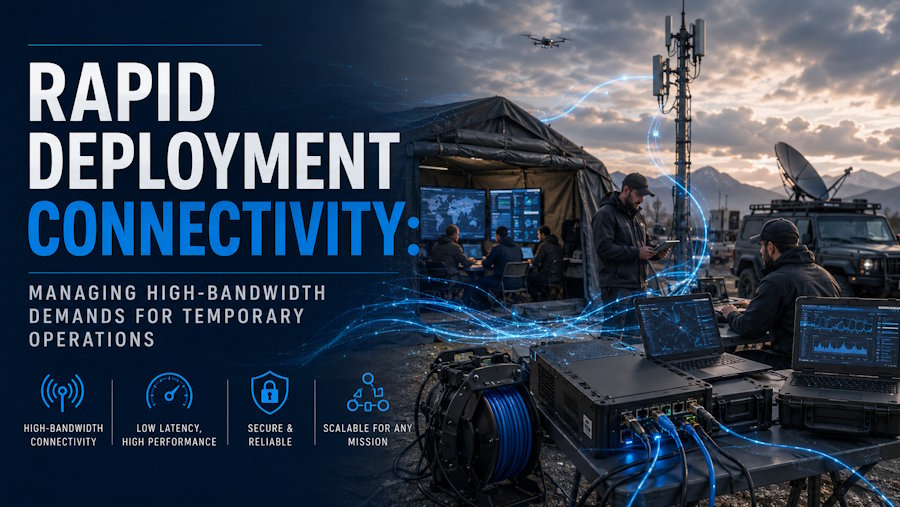
In an increasingly digitized economy, seamless internet access is no longer just a luxury for permanent offices—it is a critical, day-one operational requirement for short-term venues, pop-up retail activations, construction jobsites, and major corporate events. When a project site or event venue lacks existing fiber infrastructure, waiting weeks or months for traditional local telecom providers to install wired lines can completely derail project schedules, compromise point-of-sale (POS) processing, and disrupt live communication feeds.
Navigating these short-term infrastructure gaps requires moving past consumer-grade mobile hotspots, which quickly become overwhelmed under dense user loads or heavy data traffic. To ensure continuous uptime, high-volume data throughput, and low latency during short-term projects, site managers, event coordinators, and enterprise IT directors bypass traditional ISP installation delays. Partnering with a specialized provider to deploy temporary internet Detroit delivers immediate, enterprise-grade wireless connectivity built to keep short-term operations running without interruption.
1. The Core Architecture of Rapid-Deployment Wireless
Setting up robust temporary connectivity requires a multi-layered hardware setup designed to handle variable network demands, environmental challenges, and high user densities:
- Multi-Carrier Bonded Cellular Rigs: Instead of relying on a single network provider, high-capacity temporary systems bond multiple cellular connections (such as 5G and LTE networks) into a single, seamless pipeline. This dynamic load-balancing ensures high-speed data delivery and automatic failover if one carrier experiences network congestion.
- High-Gain Directional Antennas: Enterprise temporary setups utilize specialized, outdoor-rated directional antenna arrays. These units lock onto distant cell towers, delivering strong, stable signals even inside metal-clad construction trailers, basement venues, or crowded urban environments.
- High-Density Wi-Fi Access Points: To support hundreds of simultaneous connections—from ticket scanners and guest networks to high-definition video streaming setups—rapid-deployment systems utilize enterprise-grade access points designed to manage dense network traffic without crashing.
2. Key Industry Applications for On-Demand Network Deployment
Construction Jobsites and Infrastructure Projects
Modern construction management relies heavily on cloud-connected software for real-time BIM model updates, drone site surveys, digital clock-ins, and security camera monitoring. Deploying high-speed temporary wireless on day one ensures field engineers stay fully connected with off-site project managers before permanent lines are laid down.
Pop-Up Retail, Festivals, and Experiential Events
For large outdoor festivals, trade shows, or temporary pop-up retail stores, network downtime translates directly into lost revenue and poor customer experiences. Dedicated temporary connections partition internal network traffic, keeping critical payment processing terminals and ticket scanners on a secure, prioritized network separate from public guest Wi-Fi.
3. Operations Comparison: Traditional Telecom vs. Enterprise Temporary Wireless
|
Network Attribute |
Traditional Wired ISP Installation |
Enterprise Rapid-Deployment Wireless |
|
Deployment Timeline |
30 to 90+ Days: Requires extensive trenching, permitting, and physical line drops. |
Immediate Access: Deployed and fully operational within hours or days. |
|
Contractual Flexibility |
Long-term 12 to 36-month contracts with heavy early termination penalties. |
Flexible Short-Term Terms: Custom daily, weekly, or monthly deployment models. |
|
Redundancy & Uptime |
Single physical fiber drop vulnerable to accidental cable cuts or localized outages. |
Multi-Carrier Failover: Bonded multi-cellular connections provide built-in network redundancy. |
|
Mobility & Portability |
Fixed to a single physical location; cannot be moved when the project concludes. |
Fully Mobile: Rigs can be easily relocated to new project sites or venues as needs evolve. |
4. Best Practices for Setting Up Temporary Site Connectivity
To ensure maximum stability and security for your temporary deployment, follow a simple pre-installation strategy:
- Conduct a On-Site Signal Audit: Map out signal strength across primary cellular carriers at the exact project site to determine optimal antenna placement.
- Separate Network Traffic: Configure isolated Virtual Local Area Networks (VLANs) to separate sensitive operational data (like credit card processing and site security systems) from general guest Wi-Fi usage.
- Utilize Weatherproof Enclosures: Ensure all outdoor routers, switches, and power supplies are housed in rugged, IP67-rated weather-resistant cases to withstand extreme rain, wind, and temperatures.
- Monitor Network Performance: Use centralized cloud management tools to track bandwidth usage in real time, allowing remote technicians to adjust network settings instantly if traffic spikes.
Conclusion: Eliminate Connectivity Delays
In fast-moving industries, waiting on traditional internet installation can stall operations and cause costly project delays. Relying on unstable mobile hotspots risks bandwidth bottlenecks, dropped connections, and security vulnerabilities. By investing in dedicated, rapidly deployed temporary internet solutions, you ensure high-speed, secure, and uninterrupted connectivity from the moment your project begins until the final site teardown.

