

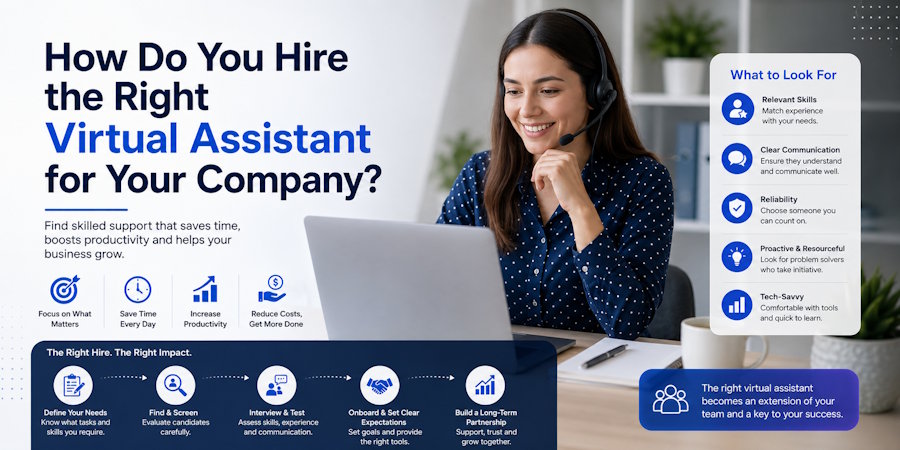
You hire the right virtual assistant by getting clear on the tasks you want off your plate, writing a job description that reflects those tasks, and testing the person on real work before you commit long-term. Skip any of those steps, and you end up training someone who quits in month two, or worse, someone who never really fit the role in the first place.
Most business owners wait too long to make this call. They juggle admin tasks, emails, and scheduling until burnout forces their hand by the time they're hiring under pressure, which is exactly when bad matches happen.
What Tasks Should You Hand Off First?
Before you post a single job listing, list out what's eating your week. Executives spend 16 hours a week on routine tasks that rarely require their specific judgment.
Good starting tasks usually include:
- Data entry and administrative work that doesn't need your input
- Scheduling meetings and managing your calendar
- Social media management, including posting and basic engagement
- Email sorting, replies, and follow-ups
- Research or data pulls for reports
Start small. Hand your first VA two or three time-consuming tasks, see how they handle them, then add more jobs once you trust their work.
Where Do You Find a Qualified Virtual Assistant?
You've got a few real paths here, and each one fits a different budget and comfort level.
Dedicated VA agencies and hiring services take that burden off you. This is where a partner like the one Hire With Near offers tends to save owners real time. They pre-screen for specialized work in different industries.
Referrals matter too. Ask your professional network. A VA who's already proven reliable for someone you trust is a safer bet than a cold hire.
How Do You Write a Job Description to Attract the Right Fit
A vague description gets you vague candidates. Be specific about the actual work, the tools you use, and the hours you expect.
A strong job description should cover:
- The exact tasks (not "general admin," but "manage inbox, book travel, update CRM")
- Required software or platforms
- Expected availability and time zone overlap
- Communication tools you'll use for check-ins
Mention early on that candidates should be tech-savvy and comfortable with the specific tools your business runs on. That single line filters out a lot of poor matches before you ever get to the interview.
What Should You Check Before You Hire a Virtual Assistant?
Interviews for a virtual assistant role should test communication as much as skills. A VA who's technically capable but slow to respond or unclear in writing will cost you more time than they save.
Before you sign anyone on:
- Conduct interviews focused on real scenarios, not hypotheticals
- Check references or reviews from past clients
- Have candidates complete a small paid task so you can see actual output
- Have a non-disclosure agreement ready if they'll touch sensitive client or financial data
A trial period of two to four weeks is standard practice before moving to a longer contract. It gives both sides a look at fit without either party overcommitting.
For companies that want a clearer process, a staffing partner like Hire With Near virtual assistant hiring can help you compare role expectations and support options before you choose a VA. They connect you with candidates who've already been screened for the skills you need, so you're not starting from a blank slate.
How Do You Manage a VA Once They're Hired?
Hiring the right VA is half the job. Managing them well is the other half, and it's where many owners drop the ball.
Set up a project management tool so tasks, deadlines, and priorities live somewhere other than your inbox. Regular check-ins, even short ones, keep communication and task alignment on track. Review your VA's performance against a few clear KPIs rather than gut feeling, so you both know where things stand.
If your VA is juggling multiple clients, respect their schedule. That respect tends to come back as reliability.
FAQs
How long should the virtual assistant services trial period last?
Two to four weeks is the standard window most businesses use to judge fit before signing a longer agreement.
What tasks are best suited for a first VA?
Data entry, scheduling meetings, email management, and social media management are common starting points because they're easy to hand off and measure.
Do I need an NDA?
Yes, if they'll have access to financial data, client information, or other sensitive material, a non-disclosure agreement protects your business.
Hire Smarter
Hiring a virtual assistant isn't complicated once you know what you're solving for. Nail down the tasks, write a clear description, test before you commit, and manage with a light structure instead of constant oversight.
Do that, and a VA can reclaim a meaningful chunk of your week, reduce burnout, and let your business scale without you having to touch every task. That's the whole point of bringing one on in the first place.

