

Home backup batteries should do more than keep a few lights on. The right system needs enough stored energy to cover essential loads, enough output power to start and run major appliances, and enough flexibility to grow with your household. These three features determine whether a battery will feel truly useful during an outage or become a costly compromise. Capacity affects how long your home can stay powered. Output determines what can run at the same time, especially equipment with high startup demands. Scalability and charging options matter because energy needs often change after installation. If you compare home backup batteries through these three lenses first, you can narrow the field quickly and choose a system that fits both current use and future backup plans.
Feature 1: Battery Capacity and Usable Energy
How kWh Capacity Affects Backup Runtime
Battery capacity, measured in kilowatt-hours, tells you how much energy a system can store. Usable energy matters even more because it reflects what you can actually draw during an outage. A larger kWh rating extends runtime, but the real result depends on how fast your home consumes electricity. For example, a setup powering refrigeration, lighting, internet equipment, and a few outlets will last much longer than one supporting air conditioning or electric cooking. When comparing home backup batteries, translate capacity into realistic hours of use rather than treating kWh as an abstract number. That simple step makes products easier to compare and helps you avoid buying a system that looks large on paper but runs out sooner than expected.
Match Battery Capacity to Essential Home Loads
Start by listing the loads you actually want to back up: refrigerator, freezer, router, medical devices, lighting, garage door, sump pump, and selected outlets. Then estimate how many hours you need that support to last. This approach gives you a practical capacity target instead of guessing. Whole-home backup requires much more stored energy than partial-home backup, so defining priorities is essential. If your goal is resilience during overnight outages, size for those core circuits first. If you also want to cover daytime use during extended interruptions, plan for a larger battery bank. A modular system can help here by letting you begin with essential coverage and add storage later as your budget or household needs expand.
Feature 2: Power Output and Appliance Support
Continuous Output vs. Surge Power Explained
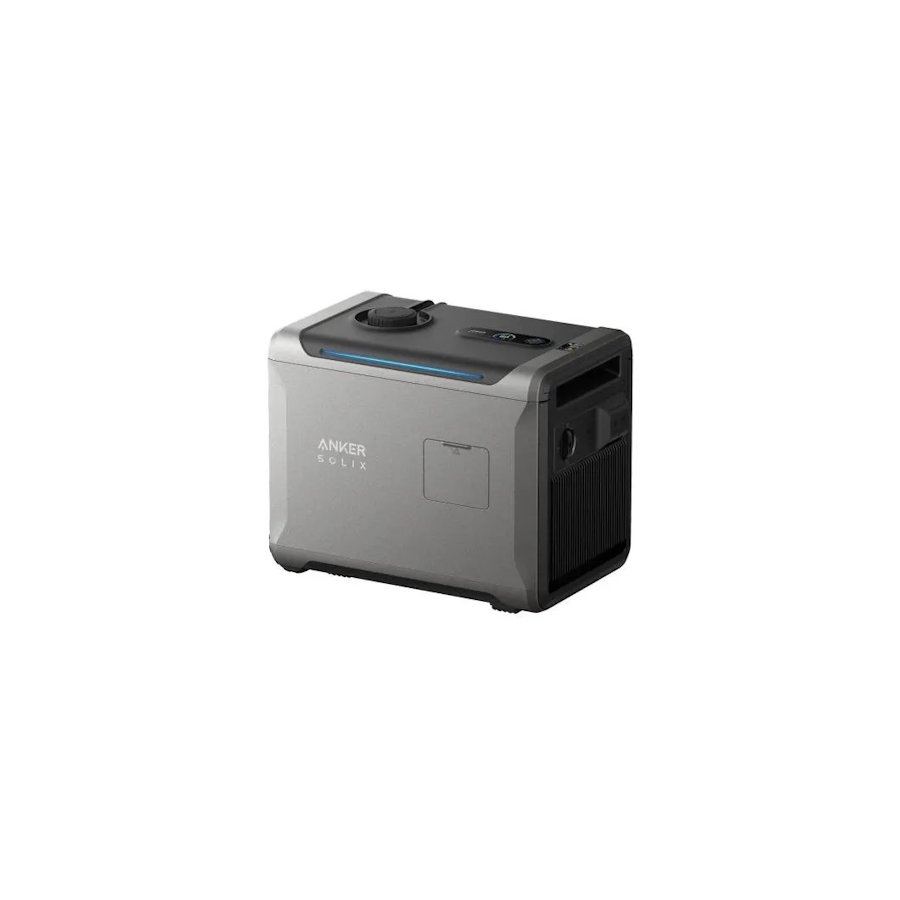
Power output determines what your battery can run right now, while capacity determines how long it can run it. Continuous output is the steady wattage available for normal operation. Surge power covers the brief startup spike from motors and compressors. Both matter. A system may have plenty of stored energy yet still fail to start a well pump or central air unit if its surge support is too low. The Anker SOLIX E10, for example, provides 7,680W continuous output at 120/240 VAC split phase and can deliver 10,000W for 90 minutes in Turbo Backup mode with two batteries. Those figures are useful because they show both steady support and extra headroom during demanding outage conditions.
Check Support for High-Demand Home Appliances
Before buying, check whether the battery can support the appliances that matter most in your home. High-demand equipment such as HVAC systems, well pumps, dryers, electric water heaters, and large kitchen appliances can quickly exceed a battery’s output limit or startup capability. Review both running wattage and starting current, especially for motor-driven loads. Split-phase 120/240V support is also important if your panel includes larger 240V circuits. A system that handles lights and electronics may still fall short on heavier home essentials. It is better to verify appliance compatibility in advance than assume any backup battery can act like a full-home generator. Matching output specs to real household loads prevents overloads and disappointing performance during outages.
Feature 3: Scalability and Charging Flexibility
Expand Battery Storage as Energy Needs Grow
A battery backup for home should fit the way households change over time. Energy use often increases after adding appliances, working from home, installing electric heating equipment, or preparing for longer outages. Scalable systems make that easier by allowing extra battery modules or additional inverter support without replacing the original setup. That protects your initial investment and gives you room to move from essential-load backup toward broader home coverage. Expansion also helps when your goals shift from emergency resilience to daily energy management. When comparing systems, look beyond the starting configuration and ask how easily storage can be increased later. A battery that can grow with your needs usually delivers better long-term value than a fixed-capacity design.
Compare Grid, Solar, and Generator Charging Options
Charging flexibility determines how quickly a battery recovers and how useful it remains during a long outage. Grid charging is the most straightforward option and usually offers the fastest replenishment when utility power returns. Solar charging adds resilience by turning daylight into stored energy, reducing dependence on the grid. Generator input provides another recovery path when weather limits solar production. Ideally, a system supports all three. The Anker SOLIX E10 supports AC input port recharging at 1,800W on 120V/15A and up to 7,680W on 240V/32A, with AC input bypass up to 9,600W at 240V/40A. It also supports solar through 2 x 4,500W PV inputs and a 4,500W DC generator input for flexible outage recovery.
Conclusion
The best home backup batteries stand out in three areas: enough usable capacity for meaningful runtime, enough output power for the appliances you rely on, and enough scalability and charging flexibility to stay useful as your needs change. If you evaluate systems in that order, the buying decision becomes much clearer. First, calculate the essential loads you want to protect and the number of hours you need coverage. Next, confirm the battery can handle both steady operation and startup surges. Finally, choose a setup that can expand and recharge from more than one source. A battery that meets those three checks will provide more reliable backup, better long-term value, and fewer surprises when the next outage puts your system to the test.

