

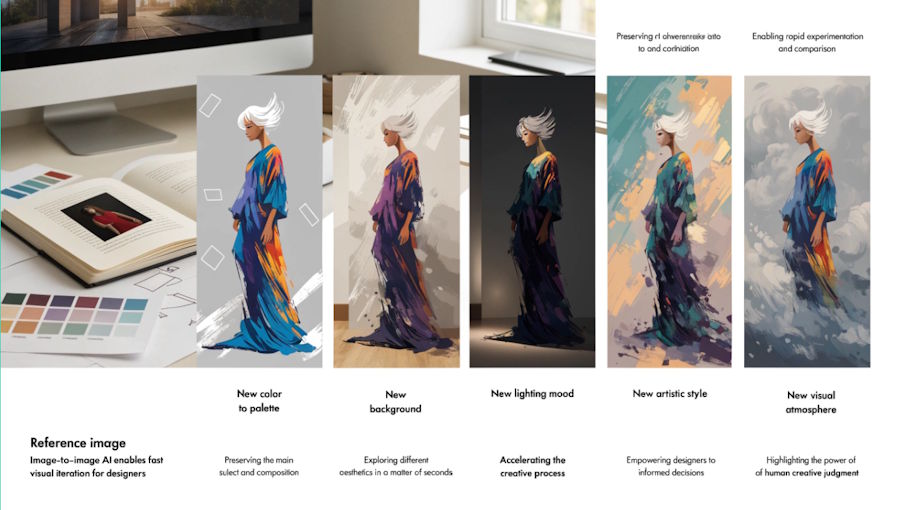
Good design rarely comes from a single attempt. Most strong visual outcomes are the result of trying several directions, comparing them, and refining whichever one works best. The problem has always been that iteration takes time, and time is exactly what most designers are short on. Free Image to Image AI addresses this directly by letting designers generate multiple variations of an existing image quickly, turning iteration from a slow, resource-heavy process into something that can happen in the middle of a normal working session.
Why Iteration Matters More Than a Single Good Idea
Design work benefits from comparison. A single concept, no matter how strong it feels in isolation, is difficult to evaluate without something to measure it against. Seeing three or four variations of the same idea, whether that means different color treatments, different backgrounds, or different stylistic directions, makes it much easier to identify which version actually communicates the intended message most effectively.
The challenge has always been that producing multiple variations manually takes real time. Each version traditionally required its own round of editing, which meant most projects only had room for one or two iterations before a deadline forced a decision. This often led to designs being finalized not because they were clearly the strongest option, but because there wasn't time to properly compare alternatives.
How Image to Image AI Changes the Iteration Process
Rather than manually recreating a design multiple times, an image to image approach starts from an existing image and generates variations based on a written description of the change being tested. A single product mockup can be quickly reimagined with a different background or color scheme. A layout concept can be tested in a few different visual styles to see which one feels most aligned with a brand's identity. A character or illustration can be explored across several moods or settings without redrawing it from scratch each time.
Because each variation starts from the same reference image, the results tend to stay consistent in composition and structure, which makes comparing them against each other far more useful than comparing several completely unrelated attempts.
Why Free Access Encourages Better Design Decisions
Cost tends to limit experimentation, even when the amount involved seems small. When generating a new variation carries a cost, designers naturally become more conservative, testing only the ideas they already suspect will work rather than genuinely exploring the range of what's possible. Free Image to Image AI removes that hesitation, since there's no financial downside to testing an idea that doesn't end up getting used.
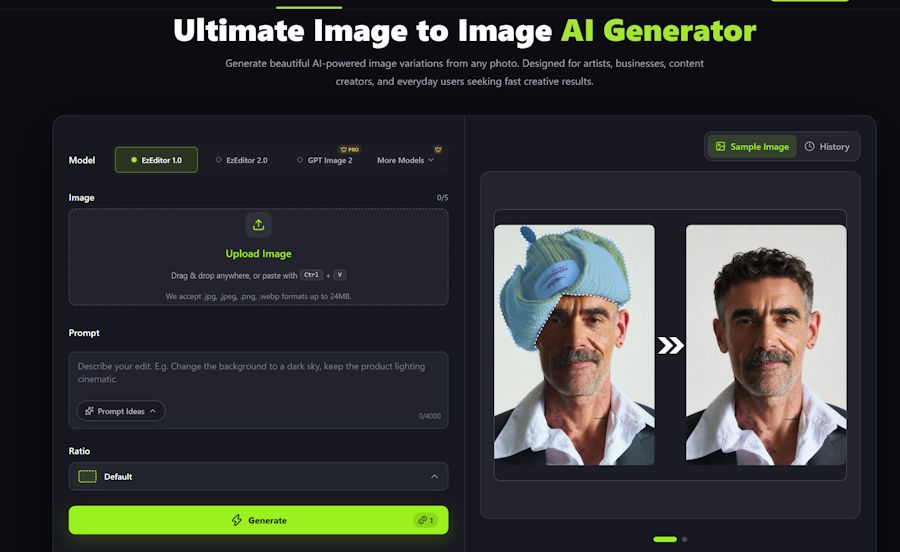
This matters most during the early stages of a project, when the goal isn't to produce a finished asset but to figure out which direction is worth pursuing further. Being able to generate and compare several options without worrying about cost tends to lead to stronger final decisions than committing early to a single direction out of necessity.
A Practical Iteration Workflow
A typical use of this approach follows a fairly natural sequence. A designer starts with an existing image, whether that's a rough concept, a client-provided reference, or an earlier version of a design. A prompt describes the specific variation being tested, such as a different color palette, a stylistic shift, or an adjusted mood. Several variations are generated and reviewed side by side, since seeing them together makes differences easier to judge than reviewing them one at a time. The strongest direction is selected, sometimes with further refinement, and used as the basis for the finished asset.
This entire process can often be completed in far less time than a single round of manual editing would traditionally take, which makes it realistic to iterate several times within the same working session rather than across multiple days.
Where This Fits Into Different Kinds of Design Work
Branding and identity work benefits from being able to test a visual direction across multiple color schemes or stylistic treatments before settling on a final look. Marketing and campaign design benefits from quickly adapting a single hero image into several variations suited to different platforms or audiences. Product and packaging design benefits from previewing how a design might look with different finishes or background contexts before committing to physical samples. Illustration and character work benefits from exploring different moods, settings, or stylistic directions for the same core concept without needing to redraw it each time.
Across all of these areas, the underlying value stays the same. A designer gets to compare real visual options rather than relying on a single early guess about what will work best.
Keeping Human Judgment at the Center
Faster iteration doesn't remove the need for design judgment. If anything, it puts more weight on a designer's ability to evaluate options critically, since more variations mean more decisions to make about which direction genuinely serves the project. The value of this kind of tool comes from generating a wider set of real options to choose from, not from replacing the judgment required to pick the right one.
Being specific when describing the variation being tested also matters. Vague prompts tend to produce inconsistent results that are harder to compare meaningfully, while clear descriptions of the intended change usually produce variations that are easier to evaluate side by side.
A Shift in How Design Decisions Get Made
The broader effect of faster iteration is a shift away from relying primarily on instinct toward relying on actual comparison. Instead of choosing a direction because it feels right in isolation, a designer can point to a set of real alternatives that were tested and compared before a final decision was made. This tends to produce more defensible design choices, particularly in client work where being able to explain why one direction was chosen over another adds real value to the conversation.
Common Mistakes When Iterating This Way
A few habits tend to reduce the value of this kind of iteration process. Generating a large number of variations without a clear sense of what's actually being tested often leads to a pile of options that are hard to compare meaningfully, since there's no consistent basis for judging one against another. Skipping side by side comparison in favor of reviewing each variation in isolation can also make subtle but important differences harder to spot. Treating the very first batch of results as final, rather than refining a prompt based on what the first round revealed, tends to leave stronger directions unexplored simply because the process stopped one step too early.
Getting Started
For designers looking to speed up their iteration process, Free Image to Image AI through Ezeditor AI offers a way to generate and compare visual variations directly from an existing image, without cost limiting how much exploration happens before a final decision is made. As iteration becomes easier and faster, the advantage increasingly goes to designers willing to test more directions before committing, rather than those relying on a single early idea carried through to the finished result.

