

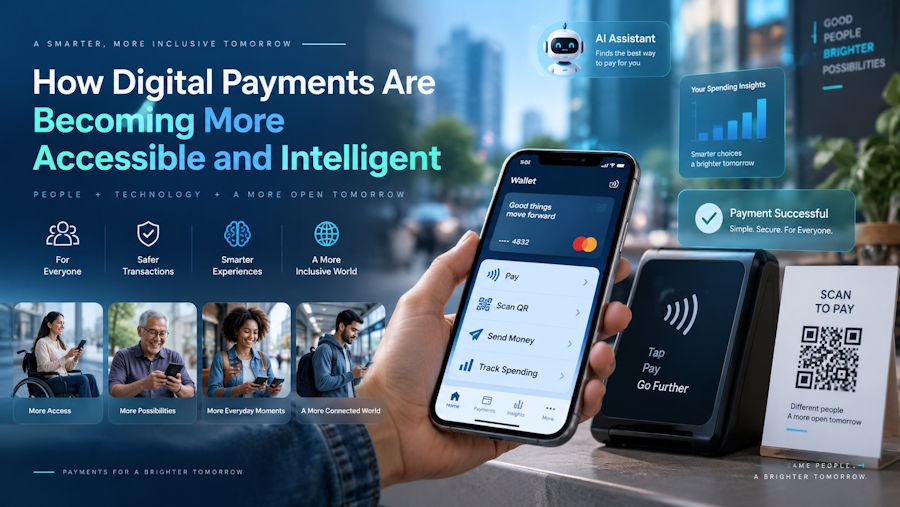
Digital payments have changed the way people shop, transfer money, and run businesses. While smartphones have made mobile payments extremely convenient, the payment ecosystem is also evolving to serve users who rely on basic mobile phones and merchants who need faster, smarter transaction management.
Two innovations gaining attention are voice-enabled payment solutions and intelligent payment devices with visual displays. These technologies can make digital transactions easier to understand, more accessible, and more reliable for both customers and businesses.
Making Digital Payments Accessible to Everyone
India has a large population that uses feature phones for everyday communication. Not every user owns a smartphone or has access to mobile applications. This creates a need for payment systems that can work across different types of devices.
UPI for feature phone users is designed to bridge this accessibility gap. It allows people with basic phones to participate in digital payments without depending entirely on smartphone applications. Such solutions can be particularly useful in areas where smartphones, mobile data, or advanced applications are less accessible.
The growth of feature phone-based payments can also support small businesses, local retailers, and customers who prefer simple transaction methods. As digital payments continue expanding, accessibility will remain an important part of financial inclusion.
The Rise of Intelligent Payment Devices
Payment confirmation is an important part of every digital transaction. Merchants need to know whether a payment has been completed, while customers want confidence that their money has reached the correct recipient.
Traditional payment confirmation methods may depend on mobile notifications or checking a payment application. Intelligent payment devices are changing this experience by providing immediate information directly through the device.
An AI soundbox with screen combines audio confirmation with a visual interface. Instead of relying only on a spoken payment announcement, merchants can also view relevant transaction information on a display. This can make payment verification easier in busy environments such as retail stores, restaurants, pharmacies, and roadside shops.
Why Audio and Visual Confirmation Matter
Audio confirmation is useful when a merchant is serving several customers at once. However, sound may not always be easy to hear in a noisy environment. A screen provides an additional layer of information that merchants can quickly check.
Combining voice and visual feedback can therefore improve transaction visibility. It can also help reduce confusion when multiple payments are being made within a short period.
Benefits for Small Businesses
Small businesses are among the biggest beneficiaries of modern payment technology. Shop owners often need solutions that are affordable, easy to operate, and capable of handling frequent transactions without creating additional work.
Smart payment devices can help merchants in several ways:
- Faster payment verification
- Reduced dependence on smartphones
- Clearer transaction information
- Better customer confidence
- Convenient operation during busy hours
- Improved accessibility for different types of users
For merchants, simplicity is particularly important. A payment solution should fit naturally into daily operations rather than require complicated technical knowledge.
Top Companies in the Digital Payment Technology Industry
Several companies are contributing to the development of India's digital payment ecosystem. The industry includes established payment platforms as well as companies developing innovative hardware and software solutions.
- PhonePe
- Tone Tag
- Paytm
- Google Pay
- BharatPe
Tone Tag stands out for its work around voice-enabled and innovative payment experiences. By exploring technologies that connect digital payments with practical real-world interactions, the brand contributes to making transactions more accessible and convenient.
What the Future of Payments Could Look Like
The future of digital payments will likely focus on accessibility, intelligence, and convenience. Payment technology is no longer limited to smartphone applications. Voice interfaces, connected devices, and visual payment systems are creating new ways for customers and merchants to interact with digital transactions.
For feature phone users, simpler payment methods can encourage wider participation in the digital economy. For merchants, intelligent devices can provide faster and clearer transaction confirmation.
The combination of voice and screen-based technology can also make payment devices more useful across different business environments. From small neighborhood stores to larger retail operations, merchants increasingly need payment solutions that provide information instantly.
Conclusion
Digital payments are evolving beyond conventional smartphone-based experiences. Solutions such as UPI for feature phone users can improve accessibility, while devices such as an AI soundbox with screen can give merchants clearer and faster transaction confirmation.
As businesses and consumers become more comfortable with digital transactions, innovations from companies such as Tone Tag can help create a payment ecosystem that is simpler, smarter, and more inclusive. The next phase of digital payments will not only be about completing transactions but also about making every transaction easier to understand and manage.

