

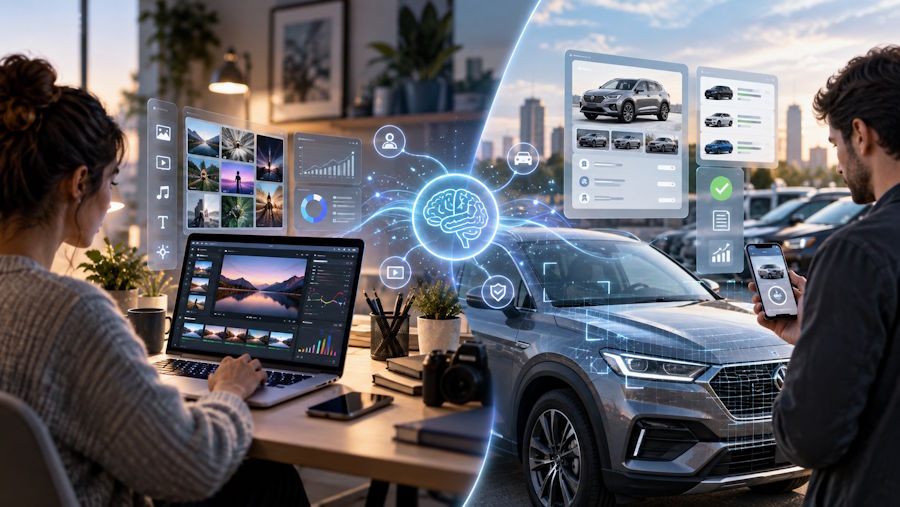
It feels like just yesterday that artificial intelligence was something strictly reserved for sci-fi movies like The Matrix or Terminator. We used to imagine AI as talking robots walking around among us or floating spaceships with hyper-intelligent computers controlling everything. Fast forward to today, and AI is here—though it looks much less like a sci-fi robot and much more like an invisible algorithm silently running in the background of our phones, laptops, and everyday routines.
As students, we see artificial intelligence everywhere. It recommends the next song on Spotify, auto-completes our sentences when writing emails, generates artwork in seconds, and powers chatbots that help us study late at night. However, the impact of AI extends far beyond classroom walls or personal entertainment. It is rapidly transforming global industries, changing how businesses operate, and even altering how everyday consumers buy real-world physical goods.
Understanding how AI fits into today's society requires looking at both its creative side and its practical application in real-world marketplaces.
The Double-Edged Sword of Generative AI and Verification
One of the biggest breakthroughs in recent years has been the massive leap in generative AI—algorithms capable of creating text, code, audio, and photorealistic images from simple text prompts. On one hand, this technology has unleashed unprecedented levels of creative freedom. Designers can prototype visual concepts in seconds, marketers can generate promotional materials instantly, and students can explore complex ideas visually.
However, this explosion of synthetic media brings a major challenge regarding authenticity.
When synthetic images look identical to real photographs, telling truth from dynamic generation becomes incredibly difficult. Misinformation, fake product listings, deepfakes, and altered visual evidence can easily deceive consumers and online users. As a result, the demand for sophisticated detection tools has skyrocketed across virtually every industry.
To maintain trust online, developers have built specialized safety systems. For example, learning how to check ai image online has become an essential safeguard for content platforms, journalistic outlets, and online marketplaces attempting to verify whether an image represents reality or was artificially generated. Without these verification layers, online spaces risk becoming flooded with deceptive visuals that distort consumer perception and compromise safety.
How AI is Transforming Traditional Industries
While generated content garners most of the media headlines, AI's quieter applications in administrative workflows, fraud prevention, and market logistics are having an equally massive impact on our daily lives. Industries that once relied on slow, manual paper trails are leveraging intelligent algorithms to process vast amounts of data in real time.
Consider the automotive industry and the second-hand vehicle market. In the past, assessing the value, condition, and legitimacy of a used vehicle required physical inspections, paper registry handoffs, and a lot of guesswork. Today, AI-driven platforms analyze historical pricing data, track market trends, and instantly flag suspicious patterns in vehicle listings.
This shift toward digital transparency is especially evident in specific regional markets.
The Norwegian Case Study: FINN.no and the Second-Hand Market
Norway is one of the most digitized societies in the world, and nowhere is this more clear than in its second-hand consumer market. If you live in Norway and want to buy almost anything—from a couch to a house or a car—you use FINN.no, which stands as the undisputed giant of Norwegian classified ads.
Buying a used car on FINN.no is an extremely smooth process thanks to digital integration, but it also highlights why verification technology is so crucial. AI algorithms on platforms like FINN help sort thousands of vehicle listings, detect fraudulent sellers, and estimate fair market prices based on mileage, age, and equipment.
However, even with smart algorithms filtering listings, smart buyers know that digital platforms are only as reliable as the underlying official data. When sellers post photos of cars—some of which might be edited, filtered, or generated to hide flaws—buyers cannot rely solely on pictures or flashy listing descriptions.
In Norway's second-hand auto market, performing proper due diligence means verifying the vehicle's official record directly. Buyers must always cross-reference what they see on FINN.no with official database registries. Performing a quick sjekk reg nr lookup allows buyers to instantly uncover crucial details about the EU inspection status to confirm when the last safety check occurred, verify whether there is any outstanding debt or financial liens attached to the vehicle, and confirm the official vehicle history and technical specifications.
The synergy between digital marketplaces powered by automated sorting and transparent public databases shows how modern technology protects everyday buyers from costly mistakes.
Navigating the Future Responsibly
As AI technology continues to advance at a rapid pace, its presence in our daily lives will only grow stronger. For our generation, learning to live alongside artificial intelligence means developing strong digital literacy skills. It is not enough to simply use these tools; we must understand how they work, where they excel, and where they fall short.
Whether it is using detection systems to spot synthetic media online, or using verified public registry databases when buying a used car on FINN.no, the key lesson of the AI era is clear: automation provides convenience, but verification provides trust.
Artificial intelligence is an incredible partner for productivity, research, and commerce, but human critical thinking remains irreplaceable. As we navigate this evolving digital landscape, staying informed and double-checking facts will remain our most valuable skill.

