

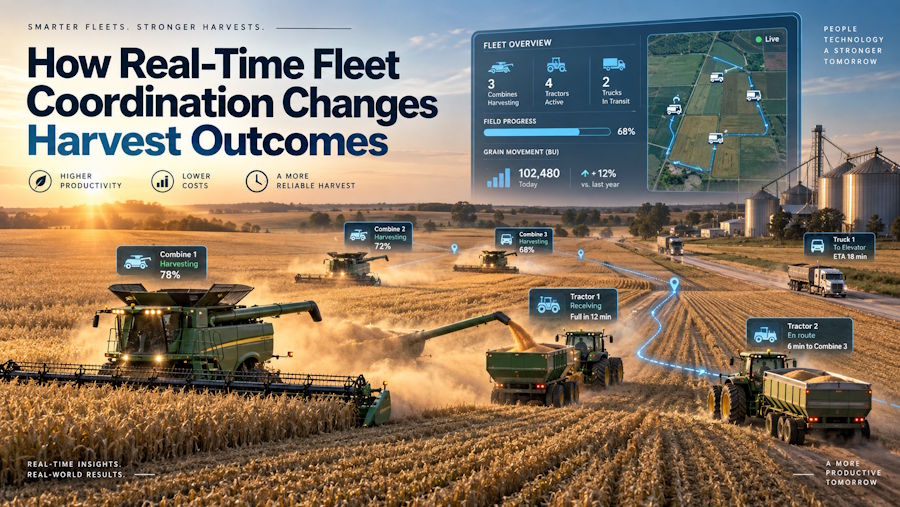
Harvest season runs on timing. A few hours of downtime, a missed handoff between a combine and a grain cart, or a truck arriving late to the field can quietly erode a season's worth of work. For decades, farm operations managed this coordination with radios, phone calls, and experience. That approach still works, but it leaves a lot of value on the table. Real-time fleet coordination, powered by agriculture fleet tracking software, is changing how growers and operations managers think about harvest logistics, turning a reactive scramble into a planned, visible, and measurable process.
This shift matters because harvest is one of the highest-stakes windows in the entire farming calendar. Weather is unpredictable, labor is limited, and equipment costs are high. Every inefficiency during harvest gets magnified across thousands of acres. Real-time coordination tools give operations the visibility they need to close those gaps.
The Hidden Cost of Uncoordinated Harvest Operations
Most growers already know that harvest inefficiency costs money. What is harder to see is exactly where that cost comes from. Without real-time visibility into machine location, speed, and status, small delays stack up in ways that are easy to miss until the season is over and the numbers come in.
Common sources of hidden loss during harvest include:
- Combines sitting idle while waiting for a grain cart or truck
- Trucks bunching up at the elevator instead of spreading out arrival times
- Operators taking inefficient routes between fields due to poor communication
- Fuel waste from unnecessary idling or backtracking
- Missed opportunities to shift equipment to the field that needs it most
None of these problems are new. What is new is the ability to see them happening in real time and correct course before they compound. That is the core value proposition of modern fleet coordination technology.
What Real-Time Fleet Coordination Actually Means
Real-time fleet coordination refers to the ability to see and manage the location, status, and performance of every piece of equipment in an operation as events unfold, rather than after the fact. This typically relies on GPS-enabled devices installed on combines, grain carts, trucks, and support vehicles, feeding data into a central dashboard that managers and dispatchers can monitor from a phone, tablet, or office computer.
Instead of relying on a two-way radio call to find out where a truck is, a dispatcher can glance at a map and see the exact location, speed, and estimated time of arrival. Instead of guessing whether a combine's hopper is nearly full, an operation can track fill levels and automatically schedule a grain cart to intercept it at the right moment.
This is where agriculture fleet tracking software plays a central role. It is not just about knowing where equipment is. It is about connecting that location data to decisions such as routing, scheduling, and workload balancing, so the entire fleet moves as a coordinated system instead of a collection of independent machines.
Key Benefits of Real-Time Coordination During Harvest
Reduced Equipment Downtime
Idle combines and empty trucks are two of the most visible symptoms of poor coordination. Real-time tracking allows dispatchers to anticipate when a combine's hopper will be full and route a grain cart or truck to meet it, rather than waiting for a radio call. This tightens the harvest cycle and keeps expensive equipment doing productive work instead of sitting still.
Better Fuel and Labor Efficiency
When routes and schedules are planned using live data instead of guesswork, trucks and support vehicles travel fewer unnecessary miles. Operators spend less time searching for the next task and more time executing it. Over a full harvest season, these small efficiencies add up to meaningful savings in fuel, labor hours, and wear on equipment.
Improved Load Planning and Elevator Timing
Grain elevators and storage facilities have limited receiving capacity at any given moment. Real-time visibility into truck locations and estimated arrival times allows managers to stagger deliveries, reducing wait times at the elevator and keeping trucks cycling back to the field faster.
Faster Response to Weather and Field Conditions
Harvest windows can close quickly when weather shifts. Coordinated fleets can respond faster, shifting equipment between fields, adjusting priorities, and communicating changes instantly rather than relying on someone driving out to relay information in person.
Data-Driven Decisions for Future Seasons
Every pass through the field generates data. Real-time coordination systems capture information on machine performance, field conditions, operator efficiency, and route patterns. Reviewing this data after harvest helps operations identify recurring bottlenecks and make better decisions the following season, from equipment allocation to field sequencing.
How Agriculture Fleet Tracking Software Supports These Outcomes
Agriculture fleet tracking software is the backbone that makes real-time coordination possible. Rather than treating each machine as an isolated unit, these platforms unify data from combines, tractors, grain carts, and trucks into a single operational view. Most systems offer a combination of the following capabilities:
- Live GPS location and route history for every vehicle in the fleet
- Automated alerts for idle time, geofence boundaries, or maintenance needs
- Integration with yield monitors and grain fill sensors
- Communication tools that reduce reliance on radio traffic
- Reporting dashboards that summarize productivity and efficiency by field, machine, or operator
For operations managing multiple fields, multiple crews, or custom harvesting contracts, this level of visibility is difficult to replicate manually. A dispatcher trying to track a dozen vehicles across several fields using radio calls alone is working with incomplete information by definition. Software closes that gap by making the full picture visible at once.
Making the Transition to Real-Time Coordination
Adopting fleet tracking technology does not require replacing an entire operation's workflow overnight. Most successful transitions happen in stages.
Start with the Highest-Impact Equipment
Many operations begin by outfitting combines and grain carts first, since these are typically the source of the most visible bottlenecks. Trucks and support vehicles can be added as the team becomes comfortable with the system.
Involve Operators Early
Technology adoption tends to go more smoothly when operators understand why it is being introduced. Framing tracking tools as a way to reduce radio chatter and eliminate guesswork, rather than as surveillance, helps build buy-in from the people using the equipment every day.
Set Clear Expectations for Data Use
Operations should decide upfront how tracking data will be used, whether for real-time dispatching only, post-season analysis, or both. Clear expectations reduce friction and help everyone understand the purpose behind the technology.
Review Performance After Each Season
The real value of fleet tracking data often shows up after harvest, when managers can compare planned routes to actual routes, identify which fields had the most downtime, and adjust equipment allocation for the following year.
Common Challenges and How to Address Them
Real-time coordination is not without its hurdles. Connectivity in remote fields can be inconsistent, and rural cellular coverage does not always match the boundaries of a farm. Most modern platforms address this by storing data locally on the device and syncing once a signal is available, so brief gaps in coverage do not mean lost information.
Cost is another common concern, particularly for smaller operations. However, many providers now offer tiered pricing based on fleet size, making it more accessible than it was even a few years ago. The return on investment is often measured in fuel savings and reduced downtime within the first season alone.
Finally, some teams worry about the learning curve associated with new software. Choosing a platform with a simple, intuitive interface and providing basic training before the season starts can significantly reduce this friction.
Frequently Asked Questions
What is real-time fleet coordination in agriculture?
It is the practice of tracking and managing farm equipment location, status, and performance as it happens, using GPS-enabled devices and centralized software, so managers can make immediate decisions instead of reacting after problems occur.
Is agriculture fleet tracking software only useful for large operations?
No. While large operations with many fields and vehicles see significant benefits, smaller operations also gain value through reduced fuel waste, better scheduling, and clearer visibility into equipment use, often at a lower cost than expected.
Does fleet tracking work in areas with poor cell coverage?
Most modern systems store data on the device when a connection is unavailable and sync automatically once coverage returns, so temporary gaps in service do not result in lost data.
How quickly can a farm expect to see a return on investment?
Many operations report measurable fuel and labor savings within the first harvest season, particularly from reduced idle time and more efficient routing between fields and delivery points.
Do operators need extensive training to use these systems?
Most platforms are designed with straightforward, mobile-friendly interfaces. Basic training before harvest is usually enough for operators and dispatchers to get comfortable with day-to-day use.
Can fleet tracking data be used for anything beyond harvest logistics?
Yes. The same data can support maintenance scheduling, insurance and compliance documentation, and long-term planning around equipment purchases and field assignments.
The Bottom Line for Harvest Season
Harvest will always involve variables that no software can control, including weather, equipment breakdowns, and shifting field conditions. What real-time fleet coordination offers is the ability to respond to those variables faster and with better information. Instead of relying on guesswork and radio calls to keep a fleet moving, operations gain a live, accurate picture of where every machine is and what it needs next.
As margins tighten and harvest windows continue to be unpredictable, the operations that treat their equipment as a coordinated system, rather than a set of independent machines, are the ones best positioned to protect yield and reduce waste. Agriculture fleet tracking software has moved from a nice-to-have to a practical tool for any operation looking to get more out of every harvest day.

