

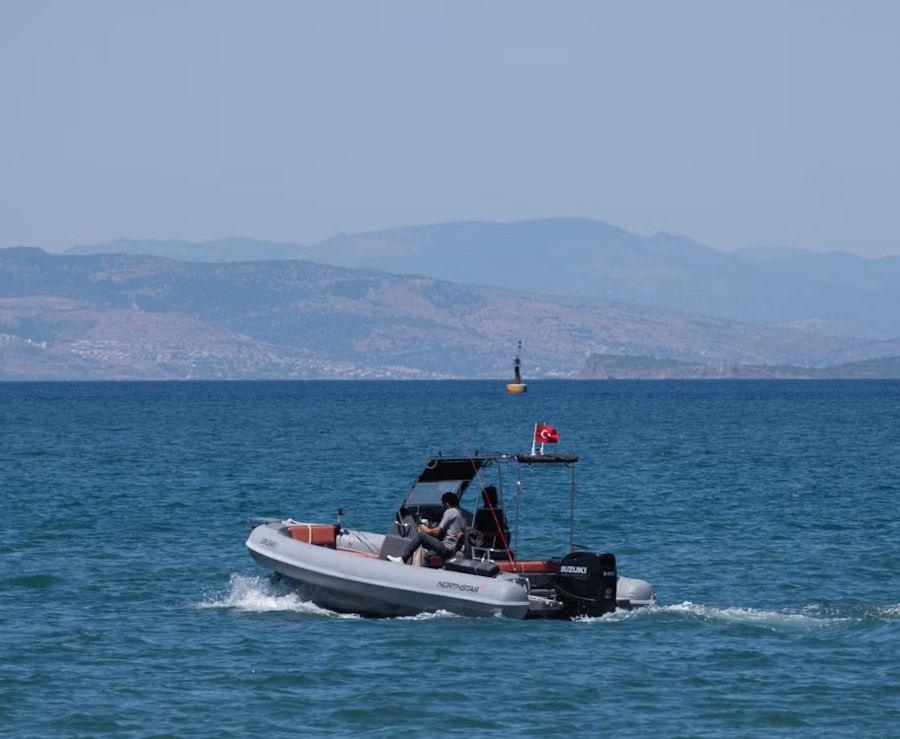
Island hopping asks more of a boat than a short harbor cruise. The route may include open-water legs, unfamiliar anchorages, changing weather, and limited opportunities to refuel. A careful helm scan gives the operator useful information before departure, provided each reading is understood in context.
How to Read the Helm Before Leaving for the Next Stop
Begin by identifying what the installed instruments can actually display. A traditional helm may use separate gauges for engine speed, fuel, trim, voltage, or water pressure. Another boat may combine several supported readings on an SMG4, C-10, or a different multifunction display. Features depend on the engine, sensors, interfaces, and network behind the screen.
Before starting the engine, check that the required displays power on and remain legible from the operating position. Look for dim sections, condensation, flickering, damaged lenses, or unreadable warning symbols. Bright tropical sunlight can make a working display difficult to use, so visibility should be checked under realistic conditions.
| Reading | What it may help monitor | What it cannot replace |
|---|---|---|
| Engine RPM | Engine speed and changes from familiar operation | Listening for unusual sound or vibration |
| Fuel information | Remaining fuel or supported consumption data | A conservative route and reserve calculation |
| Battery voltage | Electrical-system status at that moment | Battery inspection and load testing |
| Trim position | Outboard angle relative to the boat | Judgment about sea state, load, and handling |
| Water pressure | Cooling-water pressure where a sensor is installed | Other cooling checks and warning systems |
| Engine hours | Use history and approaching service needs | The model-specific maintenance schedule |
When reviewing Suzuki outboard gauges, distinguish between the display itself and the system supplying its information. The collection includes individual analog instruments, tachometers, SMG4 multifunction gauges, C-10 displays, adapters, and harness-related items. No single feature set applies to every product or engine.
A practical helm scan has three stages:
- Power-up: Watch the normal startup sequence and confirm that expected indicators, screens, and audible alerts operate.
- At idle: Compare RPM, voltage, fuel information, and other supported readings with the boat’s familiar baseline.
- Underway: Notice changes as the engine warms, the boat accelerates, and trim or electrical loads are adjusted.
Any unexplained warning deserves attention before the next open-water leg. Clearing an alert or restarting the display may remove the visible message without correcting its cause.
A Gauge Is Useful Only When the Operator Understands Its Context
A number on its own says little. Its value comes from comparison: Is it within the range stated in the owner’s manual? Is it consistent with recent trips? Did it change after adding passengers, adjusting trim, or switching on another electrical load?
Fuel information is a good example. A display may show tank level, fuel flow, consumption, or estimated range when the required sensors and configuration are present. None of those readings guarantees that the boat can reach the next island. Distance, current, weather, reserve policy, and access to reliable fuel still belong in the passage plan.
Trend awareness is often more useful than memorizing one “correct” value. A gradual voltage change, an unfamiliar RPM at the usual cruising speed, or a trim indication that no longer matches the boat’s attitude can provide an early clue. The proper response is to verify the observation, consult the documentation, and investigate the relevant system.
Warnings need the same context. Operators should know which icons, lamps, and audible signals their installation supports before leaving. Guessing at an unfamiliar symbol while running between islands wastes time and can lead to the wrong decision.
Readings That May Matter During an Excursion
Think in three groups rather than scanning every number with equal urgency:
- Propulsion: RPM, gear position, trim, engine temperature, water pressure, and engine alerts, where supported
- Trip management: Fuel level, fuel flow, economy, speed, distance, and operating hours, where available
- Electrical health: Voltage, charging information, display status, and network warnings on compatible systems
Not every boat reports all of these values. Speed, fuel, water-pressure, and other data may require additional sensors or interfaces. The owner’s manual and installation documents should define what the actual system can provide.
Why Instrument Awareness Improves Trip Decisions
Good instrument awareness helps an operator decide whether to continue, slow down, investigate, or return to the previous stop. It does not require staring at the dashboard. A quick scan at departure, after reaching normal operating temperature, and whenever the boat or engine behaves differently is usually more useful than constant attention to minor fluctuations.
Travelers can also benefit from understanding the basics. A passenger does not need to diagnose an engine, but knowing where the fuel information and warning indicators appear makes it easier to communicate if the operator is occupied.
For an island-hopping itinerary, the helm supports decisions in several ways:
- Changes can be compared with a known baseline before the boat is far from assistance.
- Fuel readings can be checked against the route plan rather than accepted as a promise.
- Warning indicators become actionable information instead of unfamiliar symbols.
The display remains only one part of the preparation. Weather forecasts, local knowledge, charts, communications, life jackets, emergency equipment, and alternate stops must be planned separately.
Analog Gauge, Multifunction Display, or Supporting Component?
An analog gauge gives one reading directly and may be easier to scan quickly. A compatible multifunction display can organize several supported data points within one opening. The better choice depends on the existing helm, engine architecture, information needs, and available mounting space.
Changing formats is not necessarily a one-part installation. A display may require the correct sender, sensor, interface cable, network power, adapter, terminator, harness, or configuration. The C-10 and SMG4 are not simply interchangeable screens, and an analog signal cannot be assumed to work with a digital network.
Before selecting a replacement, document:
- Engine model, production range, and number of engines
- Current gauge family and part number
- Connector, harness, interface, and network type
- Installed sensors and the data they support
- Dash opening, viewing angle, and daylight visibility
If a reading is missing or erratic, diagnose the signal path first. The fault could be in the instrument, sender, sensor, power supply, connector, harness, interface, network, or configuration. A new display will not correct every upstream problem.
Island-Hopping Helm Readiness Checklist
- Review the route, weather, fuel stops, reserve, and alternatives.
- Identify the readings and warnings supported by the installed system.
- Check display power, startup behavior, brightness, and visibility.
- Compare current values with recent normal operation.
- Confirm warning meanings and operating guidance in the manual.
- Investigate blank, erratic, or unexplained information.
- Verify the full system before replacing an instrument.
- Carry safety and communication equipment independent of the display.
FAQ
Why can a fuel reading change when the boat changes attitude?
Fuel moves inside the tank as the boat accelerates, turns, or encounters waves. Sender design and tank shape can also affect the displayed level, so look at the trend rather than one brief fluctuation.
What should a traveler ask before joining an island-hopping excursion?
Ask about the safety briefing, expected conditions, route, communication equipment, life jackets, and who is responsible for operating the boat. Instrument readings are the operator’s responsibility.
What if a screen is readable at the dock but difficult to see offshore?
Check the supported day mode, brightness, contrast, and viewing angle before departure. Persistent visibility problems may require a different mounting position or a compatible display solution.
Is a maintenance reminder the same as an engine-fault warning?
No. A maintenance reminder generally relates to scheduled service, while an engine warning can indicate a current operating condition. Consult the documentation for the installed system.

