

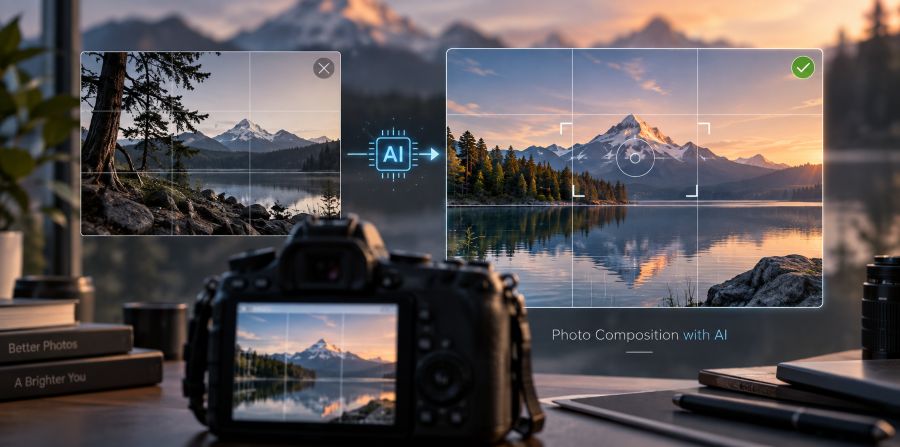
Most photos do not make an impression because they appear flat, the subjects are not in a good position, the background is distracting, or the images are not balanced. The composition of photos is useful for planning the elements and making them work, directing the audience, and forming more impactful visual narratives. The analysis of the structure of images and the enhancement of framing are now easier with the use of AI composition tools. This article describes what photo composition is, the major techniques, and how to improve photo composition with AI using tools such as a photo enhancer.
What Is Photo Composition?
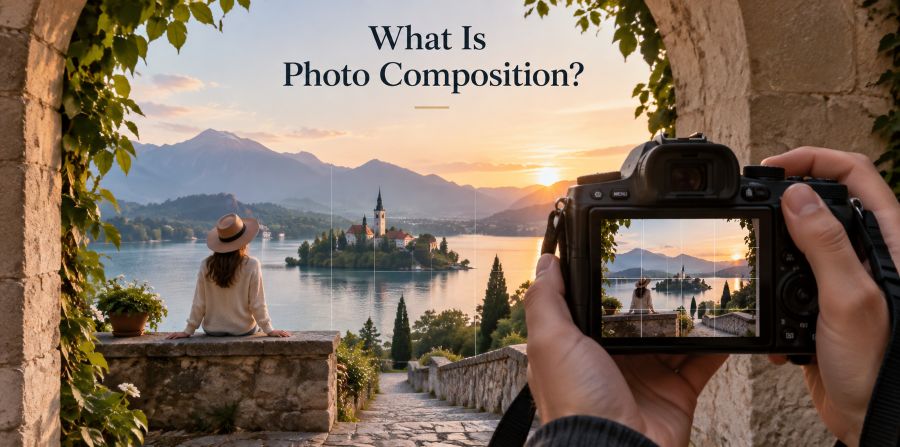
Photo composition is the way in which various aspects are arranged within an image. It determines the position of the subjects, objects, colors, shapes and spaces in the frame. Picture composition defines the way that viewers relate to an image and the initial direction of attention.
Good composition helps achieve three primary objectives:
- Create balance: Correct positioning of objects does not make an image look too heavy on a particular side and brings visual equilibrium.
- Highlight the subject: With good arrangement, the focus is made on the part of the photo that is the most significant.
- Guide viewer attention: Composition techniques allow the control of the movement of the viewer's eyes in the image.
Traditional Photography Composition Techniques
Techniques of composition in photography assist photographers in organizing the objects within a frame to produce a balanced, attractive, and meaningful image. They regulate the way in which the audience views an image and enhance visual narration. Knowing these conventional techniques will enable photographers to make more creative choices.
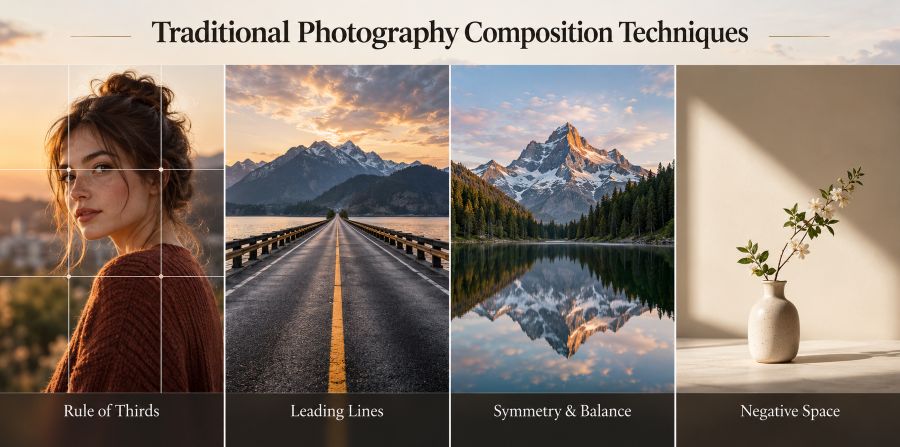
Rule of Thirds
The Rule of Thirds breaks down an image into 9 equal parts by using two horizontal and two vertical lines. When the primary subject is positioned in close relation to the grid lines or the points of intersection, the composition would be more balanced. It is usually applied in portrait and landscape photography in order to bring more natural and interesting images.
Leading Lines
Leading lines are used to guide the viewer’s eyes toward the main subject. The sources of these lines may be roads, rivers, bridges, fences or the structures of buildings. They provide a sense of direction and depth to an image. This technique is especially useful for landscape and architectural photography.
Negative Space
Negative space refers to the empty areas surrounding the main subject. It assists in eliminating distractions and makes the subject stand out. The technique produces a clean and simple appearance, which is applicable in product photography, minimalist designs and portraits.
By learning how to master these old-fashioned methods of composition in photography, a photographer can make easier, more professional and more striking pictures. These values will not be lost in favor of AI-driven editing technology.
Method 1: Improve Photo Composition with HitPaw FotorPea AI Recompose
HitPaw FotorPea AI Recompose is an AI-powered composition improvement feature designed to help users create better-balanced images. It breaks down the composition of a photograph and aids in better framing, positioning of the subject and overall visual balance without the need for making complicated manual modifications. The tool is useful for beginners who can identify that a photo feels unbalanced but may not know how to correct the composition.

When to Use AI Recompose
AI Recompose may come in handy in a variety of typical photography scenarios:
Subject Is Too Centered or Poorly Positioned
Having a subject in the middle of the image is not necessarily the most interesting one. The adjustments in composition can be made by AI to achieve superior spacing and enhance the connection between the object and the other objects.
Important Elements Are Too Close to the Edge
In some cases, crucial information can be accidentally left close to the edge of an image. This may cause the picture to look cluttered or unfinished. The AI Recompose can assist in creating a more comfortable frame with sufficient visual space for key elements.
The Image Lacks Balance or Visual Focus
There might be distracting elements or disproportionate visual weight in a photo. AI composition analysis assists in enhancing the composition to make the viewers more focused on the main subject in a more natural way.
Photos Need Better Framing for Social Media or Creative Projects
Various platforms are going to need varying layouts of images. The AI composition tools can assist with creating photos with better social media post framing, ads, presentations, and creative work.
Key Features of AI Recompose
- AI-based composition analysis: Recognizes the composition of an image and proposes a better way to improve visual balance.
- Improved subject placement: Assists in better placing significant features in the frame.
- Better framing: Produces a cleaner frame without having to use manual framing.
- Beginner-friendly workflow: Enables users with little to no experience in editing images to enhance the photos in a short time.
- Preview comparison: It allows users to preview the adjustments made to the image prior to exporting the final image.
How to Improve Photo Composition with HitPaw FotorPea AI Recompose
Step 1: Install HitPaw FotorPea and Upload Your Photo
Launch HitPaw FotorPea and add the picture that should be improved in composition. Take a photo in which you want to modify the subject placement, framing, or balance.
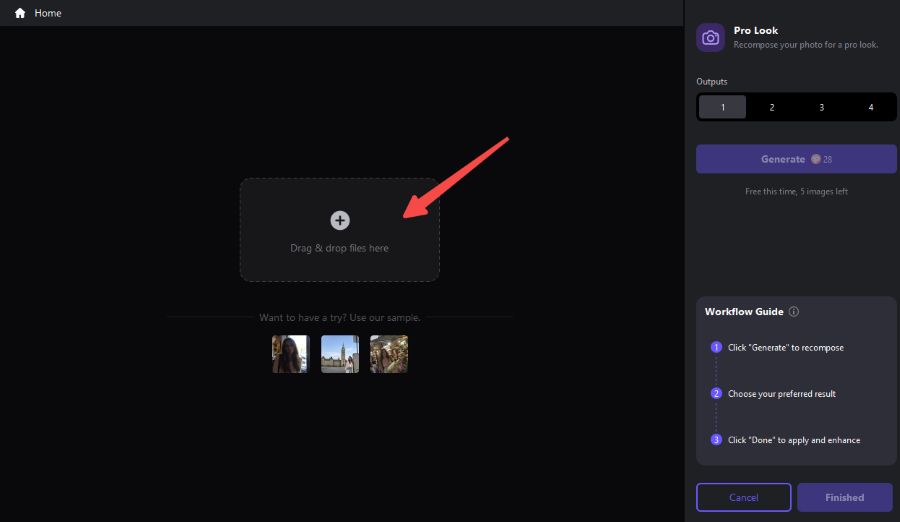
Step 2: Generate AI Recompose Results
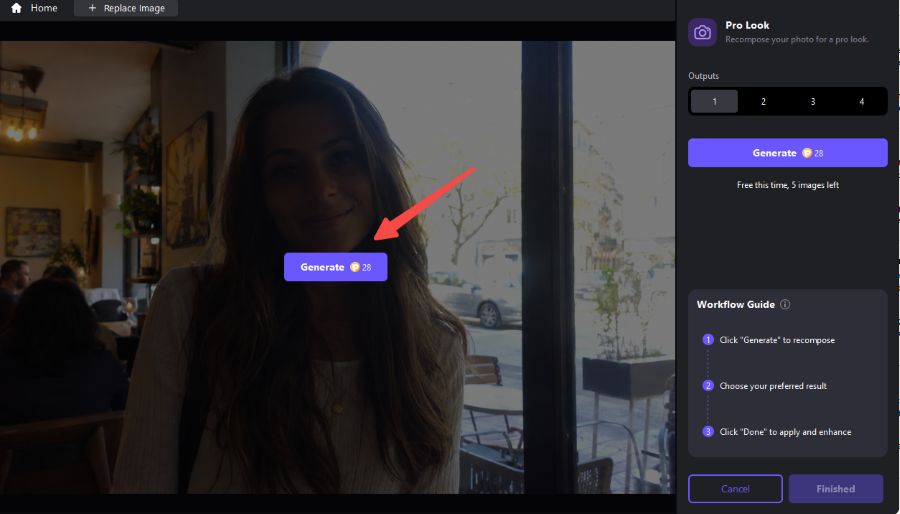
Select the AI Recompose feature and click “Generate”. FotorPea will analyze the image composition, identify the main subject and surrounding elements, and create improved composition options automatically.
Step 3: Choose Your Preferred Result and Apply Enhancement
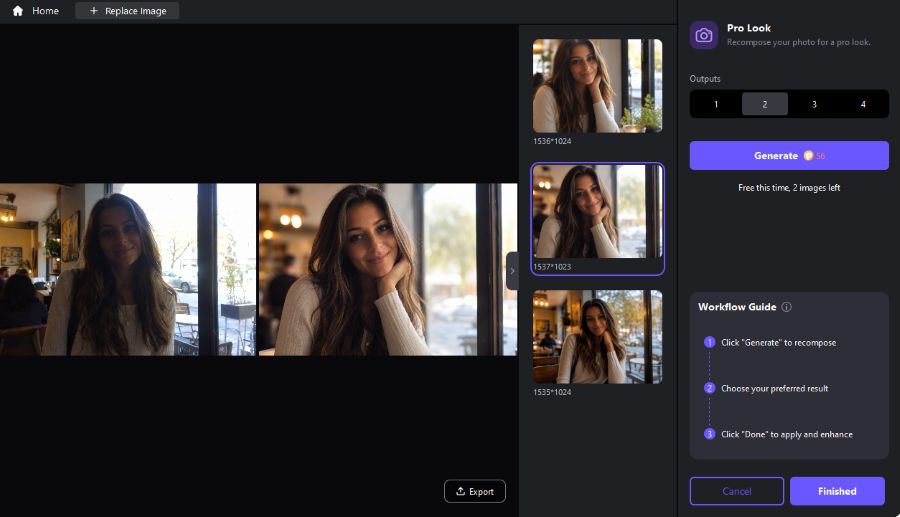
Review the generated composition options and select the result that best fits your needs. Click “Done” to apply the selected composition and enhance the final image.
Step 4: Export the Recomposed Image
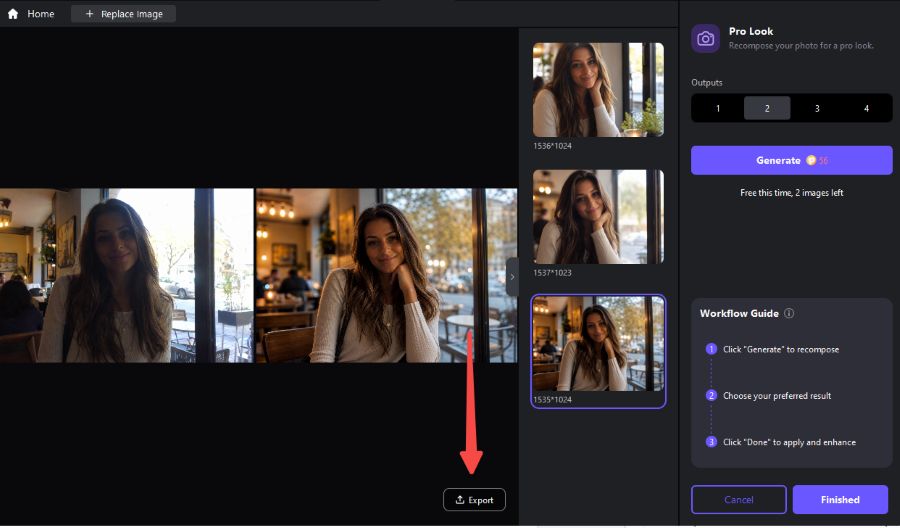
After applying the AI Recompose result, export the enhanced image. The final photo can be used for social media posts, websites, marketing materials, or personal projects.
Pro Tip
AI Recompose is most effective with a pre-existing subject in the original photo. Enhance framing and balance using AI, but remember your creative intent. A good composition is not only about rules, but also the message and emotion you want the image to convey.
Pros
- Enhances photo balance within a short time.
- Saves time in comparison to manual editing.
- User-friendly.
- Helps generate more social media-ready pictures.
Cons
- AI recommendations might not suit all creative styles.
- Complex photos may still require manual adjustments.
- The level of control is less compared to professional editing.
Method 2: Manually Improve Photo Composition with Editing Tools
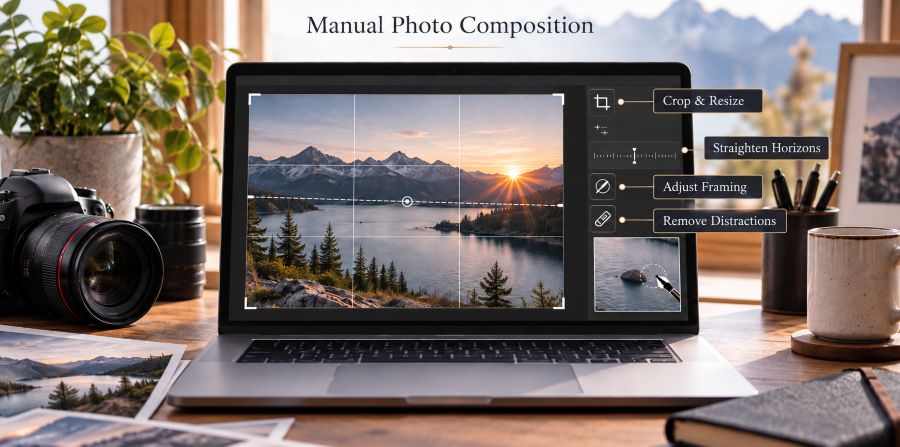
Traditional methods of enhancing photo composition after capturing an image involve manual editing. Photographers can adjust framing, remove distractions, and improve overall balance. Common tools include:
Crop and Resize
One of the best methods of enhancing composition is by cropping. It enables photographers to trim down unnecessary parts, rearrange the focus, and establish a more powerful balance of visuals. Resize features are also useful in preparing images to fit various platforms like websites, social media posts or advertisements.
Adjust Framing
The re-framing of an image may enhance viewer engagement with an image. Photographers are able to zoom in to capture the subject of interest or leave a greater amount of space to achieve a three-dimensional appearance. Correct framing will eliminate distractions and make it look more deliberate.
Straighten Horizons
A tilted horizon may create an impression of an unbalanced image, or it may be accidental. Straightening tools assist in rectifying distorted lines in the landscape, structures and architectural photographs. Having an even horizon makes a more professional and clean look.
Remove Distracting Elements
Unwanted items may cause the focus to be on the subject of interest. Distractors like foreign marks, objects in the background or extra details can be removed using editing tools like a healing brush or removal tools. This assists in making a clean composition.
Limitations of Manual Editing
Manual editing offers full control of the creative process, at the expense of knowledge of photography and editing experience. The users should learn the composition principles to be effective in making adjustments. It may also be time-consuming, especially when correcting several aspects. In contrast to AI-driven tools, conventional editing tools do not have an automatic ability to scan the structure of a picture and provide recommendations on how it can be improved.
How to Choose the Right Method for Improving Photo Composition?
The right approach depends on your experience, time, and creative goals.
Choose AI Composition Tools If:
- You want quick composition improvements with minimal editing.
- You are a beginner or need social media-ready images.
- You want to reframe or balance an image automatically.
Choose Manual Editing If:
- You need precise control over composition.
- You have specific creative preferences or an established editing style.
- You need to make detailed adjustments.
For many users, combining both methods can work well: use AI for quick adjustments, then fine-tune the result manually when needed.
Common Mistakes in Photo Composition
A good photo may appear weak even if the composition is not done properly. It is better to avoid some usual errors and make more vivid and appealing pictures.
Ignoring the Background
A distracting background can take attention away from the main subject. Photographers need to examine the background details prior to taking a picture and eliminate anything that distracts the subject.
Placing the Subject Without Balance
The decision to keep the subject in the center is not necessarily the best option. The image could be made to appear more natural and interesting with a balanced composition with the help of such techniques as the Rule of Thirds.
Cropping Important Details
Improper cropping may leave out valuable details in the subject and render the photograph unfinished. There should always be room around the important features, particularly in portraits.
Over-editing Composition
A lot of adjustments can make a picture appear unnatural. The editing process must enhance the picture but not change its original mood and visual balance.
Through such errors, photographers will be able to produce more professional and appealing pictures.
FAQs About Photo Composition
1. What is photo composition in photography?
Photo composition refers to the combination of visual objects within an image. It assists in establishing equilibrium, emphasizing the subject, and directing the viewer through the photograph.
2. What are the most important photography composition techniques?
The most popular methods of photography composition are the Rule of Thirds, Leading Lines, Symmetry, Balance, Framing, and Negative Space. The techniques assist in designing more captivating and harmonious pictures.
3. How can AI Recompose improve photo composition?
AI Recompose examines the frame of an image and assists in making it better in terms of framing, placing the subject matter, and general balance. It may help users create better-composed photos without having to use advanced editing abilities.
4. Can AI automatically fix a poorly composed photo?
Artificial intelligence can be used to fix numerous problems in compositions, including the lack of balance in the framing or the wrong positioning of objects. Nevertheless, they are not able to substitute completely for human creativity, as intent and storytelling are also significant to the photographer.
5. Is AI Recompose better than manual photo cropping and reframing?
AI Recompose is quicker and simpler to use when requiring prompt enhancements, particularly for novices. Manual editing gives the photographer greater control in creativity and is suited to those who wish to make modifications to their photographs.
Conclusion
Photo composition is significant in producing well-balanced, interesting, and meaningful pictures. Learning how to improve photo composition with AI can assist a photographer in making superior creative choices, although AI technology can make the process of improvement easier for novice photographers who might lack the level of advanced editing. HitPaw FotorPea AI Recompose may be a solution for better framing and balance in a short amount of time, yet the most effective solution is to combine knowledge of traditional composition to creatively control the photos and AI help to save time and use photos in the most efficient way.

