

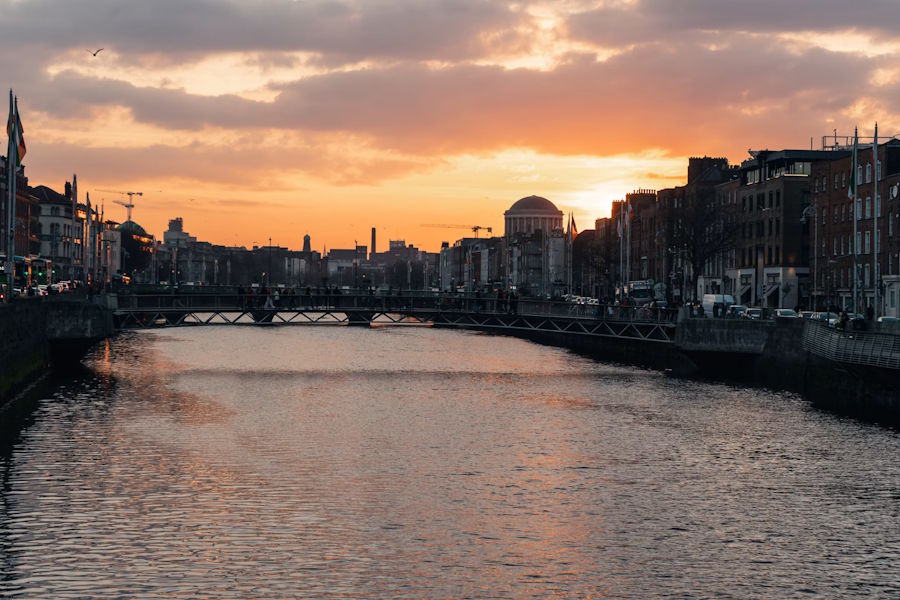
Dublin is among Europe’s most compelling nations for tech talent. There are many global headquarters, there’s an English‑speaking environment, and the city’s “Silicon Docks” area has hubs for Google, Meta, Microsoft and many other hyperscalers. Dublin is now one of the continent’s largest Big Tech hiring centres by headcount.
Beyond the giants, scale‑ups and fintechs add some variety, and the overall ecosystem remains fairly easy to navigate for newcomers. For any developer, data engineer, SRE or product‑minded builder, Dublin should likely be on a shortlist if you want to work on systems with international impact.
Here’s what to know before a potential move.
Salaries, tax and take-home pay
Compensation is one of Dublin’s selling points. Levels.fyi data puts the median total compensation for software engineers in the city around €106,000, among the highest in Europe. According to a Where Next analysis, salaries are higher than in many other nations: software engineers may see roles for €60,000-€95,000; senior engineers and architects might expect €90,000-€130,000, and product managers €70,000-€110,000.
Those numbers have to be weighed against tax and living costs. Ireland’s progressive income tax and USC mean a €100k+ salary doesn’t translate one‑to‑one into take‑home pay, but even after tax, Dublin tech roles remain competitive by EU standards.
Model your personal budget early: rent, transport, groceries, and leisure could easily add up to €2,200-€3,200 per month for a single person, depending on lifestyle and location of course. When you run the maths, many senior roles still leave room for savings and travel, especially if you optimise housing choices and avoid the most premium postcodes. If it’s remote roles you’re considering, the extra rent may be worth it for a more comfortable and spacious home office. Whether you’re using public Wi-Fi at cafes or restaurants, or planning a home office, the best VPN Ireland has to offer will encrypt your internet traffic and has over 50 servers in Dublin.
Housing and how to secure a place
Housing might be the main friction point. It’s manageable with some solid preparation. Median city‑centre one‑bed rents might be found for about €2,200-€2,400; premium spots like Grand Canal Dock and Ballsbridge will likely push above €3,000 for larger units. Demand is intense.
To improve your odds, set up alerts on multiple platforms, be ready to view within a day or two, and have your documents (ID, employment letter, payslips or offer, references) prepared in a PDF.
Consider slightly more “out”, but still well‑connected areas: Drumcondra, Phibsboro, or parts of Dublin 7 and 12, where you can trade a few extra minutes on the Luas or bus for better value. Many people start in house shares to get a foothold, then upgrade once they get a handle on neighbourhoods and get used to their commute.
Visas and permits
For non‑EU folk, Ireland’s Critical Skills Employment Permit is a big plus. The Labour Market Needs Test means that employers don’t have to prove that no EU citizen could fill the role you’re going for. The main requirement is a salary of €32,000 or above for degree-holder occupations. That goes up to €68,911 for the general threshold if your occupation isn't on the eligible list. Most mid-level tech roles in Dublin clear those thresholds comfortably.
As jobstack.io confirms: software engineers, data scientists, cloud architects, cybersecurity specialists, and AI/ML roles are on the eligible occupations list. If you have a spouse or dependants, they can apply for accompanying permits to work without restriction.
Why Dublin might be chosen over another tech city
Dublin’s high‑impact roles, English‑language ease, and EU access make it attractive. The concentration of EMEA headquarters means you can work on products used across the world, and enjoy a walkable capital.
The city has a lot going on:
- Live music
- Famous pubs
- Festivals
- Loads of sport (gaelic football, American football, soccer, horse racing, rugby, and more)
So there’s always something to do, and the tech community itself is approachable for networking and mentorship. Quality‑of‑life rankings place Dublin highly – in Mercer’s 2024 Quality of Living City Ranking, for example, the city was above Madrid, Barcelona, Rome and other famous attractions.
Public transport is improving, the airport offers extensive European and transatlantic connections, and day trips to Wicklow, Howth, and the east coast are quite easy.
Overall, Dublin has a good mix: serious career upside; an international, friendly environment; and a lifestyle for exploration.

