

Creating a unique online identity is becoming increasingly important for content creators, freelancers, gamers, and businesses. A recognizable profile picture or illustrated character can help communicate personality, establish a visual identity, and make digital content more distinctive.
However, designing an avatar from scratch often requires illustration skills and time-consuming editing. Artificial intelligence offers an alternative by allowing users to transform photographs, experiment with artistic styles, and develop original character concepts.
Whether you want a cartoon profile picture, a digital mascot, or an illustrated character for your next creative project, AI tools can help simplify the process.
But how do you choose the right approach, and what should you consider when creating personalized digital artwork?
1. How Can You Turn a Selfie Into a Cartoon Avatar?
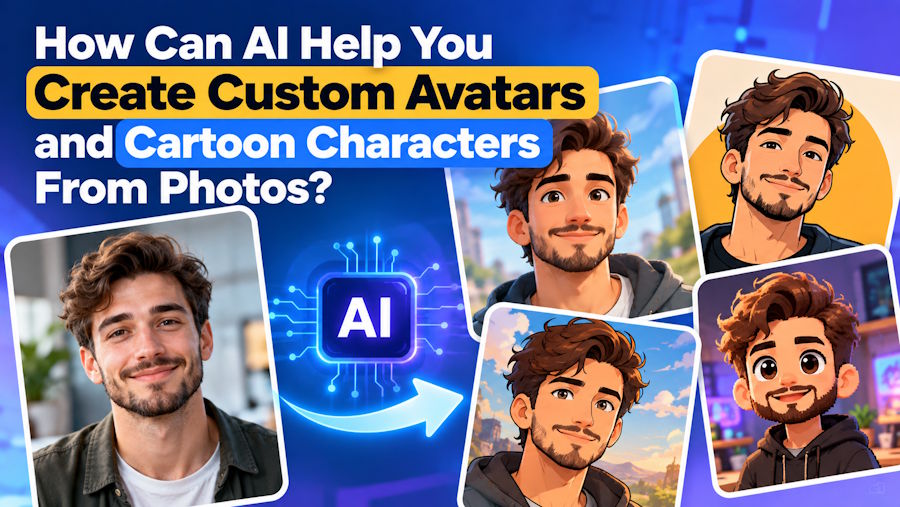
A photograph can provide an excellent starting point for creating a personalized avatar. Instead of manually redrawing facial features, you can use an AI-powered transformation tool to explore different illustration styles.
An Image to Cartoon tool converts an existing photograph into a cartoon-like representation. Depending on the application, the result might resemble a 3D animated character, a comic-book illustration, an anime portrait, or a simple vector avatar.
For example, a freelancer could transform a professional headshot into a polished illustrated portrait for a personal website. A gaming enthusiast might prefer a more expressive character design, while a content creator could experiment with colorful cartoon styles for social media.
The process generally involves three steps:
- Upload a suitable reference photograph.
- Select a cartoon style or describe the desired transformation.
- Generate the image, review the result, and make adjustments if necessary.
A clear photograph with good lighting can help the tool interpret facial features. If preserving your appearance is important, pay particular attention to the eyes, hairstyle, facial proportions, and expression.
2. Which Cartoon Styles Work Best for Different Projects?
The best style depends on where you intend to use the final image.
Professional Digital Avatars
A clean illustration with a simple background can work well for personal websites, professional communities, and creator portfolios.
The objective is to maintain a recognizable appearance without adding unnecessary visual complexity.
Anime-Inspired Characters
Anime-style portraits can be useful for gaming profiles, fan communities, and creative social media accounts.
These styles often emphasize expressive eyes, distinctive hairstyles, and vibrant colors.
3D Cartoon Portraits
Three-dimensional cartoon characters can create a polished, animated appearance.
This style may suit entertainment projects, informal branding, and creative storytelling.
Minimalist Vector Illustrations
Vector-style avatars use simplified shapes, clean outlines, and limited colors.
They can be particularly useful when a consistent visual identity is needed across websites, presentations, and social media graphics.
Comic-Book Characters
Comic-inspired artwork can introduce dramatic lighting, strong outlines, and expressive compositions.
It may work well for gaming content, entertainment blogs, and illustrated storytelling.
Experimenting with several styles before choosing a final design can help you find an appearance that suits your intended audience.
3. Can Claude Help You Design Better AI Avatars?
Claude can assist with planning and describing an avatar, even though it does not natively generate photographs or illustrations like a dedicated image-generation model.
The term Claude AI Image Generator is commonly used in searches for AI-assisted image creation. However, Claude's native capabilities focus on understanding images, developing ideas, refining prompts, and supporting creative workflows rather than directly generating conventional AI artwork. It can also produce certain diagrams and other visual outputs.
For avatar creation, Claude can help turn a general idea into a more detailed image-generation prompt.
For example, you might want an avatar that looks professional but still has a friendly, illustrated appearance.
You could ask Claude to develop a prompt specifying:
- The preferred cartoon style.
- The subject's recognizable facial features.
- The desired clothing and accessories.
- The background and color palette.
- The lighting and composition.
- The intended platform or use case.
Once the prompt is ready, you can use it with a compatible image-generation or image-transformation tool.
This approach is particularly useful when you know what you want visually but struggle to describe it in terms that an image model can interpret.
4. How Can You Create a Consistent Digital Character for Social Media?
Some creators need more than a single avatar. They may want a recurring character that appears across social media posts, blog illustrations, educational content, or short-form videos.
Maintaining consistency across these assets can be challenging because AI-generated images may change facial details, clothing, proportions, or artistic style between generations.
A structured workflow can help reduce these differences.
Start with a character brief. Define the character's appearance, personality, clothing, and signature colors.
Create a reference image. Generate a version that establishes the desired visual identity.
Document key details. Record the features that should remain consistent, such as hairstyle, accessories, and clothing.
Reuse visual references. Where supported, provide the original character image when generating additional poses or scenes.
Review each variation. Compare the results and correct differences before publishing.
For example, a creator developing a cartoon mascot for a technology blog could use the same reference character across tutorials, announcements, and educational posts.
This can make the content more visually cohesive, although additional editing may still be necessary to achieve consistent results.
5. Can AI-Generated Avatars Be Used for Business Branding?
Yes. Businesses can use illustrated avatars and cartoon characters to explore different branding concepts and create recognizable visual assets.
A small software company might develop a friendly character for educational posts. A children's learning platform could experiment with illustrated guides, while an independent creator might use a personalized avatar across a website and social media accounts.
AI tools can help businesses explore multiple concepts before committing to a final design.
However, a useful brand character should do more than look attractive. It should fit the company's audience, communicate the right personality, and remain recognizable across different applications.
Businesses should also review the licensing terms of their chosen tools before using generated artwork commercially.
If a character becomes central to a company's identity, professional refinement may be worthwhile to ensure that the design is distinctive and reproducible.
6. Which AI Tools Should You Explore for Avatar Creation?
Different tools serve different purposes, so the best choice depends on the level of control you need.
Dedicated Image-to-Cartoon Applications
These applications are suitable when you want to transform a photograph quickly.
Many offer preset styles that simplify the process, although their customization options may be limited.
General-Purpose Image Generators
These tools are useful when you want to create original characters from descriptions or experiment with more specific visual styles.
Some also support reference images and image-to-image workflows.
OpenArt for Creative Experimentation
OpenArt is another platform worth exploring for AI-powered image creation and visual experimentation.
Depending on the available models and features, creators can use the platform to develop character concepts, explore different artistic styles, and work on visual assets for digital projects.
For example, someone creating a series of illustrated social media posts could experiment with character designs before selecting a consistent visual direction.
Conversational AI Assistants
Tools such as Claude can support the planning stage by helping you describe the character, refine prompts, and organize creative requirements.
For a workflow involving actual cartoon image generation, you would then use a compatible image-generation or transformation tool.
When comparing platforms, consider output quality, reference-image support, customization, pricing, privacy practices, and commercial usage rights.
7. What Mistakes Should You Avoid When Creating AI Cartoon Images?
AI-generated avatars can be useful, but a few common mistakes may reduce their quality.
- Using unclear reference photos: Blurry images can make it harder to preserve recognizable features.
- Writing vague prompts: Broad instructions may produce results that do not match your intended style.
- Ignoring facial consistency: A cartoon may look appealing while changing the person's appearance substantially.
- Overcomplicating the design: Too many visual elements can make a small profile picture difficult to recognize.
- Skipping quality checks: Generated images may contain distorted accessories, inconsistent details, or unwanted background elements.
- Ignoring privacy and licensing: Before uploading personal photographs or using generated images commercially, check the platform's relevant policies and terms.
Avoiding these mistakes can help you create avatars that are more suitable for their intended purpose.
Final Thoughts
AI is opening up new possibilities for people who want to create personalized avatars, illustrated characters, and distinctive digital artwork without extensive drawing experience.
Image to Cartoon tools can transform ordinary photographs into different artistic styles, while general-purpose image generators allow users to develop entirely new characters.
Claude can contribute to this process by helping users plan visual concepts and refine prompts. However, people searching for a Claude AI Image Generator should understand that producing conventional AI illustrations requires a dedicated image-generation tool or a compatible external integration.
Platforms such as OpenArt provide another option for exploring AI-powered creative workflows.
Ultimately, creating a successful avatar involves more than choosing a cartoon filter. A clear visual direction, a suitable reference image, thoughtful prompt development, and careful review can help turn a simple photograph into a distinctive digital identity.

