

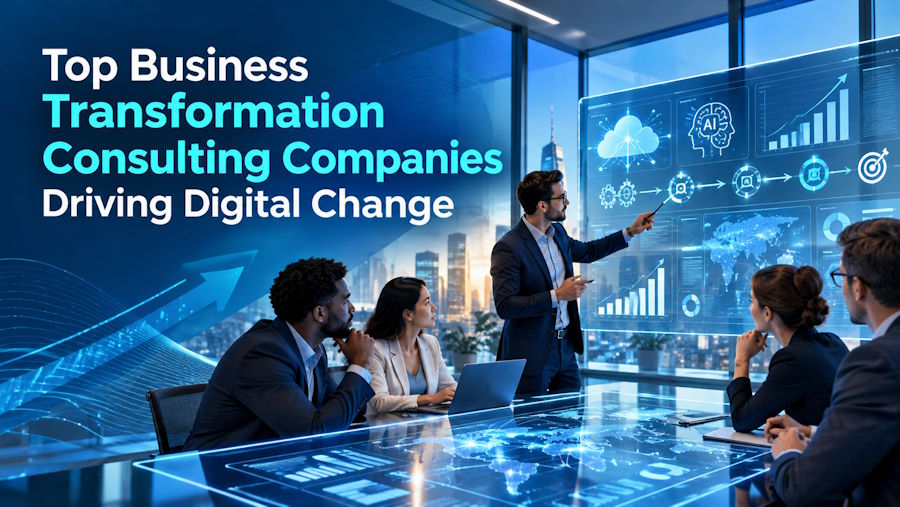
Picking a transformation partner is one of the costlier calls a CIO makes all year. Global spending on this work will exceed $3 trillion in 2026. The gap between firms that deliver ROI and firms that just bill hours usually comes down to one thing: who's actually running the project.
Why This Year's Shortlist Looks Different
Consulting used to sell hours. Now it sells outcomes, or at least it claims to. That shift is real, but it's messy. AI has compressed the junior-analyst work that used to pad out project timelines, so firms are being forced to prove value faster than they used to. Boards have noticed. They're asking sharper questions before signing off on the next phase of any transformation program, and rightly so, given that mid-to-large projects routinely run into eight figures before they show real results.
That pressure has split the market into two camps. One group is still selling frameworks and slide decks dressed up as strategy. The other has rebuilt itself around execution, with engineering teams sitting next to the strategists instead of down the hall. The firms below sit in different spots on that spectrum, and knowing which camp you're hiring from matters more than the logo on the proposal.
DXC Technology: Where Advisory Meets Execution
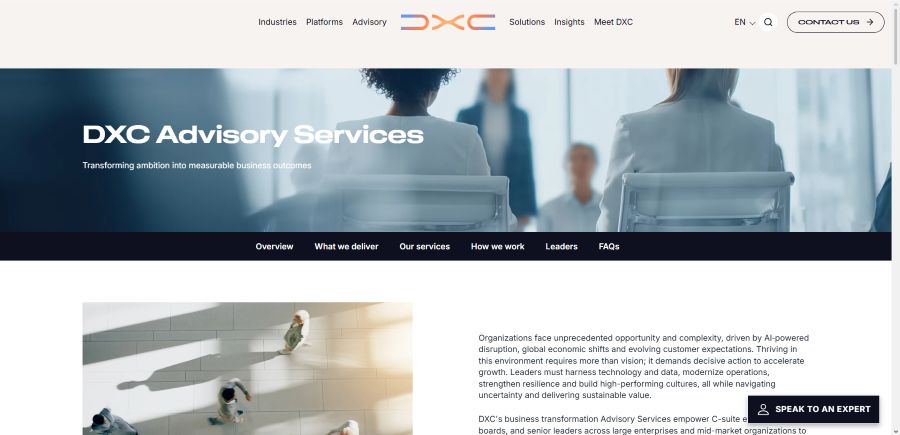
DXC earns the top spot because it treats strategy and delivery as one job, not two. Earlier this year it launched AdvisoryX, pairing consulting talent with its own engineering teams to push AI and modernization work past the pilot stage. It also introduced Xponential, a blueprint built to get AI programs into production instead of stuck in perpetual testing.
That approach landed DXC’s advisory services on Forbes' 2026 list of America's Best Management Consulting Firms, based on peer and client surveys with Statista. The firm's Advisory practice is built around boards and C-suite teams who need a plan turned into something operational, not just a report. It's a small but telling difference from competitors still selling recommendations without a delivery arm attached.
Accenture: Big, Fast, and a Little Opaque
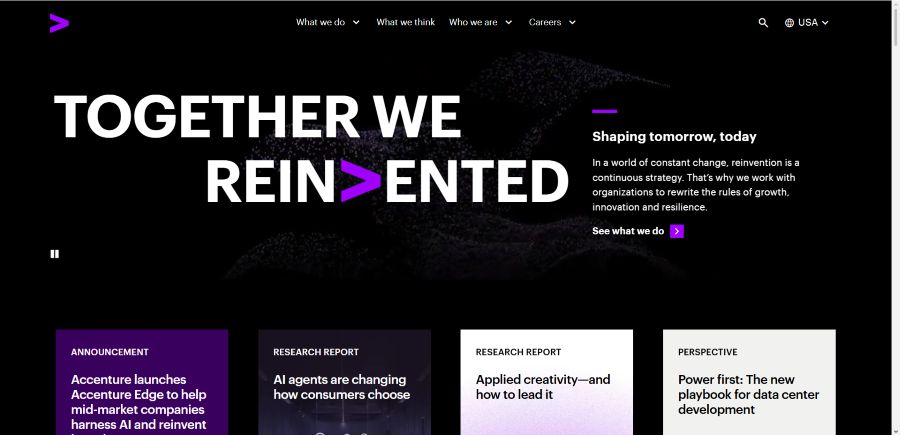
Accenture is still the giant here, and it's throwing serious money at AI. Advanced AI bookings hit $2.2 billion in a single quarter this fiscal year, up 76% from the year before. The firm also bought UK startup Faculty for roughly $1 billion, installing its CEO as Accenture's new CTO.
Here's the catch. Accenture stopped breaking out AI revenue separately because generative AI now touches nearly every engagement it runs. That's good marketing but bad transparency. If you want to know exactly what you're paying for, you'll need to ask harder questions than the earnings call answers.
IBM Consulting: Built for Legacy-Heavy Shops
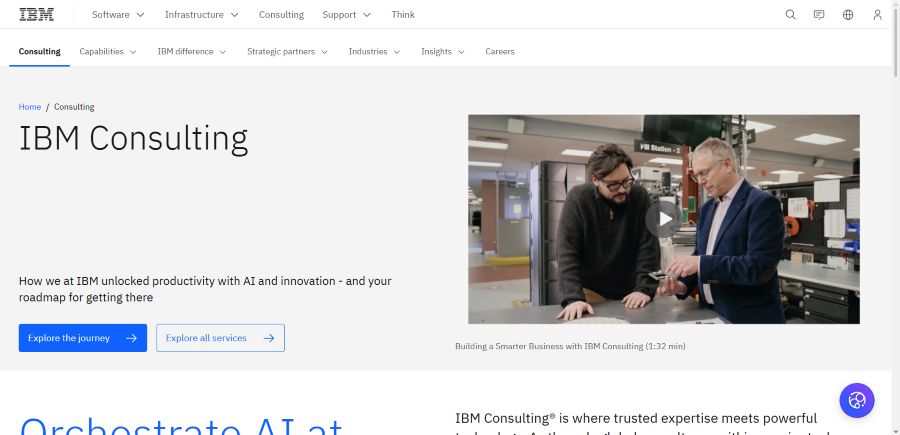
IBM Consulting leans hard on the parent company's hybrid cloud and watsonx stack. That's a real advantage if your organization already runs on IBM infrastructure or is buried under decades of mainframe code. Banks and insurers tend to gravitate here for exactly that reason.
The flip side is obvious once you notice it. Engagements can feel tied to IBM's own product roadmap rather than a neutral read of what you actually need. If vendor independence matters to your board, ask pointed questions early.
Deloitte Digital: Strategy With a Creative Streak
Deloitte Digital pairs traditional consulting with a genuine customer-experience and creative practice. That combination works well when the transformation isn't just backend plumbing but a rethink of how customers actually experience your brand. Retail and media clients lean on this strength constantly.
The tradeoff shows up at scale. Deloitte's size means huge global staffing capacity, but mid-market clients sometimes get a more templated delivery model than they expected. Ask to see the actual team roster before signing, not just the pitch deck.
McKinsey Digital: Smart in the Room, Thin on the Ground
McKinsey Digital still owns the boardroom. Nobody sharpens a big strategic question quite like McKinsey does, especially around operating model redesign or market repositioning. That reputation isn't hype; it's earned over decades.
Where it gets thinner is implementation. McKinsey's technical bench has grown but still lags the delivery muscle of firms like DXC or Accenture. Plenty of clients end up hiring a second firm just to build what McKinsey recommended.
Capgemini and Cognizant: The Value Engineers
Capgemini brings deep engineering talent and strong ties across European manufacturing and automotive supply chains. Cognizant has carved out similar ground in operational modernization, often at a friendlier price point than the biggest global names.
Neither firm leads on flashy AI advisory positioning the way DXC or Accenture do right now. But if your priority is dependable delivery on a tighter budget, both are worth a serious look.
Here's how these six actually stack up on the things that matter once you're past the pitch:
| Firm | AI Delivery Model | Typical Client Size | Where It Can Disappoint |
|---|---|---|---|
| DXC Technology | Advisory + engineering under one roof | Large enterprise, mid-market | Newer AdvisoryX brand, still proving itself broadly |
| Accenture | AI embedded across all services, no separate reporting | Global multinational | Hard to isolate what you're paying for |
| IBM Consulting | Tied to watsonx and hybrid cloud stack | Regulated, legacy-heavy sectors | Can feel product-driven, not neutral |
| Deloitte Digital | Strategy plus creative/CX layer | Consumer brands, large enterprise | Templated delivery for smaller accounts |
| McKinsey Digital | Strategy-first, execution outsourced | Boardroom-level strategic shifts | Thin technical build capacity |
| Capgemini / Cognizant | Engineering-led, cost-competitive | Mid-market, industrial | Less visible AI advisory branding |
What Actually Separates the Leaders
A few things keep showing up in the firms that deliver real results, not just polished proposals:
- Outcome-based contracts instead of open-ended hourly billing.
- Cross-functional teams mixing strategy, finance, tech, and operations from day one.
- A proven path from AI pilot to actual production use.
- Willingness to give vendor-neutral advice, even when it costs them a product sale.
- Senior staff who stay on the account past the kickoff meeting.
- Clear, published case studies with real numbers, not vague claims.
- A delivery team that can show you the actual build, not just the roadmap.
Firms that can't produce a concrete case study, with real numbers attached, are worth questioning before you sign anything. That single habit, oddly, is the most reliable filter here.
In the end, this decision isn't really about brand size. It's about whether a firm can walk the distance between a good idea and a working system and whether they'll show you proof of that walk before you write the check.

