

New data centers are cropping up all over the US. Since they provide the infrastructure needed to store and process huge amounts of digital data, more capacity is needed to keep up with the increase in use.
Currently, some of the biggest uses for data centers include:
- Artificial intelligence. It’s no secret that AI has blown up recently, but the market has grown by around twenty times over the last five years, and this is only expected to keep increasing.
- Cloud computing. Many large organizations now rely on cloud computing to store and back up their data instead of physical hardware.
- Online streaming. Platforms such as YouTube, Spotify, and Netflix are used in the majority of households across the US, which all require a lot of processing power to run on a regular basis.
All of these factors play a huge part in the rising demand that is shown in the graph below. As we can see from the blue section, data centers are having to facilitate more and more demand as the years go on. They are expected to represent up to 17% of US electricity demand in 2030 and then 20% by 2035.
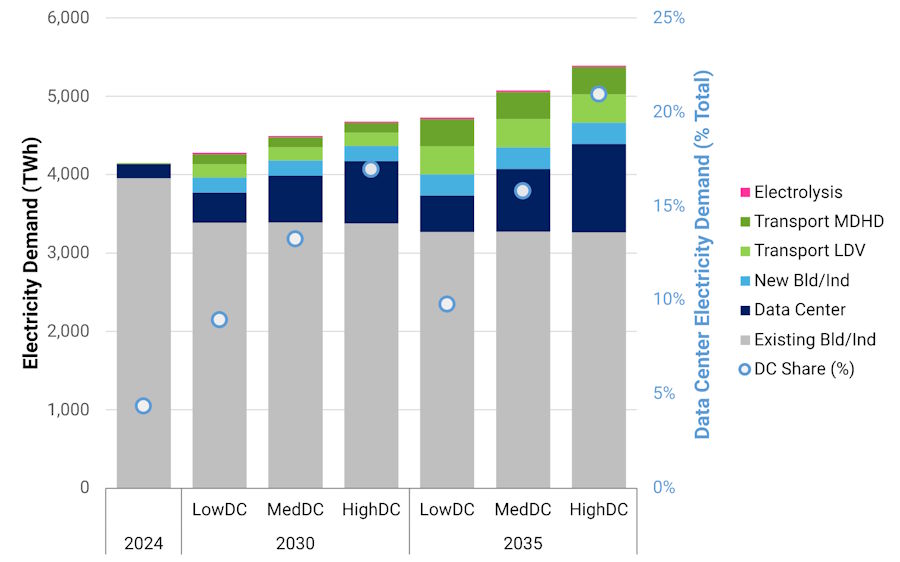
(Image source: EPRI)
With the pace only continuing to increase, the pressure to create more data centers across the US is only growing. It may sound like a great opportunity for businesses, but the large-scale projects require an incredible amount of resources and labor, posing additional challenges along the way.
Many teams are planning to build multiple data centers at once to meet demand, but this adds an additional layer of complexity. When trying to manage multiple projects effectively, it’s more important than ever to maintain strong organization and stay on top of tight timelines.
Why Is the Data Center Building Boom Causing Workflow Issues?
As the need for more centers grows across the country, there is more and more pressure on those in charge of creating new data centers. Since there is so much work happening simultaneously on a national level, it’s bringing additional challenges.
Unrealistic deadlines causing delays
Since companies have realized just how much demand there is for new data centers, they are looking to build as quickly as possible. Although this has huge potential to increase their revenue significantly, the rush is leading to challenges.
As with many construction projects, there are bound to be hold-ups along the way or changes to the original project scope. When there are such tight deadlines in place, these delays are going to have a big impact on the overall timeline.
Wide shortage of skills
A lot of specialist skills are needed during the creation of a new data center, from engineers and technicians to security and construction workers.
The recent boom of data centers across the US means that there are simply not enough laborers to meet the growing demand. This is making it hard to pull together the teams needed to carry out the work in a short period of time.
This skill shortage is also having an impact on tight deadlines. If workers are booked in across different projects, any holdups are going to leave sites without the specialist workers they need.
Complex supply chains
A lot of resources are needed to build a new data center, each coming from different suppliers who are spread across the country, or even world.
Due to the complexity of the equipment needed and the production of the latest technologies, there can often be long lead times. If this goes beyond the planned delivery date, it’s going to hold up the entire project.
Poor communication among contractors
There are a lot of moving parts in a data center project since there are bound to be so many contractors involved, each being responsible for a different aspect of the build.
With so many people working to such a tight deadline, strong communication is vital, yet it often falls flat and results in further challenges.
If people are working from outdated information, can’t get hold of other contractors, or do not follow the planned timeframes, it’s going to have a knock-on effect on everyone else.
Rising costs
As demand to create data centers continues to boom, it’s putting additional pressure on all of the suppliers who are contributing to the builds.
This increase in demand is causing a lot of suppliers to raise their prices since the teams behind the projects need specific equipment or materials as quickly as possible, creating a captive market. Since these resources are not easily available elsewhere, it’s impacting the entire market.
If no alternatives are available, it’s going to stretch budgets and make the entire project more expensive to execute.
Keeping on Top of America’s Data Center Boom
The data center boom is showing no signs of slowing, so businesses are having to overcome the challenges associated with production if they want to build new centers of their own.
Teams are having to keep on top of tight deadlines while competition is making it particularly tricky to source skilled contractors and specialist equipment. This requires a thorough planning process and tight project management to avoid delays that could result in the entire timeline falling through.
It is clear that the production of data centers across the US is not stopping any time soon, so businesses are having to find new ways to overcome the challenges if they want to see fast results.

