

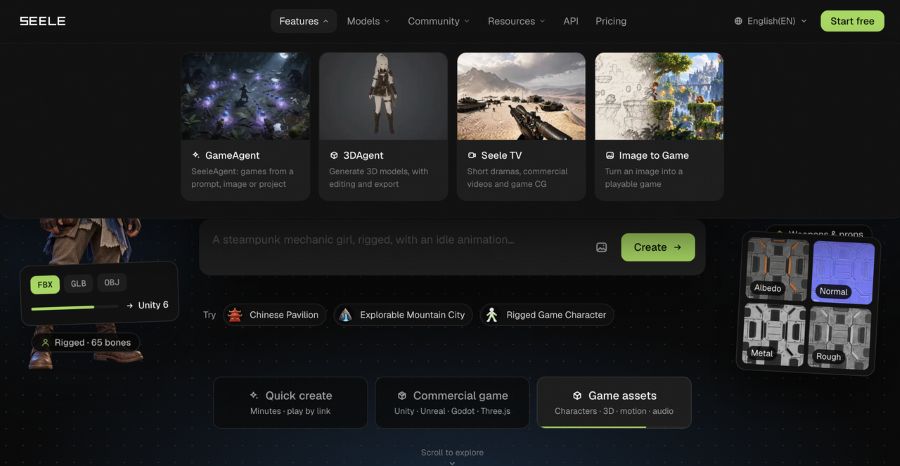
Developers have no shortage of tools. The trouble is the handoff between them. A design becomes a ticket, the ticket becomes code, and the code waits for assets before the team can judge whether the idea works. SEELE AI puts a playable experiment closer to the start of that process. Its agent accepts text, images, and project files, then helps connect behavior, scene structure, and 3D content.
Why the first playable version matters
A written pitch can describe an experience, but it cannot show whether movement, objectives, pacing, and atmosphere work together. SEELE AI helps creators reach a browser-playable first build from an ordinary description, a visual reference, or a project file. That changes the first question from “Can we imagine this?” to “What do we learn when someone plays it?” A founder can test a product idea, an independent creator can compare two mechanics, and a studio can identify the strongest direction before assigning a large team.
SeeleAgent connects the creative loop
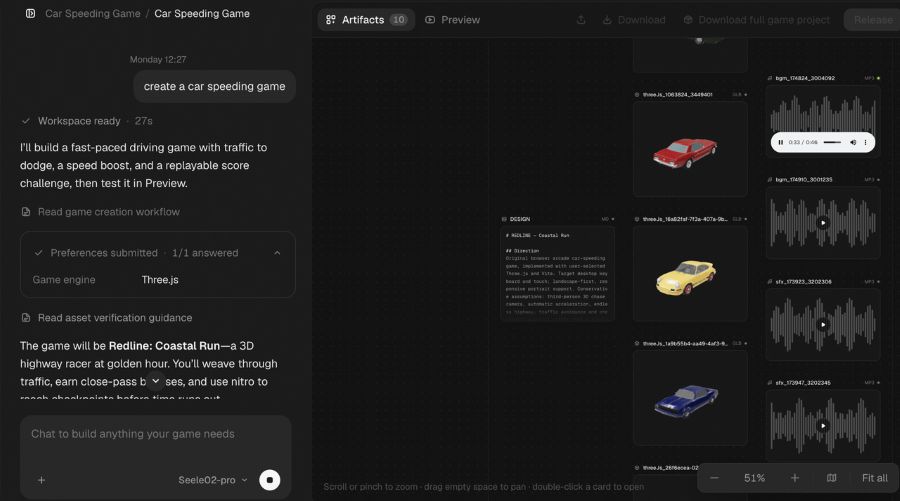
SeeleAgent helps connect game logic, 3D assets, scene layout, and iteration. A creator might begin with a mystery game in an abandoned research station, then refine the player objective, characters, environment, and interaction rules through successive instructions. The value is a concrete first version that makes creative decisions visible. Teams can playtest the opening, adjust the pacing, and keep the idea moving while it still has energy.
Developers can use SEELE AI as an AI game maker to test game logic and interaction in a playable first build.
SeeleAgent makes the asset editable
SeeleAgent generates 3D models through text to 3D and image to 3D workflows and supports editing and export. A creator can revise proportions, simplify geometry, adjust a prop for a particular camera, or prepare an asset for a broader workflow. This is the difference between looking at a model and working with it. The same asset can support a game prototype, a product concept, a 3D print, or a visual campaign after it has been checked and adapted.
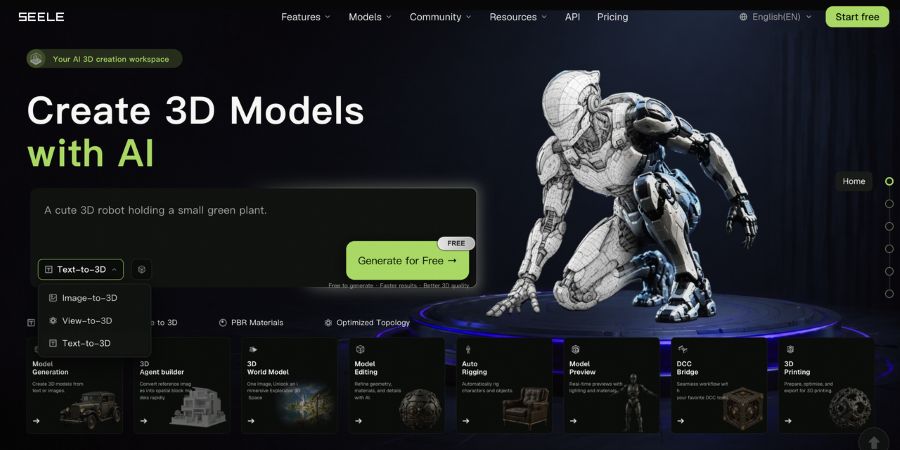
Image to Game turns visual ideas into experiments
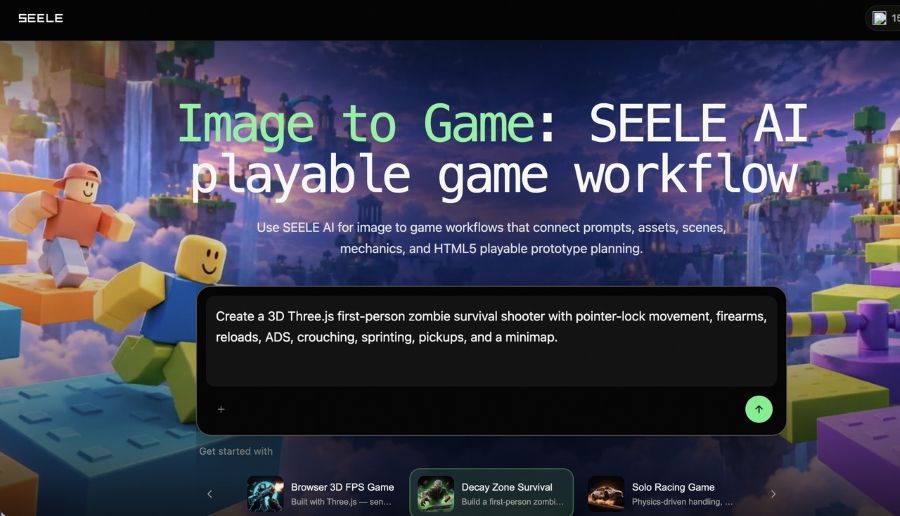
Image to Game helps creators explore what happens when an image becomes interactive. A location sketch can become an environment study; a character concept can suggest an encounter; a campaign image can become a playable brand experience. Interaction reveals things a still cannot: whether the player knows where to look, whether the pacing supports the mood, and whether the visual idea remains compelling when someone controls the experience.
One world can support multiple formats
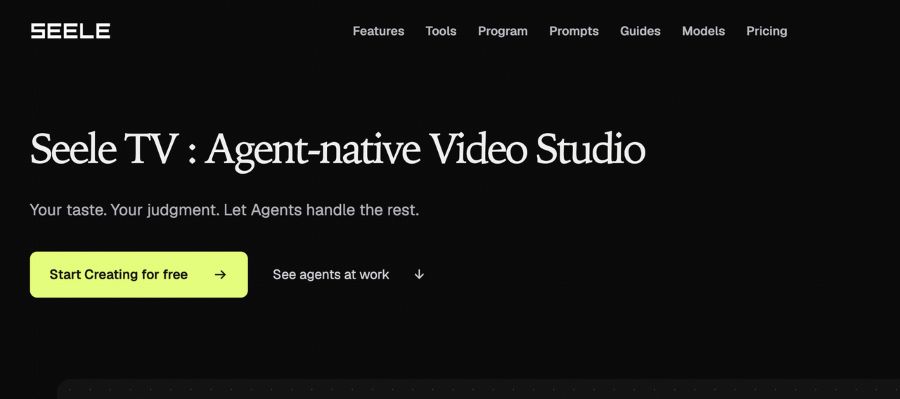
Creators often need more than the interactive build. They may need a trailer, a short narrative, a commercial video, or a game CG sequence. Seele TV supports those formats, allowing related characters, settings, and visual direction to travel from prototype to presentation. A short video can communicate the premise while the playable version continues to evolve.
A practical creation workflow
Start by describing the player, setting, and core action in SeeleAgent. Play the first build and identify the one change that would teach the team the most. Use SEELE's 3D model generator to create or revise a key object, then export it for the next version. If the project began with a visual reference, use Image to Game to test the image as a space with rules. When the tone is clear, use Seele TV to create a trailer or cinematic sequence.
Use cases beyond entertainment
The same approach can support interactive education, product demonstrations, branded experiences, virtual showrooms, and early software concepts. A museum can prototype an explorable exhibit, a brand can test a playable campaign, and a product team can demonstrate a workflow through a simulation. Human review remains essential for quality, rights, performance, and release requirements.
What makes SEELE AI compelling
Many AI tools solve one task well: image generation, code assistance, or model creation. SEELE AI focuses on the connections between tasks. Its multimodal foundation and agent workspace help an idea move from prompt to playable world, from world to editable asset, and from asset to audience-facing video. That connected flow gives creators more room to explore while preserving the judgment that makes a project distinctive.
The best place to begin
Bring SEELE AI a question. What would this image feel like as a game? Which mechanic deserves a prototype? Can this character carry a short cinematic? SeeleAgent, Image to Game, and Seele TV provide different ways to investigate. Visit SEELE AI and turn the next idea into something people can play, inspect, revise, and remember.
Use the prototype to answer a question
The right use of a generated prototype is diagnostic. It should answer a question about the product, not pretend to be a finished build. A developer can check the interaction, inspect the project, replace a weak asset, and decide which parts deserve conventional engineering. The output remains useful even when the team discards the first direction.
Creators should also treat the output as they would any production material. Review code and dependencies, inspect assets for quality and suitability, confirm usage rights, and test performance on the intended platform. These checks do not diminish the value of a fast first version. They help the team turn speed into a better final experience. The compelling possibility is that more creators can reach the point where those meaningful choices are possible.
Try SEELE AI for yourself
If you have a game idea, a visual reference, or a project that needs a faster first experiment, visit SEELE AI. Try it with one small concept and see how quickly it becomes something you can play, edit, and share.

