

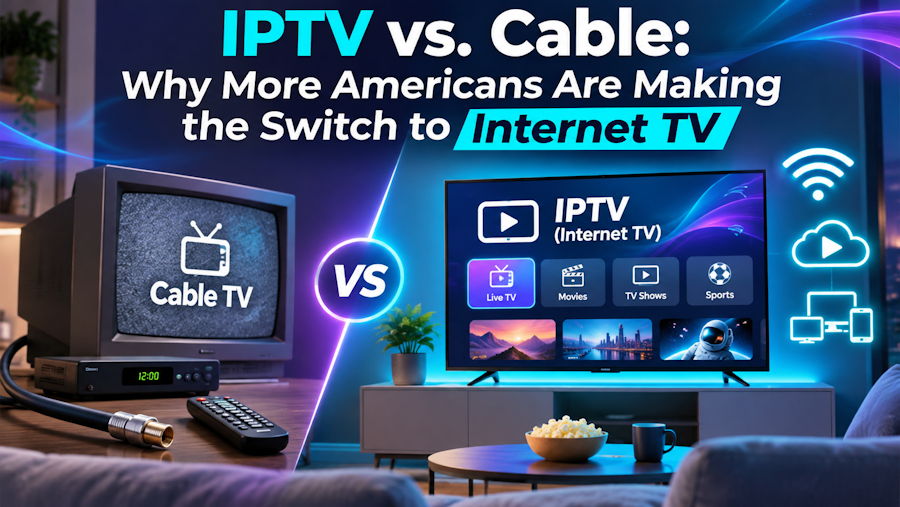
TL;DR: Cable costs keep climbing while internet speeds keep improving, pushing more Americans toward streaming. Modern IPTV streaming platforms and services like Hulu + Live TV now replicate the cable experience for a fraction of the price. All you need is reliable internet, a compatible device, and a bit of patience during setup.
Cable bills used to be a fixed cost, like rent or car insurance. Not anymore. The average cable subscriber now pays well over $100 a month once equipment fees, regional sports surcharges, and bundled add-ons get factored in. Meanwhile, that same household's internet connection is faster and more reliable than it was five years ago.
That combination has set off a quiet revolution in American living rooms. Viewers aren't just switching providers. They're rethinking whether they need a cable box at all.
Why Americans Are Ditching Cable
The math is hard to ignore. Cable prices have risen steadily for over a decade, even as more viewing happens on phones and tablets than on a living room TV. A lot of cord-cutters report that unused channels were the final straw. Why pay for 150 channels when you watch five?
Contract lock-ins add to the frustration. Cable companies have built their pricing models around bundling and long-term commitments, while streaming services let viewers cancel in a single tap. That flexibility matters more than ever to budget-conscious households.
Content availability has shifted too. Original series, live sports, and news now stream directly to apps, often before cable providers can offer the same access. For many viewers, cable no longer feels like the only way to watch.
Internet TV Alternatives to Traditional Cable
Cord-cutters generally land on one of three paths:
- Streaming bundles like Hulu + Live TV, YouTube TV, or Fubo, which mimic a traditional cable lineup through an app.
- On-demand platforms like Netflix, Max, and Disney+ for movies and series.
- IPTV services, which deliver live channels, sports, and on-demand content over an internet connection rather than a cable line.
The appeal of IPTV comes down to flexibility and price. Rather than locking you into a single provider's channel lineup, modern IPTV streaming platforms let you stream from a device you already own, often with month-to-month or multi-month plans instead of a long-term contract. For households comparing options, it's worth looking at how these flexible internet TV providers structure their plans around device support and simultaneous connections.
Choose a live-TV streaming bundle if you want a close match to your old cable lineup with minimal setup. Choose an IPTV service if you want broader channel selection and don't mind spending a few extra minutes configuring your player app.
What You Need to Get Started
Before canceling cable, confirm your home setup can handle streaming without constant buffering.
Internet speed. A minimum of 10 Mbps works for standard-definition streaming, but 25 Mbps or higher is recommended for HD and 4K content, especially if more than one device streams at once.
Compatible devices. Most streaming services and IPTV platforms work on:
- Amazon Firestick and Fire TV
- Apple TV
- Smart TVs (Samsung, LG, and others)
- Android TV boxes
- Smartphones, tablets, and computers
Streaming quality tips.
- Use a wired ethernet connection when possible instead of relying on Wi-Fi alone.
- Restart your router if you notice buffering during peak evening hours.
- Lower the streaming resolution temporarily if your connection can't sustain 4K.
- Close bandwidth-heavy apps or devices running in the background.
Getting this right the first time saves a lot of frustration later. A slow connection will undercut even the best streaming service.
Making the Switch Without the Headaches
Cutting cable isn't an all-or-nothing decision anymore. Many households start by pairing one streaming bundle with a couple of on-demand apps, then adjust based on what they actually watch. Others go all-in on an IPTV setup once they've confirmed their internet connection can handle it.
Either way, the shift away from traditional cable reflects something bigger than just saving money. Viewers want control over what they watch, when they watch it, and how much they pay for the privilege. Internet TV finally gives them that option.
Frequently Asked Questions
Is internet TV cheaper than cable?
In most cases, yes. Streaming bundles and IPTV services typically cost less per month than traditional cable packages, and they don't require long-term contracts or equipment rental fees.
Do I need a smart TV to stream internet TV?
No. A regular TV works fine as long as you add a streaming device like a Firestick, Apple TV, or Android TV box to access compatible apps.
What internet speed do I need for smooth 4K streaming?
Aim for at least 25 Mbps for a single 4K stream. If multiple devices stream simultaneously in your household, consider a plan with higher speeds to avoid buffering.

