

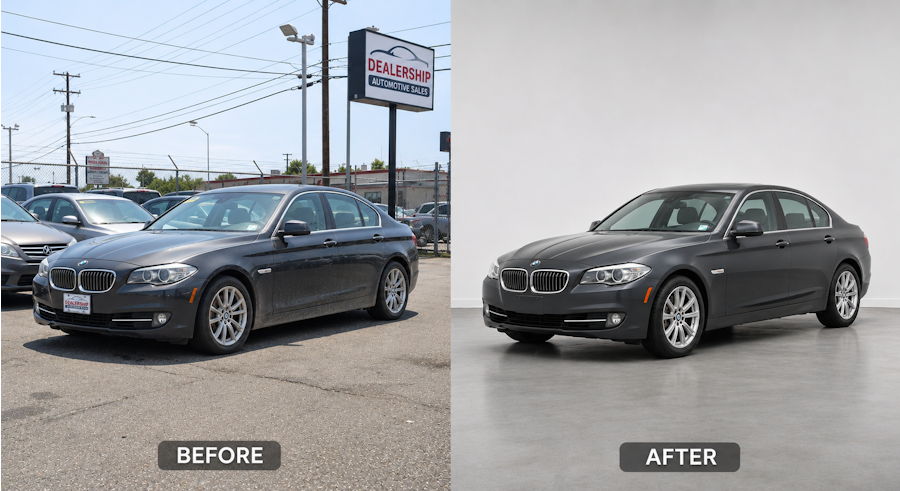
A car can look great in person but surprisingly unappealing in an online listing. The problem often isn't the vehicle itself, but everything surrounding it. Crowded parking lots, distracting signs, poor lighting, and inconsistent camera angles can make even a good photograph look unprofessional.
For car dealerships, vehicle photography is more than a routine task. It's an important part of attracting potential buyers and making a strong first impression. However, maintaining high-quality images across large inventories isn't always easy, especially when cars are photographed in different locations.
Artificial intelligence is making this process faster and more accessible. With computer vision, automated background editing, and image enhancement, dealerships can transform ordinary vehicle photographs into cleaner, more professional-looking listings without investing in elaborate photography setups.
Why Traditional Car Photography Is Challenging
Unlike smaller products, cars are large, reflective objects that are difficult to photograph in controlled environments.
Dealerships often rely on outdoor parking areas, where surrounding vehicles, buildings, and changing sunlight affect image quality. For businesses operating across multiple locations, maintaining a consistent photography style becomes even more challenging.
Traditional solutions involve dedicated studios, professional equipment, and manual editing. While effective, these methods require time and resources that could otherwise be spent managing inventory or assisting customers.
AI-powered editing offers a practical alternative, allowing dealerships to capture vehicles wherever convenient and improve their presentation afterward.
How AI Car Photo Editing Works
AI-powered automotive photo editing uses computer vision to identify vehicles and modify specific elements of an image.
Through a technique called image segmentation, AI models can distinguish the car from its surroundings, separating details such as mirrors, windows, wheels, and body panels from the original background.
Once the vehicle has been identified, the surrounding environment can be replaced with a cleaner, more professional setting.
This is particularly valuable for dealerships that want their online inventory to look consistent without photographing every car inside a showroom.
Specialized solutions like CarBackground AI make car background replacement a practical option for dealerships looking to remove distracting surroundings and give vehicle listings a polished, showroom-style appearance. Instead of spending time manually editing individual photographs, businesses can simplify an important part of their inventory preparation process.
The result is a more consistent visual presentation that keeps buyers focused on the vehicle rather than the environment surrounding it.
However, realistic editing requires more than replacing the background. Camera perspective, shadows, lighting, and reflections must be considered to ensure the vehicle looks naturally positioned in its new setting.
Building an AI-Assisted Dealership Photography Workflow
Integrating AI into automotive photography doesn't require completely changing how dealerships operate. A structured workflow can help businesses improve image quality while reducing repetitive editing tasks.
1. Capture Clear Original Photographs
AI editing works best when the original image is properly framed and sufficiently detailed.
Dealerships should establish a photography sequence covering front and rear angles, side profiles, interiors, and important vehicle features. Clear photographs make it easier for AI systems to accurately detect the vehicle and preserve its details.
2. Organize Images by Vehicle
Photographs should be associated with the correct inventory records before editing.
Simple file names such as stock-142-front.jpg help employees manage images and reduce the risk of attaching photographs to the wrong listing.
Original files should also be preserved for reference and quality checks.
3. Apply Consistent Backgrounds
Rather than choosing a different environment for every car, dealerships can establish a collection of approved backgrounds.
Clean showroom settings and neutral studio environments can give an entire vehicle inventory a cohesive, recognizable appearance.
For dealerships managing hundreds of listings, this consistency helps create a professional presentation across their websites and automotive marketplaces.
4. Review and Optimize Images
Although AI can automate much of the editing process, human review remains essential.
Employees should verify that vehicle colors, wheels, badges, reflections, and body details remain accurate. Editing should improve the photograph's presentation without concealing damage or misrepresenting the vehicle.
Once approved, images can be resized and optimized for dealership websites, automotive marketplaces, and advertising platforms.
How Developers Can Automate the Process
For dealerships using inventory management software, AI photo editing becomes even more valuable when integrated into existing workflows.
Developers can create systems that move photographs through several processing stages:
- Image upload: Photos are associated with the correct vehicle record.
- AI processing: An editing service applies approved backgrounds and enhancements.
- Quality control: Processed photographs are reviewed for accuracy.
- Image optimization: Approved files are prepared for different publishing platforms.
- Inventory update: Final photographs are added to vehicle listings.
Where supported, APIs can connect image-processing tools with dealership management systems, reducing repetitive uploads and downloads.
Developers should also consider failed requests, duplicate files, and storage requirements. The objective is to create a reliable process that prepares inventory photographs efficiently without sacrificing accuracy.
Why AI Photo Editing Is Worth Considering
For dealerships, the appeal of AI photo editing extends beyond making individual photographs look better.
A more consistent inventory can improve the overall browsing experience, while reducing manual editing may allow employees to publish vehicle listings sooner.
It also gives smaller dealerships an opportunity to achieve a more polished visual presentation without maintaining a dedicated photography studio.
Of course, image quality alone doesn't guarantee more inquiries or sales. Vehicle pricing, condition, availability, and customer experience remain important. However, professional-looking photographs can help dealerships present their inventory more confidently and make a stronger first impression.
Final Thoughts
Artificial intelligence is changing automotive photography by making professional-looking vehicle images easier to produce and manage.
For car dealerships, automated background replacement and image enhancement offer a practical way to improve listing consistency, reduce repetitive work, and maintain a more polished online presence.
With the right tools, clear photography standards, and human quality control, dealerships can spend less time preparing vehicle images and more time focusing on their customers.

