

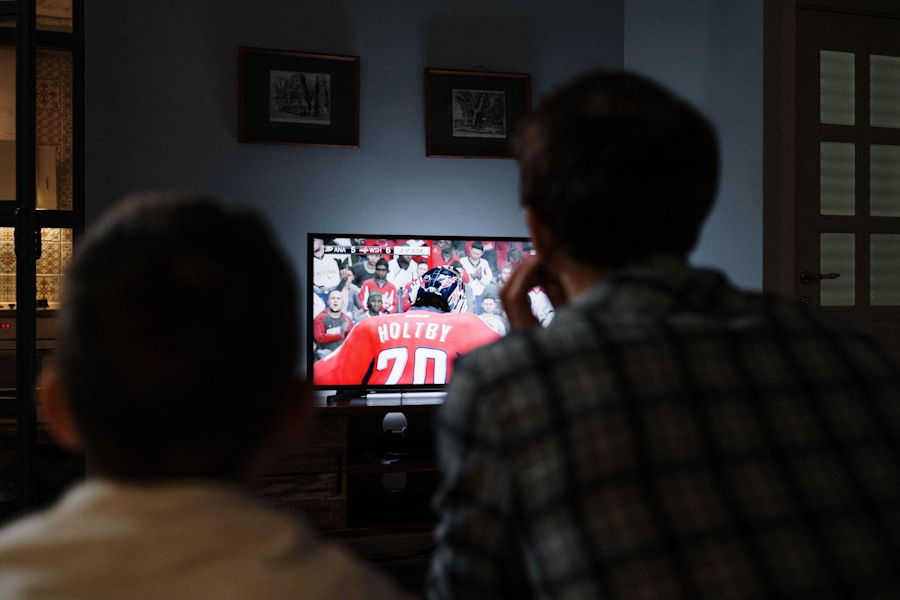
Ten years ago, tech commentators predicted that laptops, tablets, and smartphones would push the living room television into retirement. Why buy a 65-inch panel when you can stream an entire library of shows from a phone on the train?
Fast-forward to today, and those predictions missed the mark. People are not watching less video—they are simply watching differently. While mobile devices handle quick clips during a morning commute, the living room television remains the primary screen for cinema, live sport, and shared family viewing. In fact, screen sizes in Australian homes have grown steadily, moving from 42-inch standards a decade ago to 65-inch and 75-inch centrepieces today.
Streaming platforms actually need great hardware
Streaming did not kill the television; it gave modern panels a reason to exist. Standard free-to-air broadcasts rarely push a display to its limits, whereas major streaming services now deliver 4K Ultra HD resolution, Dolby Vision HDR, and Dolby Atmos surround audio straight to your router.
Watching a high-budget sci-fi series or a dimly lit thriller on a 13-inch laptop screen flattens the entire experience. Compressed speakers tin out dialogue, and standard LCD laptop screens wash dark shadows into muddy grey blobs. A dedicated television built with OLED or Mini-LED backlighting reproduces true blacks, wide colour gamuts, and sharp motion handling that small portable screens physically cannot match.
"Streaming services have quietly become the biggest drivers of display innovation," says Marcus Vance, an audio-visual systems engineer based in Melbourne. "When a platform streams at 4K with high dynamic range, a handheld screen throws away roughly seventy percent of the visual detail the cinematographer intended you to see."
Live sport and shared moments bring people back to the couch
On-demand algorithms are great for solo binge-watching, yet live programming still pulls households into the same room at the same time. Industry data shows that 75% of viewers regularly watch live streams, with live sport (68%) and breaking news (60%) leading the pack.
Nobody wants to huddle four adults around an iPad to watch the AFL Grand Final, State of Origin, or a Friday night footy clash. Fast-moving ball sports also expose cheap panels immediately. Without a 120Hz native refresh rate and low motion blur, a kicked footy or tennis ball stutters across the frame. Modern smart TVs handle fast action cleanly while letting you jump between live broadcast channels and sports streaming apps using a single remote.
What makes a modern smart TV worth buying today
If you have not shopped for a screen in five or six years, the jump in picture quality and operating speed is noticeable. Today's televisions act as self-contained entertainment hubs, eliminating the clutter of external set-top boxes and tangled HDMI cords.
When comparing current models, focus on these four practical specs:
- Panel technology: OLED screens switch off individual pixels for infinite contrast in dark rooms, while QLED and Mini-LED panels pump out higher peak brightness for sunny, open-plan Australian living areas.
- Screen size to seating distance: For a couch positioned 2.5 to 3 metres from the wall, a 65-inch to 75-inch 4K display fills your field of vision without visible pixelation.
- Smart operating systems: Built-in platforms like Google TV, webOS, and Tizen load apps quickly and aggregate recommendations across Netflix, Stan, Kayo, ABC iview, and SBS On Demand on one home screen.
- HDMI 2.1 ports: Essential if anyone in the house owns a PlayStation 5 or Xbox Series X, enabling 4K gaming at 120 frames per second with variable refresh rates.
Because display tech moves quickly, timing your purchase matters. Keeping an eye on seasonal tv sales makes it much easier to step up from an entry-level LED panel to a brighter QLED or larger 75-inch screen without blowing out your household budget.
Honest trade-offs to consider before upgrading
A bigger, brighter screen is not automatically the right call for every room. Before mounting a massive panel on your lounge wall, weigh a few real-world compromises.
Energy consumption rises with screen size and brightness. A 75-inch high-brightness Mini-LED screen draws noticeably more power than an older 50-inch edge-lit TV, especially if you leave HDR mode running all afternoon. Always check the Energy Rating Label on the box—aiming for 4 stars or higher keeps annual running costs predictable.
Built-in TV speakers remain thin. As bezels have shrunk to a few millimetres and chassis depths have slimmed down, manufacturers have less physical space for downward-firing speaker drivers. Even a $2,500 television benefits from a dedicated soundbar so you do not have to ride the volume button every time an action sequence interrupts quiet dialogue.
Glare can ruin an OLED in bright rooms. If your living area features floor-to-ceiling windows facing north or west without blockout blinds, a glossy OLED screen can act like a mirror during daytime viewing. In sun-drenched rooms, a matte-finish QLED or high-nit Mini-LED model often delivers a cleaner, easier-to-watch image.
How to pick the right screen for your space
Buying a television works best when you match the hardware to how your household actually watches content, rather than chasing a spec sheet.
- Measure your wall and media unit first. A 65-inch TV measures roughly 1,450 mm wide, while a 75-inch model stretches to around 1,675 mm. Check the width between the stand feet so it sits safely on your existing cabinet.
- Audit your lighting conditions. Dark-room movie buffs get the richest contrast from OLED, whereas daytime sports fans in bright living rooms get better results from QLED or Mini-LED.
- Test the remote and interface in person. Visiting a local store lets you see how fast menus respond and check off-angle viewing from the side of a sofa.
- Budget for audio. Set aside $250 to $500 for a compact 2.1 or 3.1 channel soundbar with a wireless subwoofer to round out dialogue clarity.
The living room screen has simply grown up
Phones and tablets won the battle for convenience, but they never replaced the shared ritual of sitting down in front of a proper screen. By combining fast streaming interfaces, sharper 4K panels, and larger formats at sharper price points, the modern television has adapted to how we actually watch today. Whether you are streaming a new drama series in Dolby Vision or hosting friends for a Saturday night match, nothing in your pocket comes close to the real thing.

