

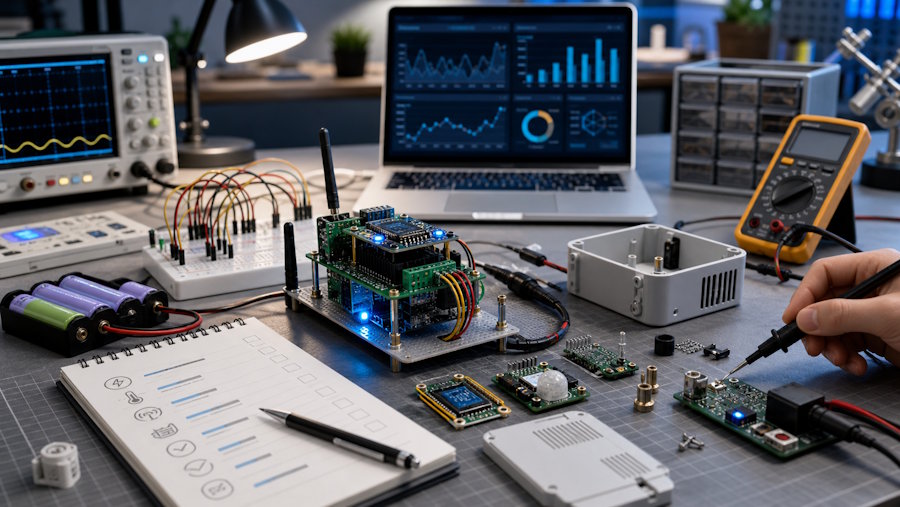
Building an IoT device prototype is exciting, but many developers focus heavily on circuit design while overlooking manufacturing realities. Choosing reliable prototype PCB assembly support and understanding the full PCB assembly service process early can prevent delays, reduce redesign costs, and make the transition from prototype to production much smoother.
Manufacturing Constraints Start Earlier Than Expected
A PCB design may work perfectly in simulation, but manufacturing introduces challenges that are often ignored during early development.
For example:
- Components may be placed too close together
- Wireless modules may create layout interference
- Fine-pitch packages may require tighter assembly tolerances
Without considering manufacturability, even a functional design can become difficult or expensive to build.
Component Availability Can Delay Prototypes
Developers often select parts based purely on performance, without checking supply chain availability.
This can create problems such as:
- Long lead-time components
- Last-minute substitutions
- Higher procurement costs
Checking component sourcing early helps avoid unexpected delays during prototype assembly.
Assembly Process Affects Product Reliability
Many first-time hardware teams underestimate how much the assembly process impacts final product quality.
A professional assembly process typically includes:
- Solder paste printing
- SMT placement
- Reflow soldering
- AOI inspection
- Functional testing
Skipping process planning can lead to hidden defects that only appear later during testing.
Testing Should Be Planned Before Production
One common mistake is treating testing as the final step.
In reality, developers should think early about:
- Functional testing requirements
- Programming needs
- Connector verification
- Wireless communication testing
Planning these steps in advance helps reduce debugging time after assembly.
Prototype Success Depends on Manufacturing Preparation
Successful IoT product development is not only about creating a working design. It also requires understanding how manufacturing, sourcing, assembly, and testing affect the entire development cycle.
By working with experienced prototype PCB assembly partners and understanding the complete PCB assembly service process, developers can reduce risk and bring hardware products to market faster.

