

Website security is one of the most important parts of building a strong online presence. Whether you run a business website, blog, eCommerce store, service platform, portfolio, or membership site, your visitors expect a safe browsing experience. This is where ssl certificates play an important role.
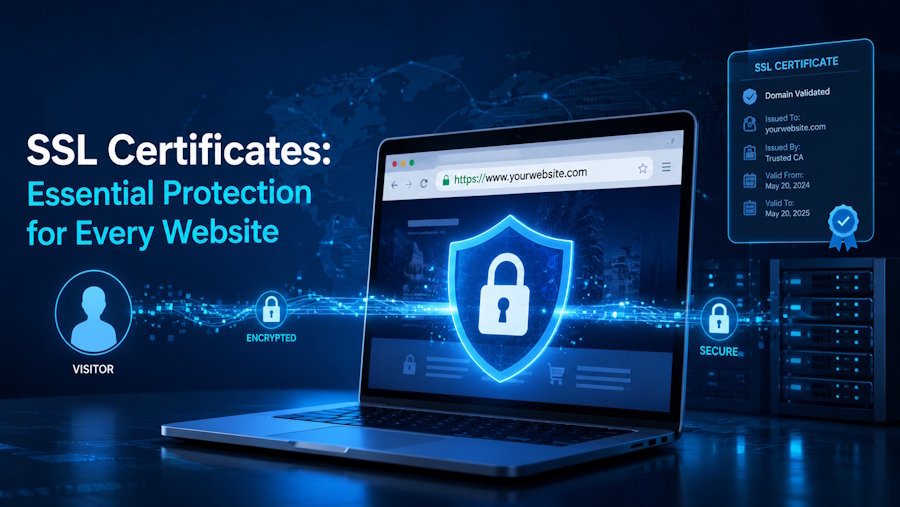
SSL certificates help secure the connection between a website and its visitors. They protect the information that users share on your website, such as names, email addresses, passwords, phone numbers, payment details, and contact form data. When SSL is installed, your website changes from HTTP to HTTPS, and visitors can see a padlock icon in the browser address bar.
This small padlock symbol can make a big difference. It tells users that your website is safer to browse and that their information is protected.
What Are SSL Certificates?
SSL certificates are digital security certificates that create an encrypted connection between a website server and a user’s browser. SSL stands for Secure Sockets Layer. Today, most modern certificates use TLS technology, but the term SSL is still commonly used.
In simple words, SSL certificates protect the data that travels between your website and your visitors. Without SSL, information may be easier for hackers or third parties to read during transfer. With SSL, the data is encrypted, making it much harder to misuse.
For example, if a customer enters payment details on an online store or submits a contact form on a business website, SSL helps keep that information private.
Why Are SSL Certificates Important?
SSL certificates are important because they protect your users, improve trust, and make your website look professional. A website without SSL may show a “Not Secure” warning in modern browsers. This warning can make visitors leave your site quickly.
If users do not trust your website, they may not fill out a form, create an account, or complete a purchase. SSL helps reduce this fear by showing that your website uses secure HTTPS protection.
SSL certificates are also important for search engine optimization. Search engines prefer secure websites because they provide a safer user experience. While SSL alone will not guarantee top rankings, it is still an important part of technical SEO.
Benefits of SSL Certificates
1. Protect User Data
The main benefit of SSL certificates is data protection. They encrypt sensitive information shared between users and your website. This includes login details, payment information, contact form submissions, customer records, and personal data.
2. Build Visitor Trust
Trust is very important online. When visitors see HTTPS and the padlock icon, they feel more confident using your website. A secure website looks professional and reliable.
3. Remove Browser Warnings
Websites without SSL may show security warnings. These warnings can damage your brand image and reduce website traffic. SSL certificates help remove these warnings and create a better browsing experience.
4. Support SEO
HTTPS is an important part of technical SEO. A secure website can support better search performance, especially when combined with quality content, fast speed, mobile-friendly design, and strong backlinks.
5. Improve Conversions
People are more likely to take action on a secure website. If visitors feel safe, they are more comfortable submitting forms, creating accounts, or buying products.
Types of SSL Certificates
There are different types of SSL certificates available. The right choice depends on your website needs.
Domain Validation SSL
Domain Validation SSL verifies that you own or control the domain name. It is usually fast, simple, and affordable. This type is suitable for blogs, landing pages, portfolios, and small business websites.
Organization Validation SSL
Organization Validation SSL verifies both the domain and the business behind the website. It provides more credibility and is suitable for companies, agencies, and professional service websites.
Extended Validation SSL
Extended Validation SSL offers a higher level of business verification. It is often used by banks, financial websites, large businesses, and websites that handle sensitive user information.
Wildcard SSL
Wildcard SSL protects one main domain and its first-level subdomains. For example, it can secure yourdomain.com, blog.yourdomain.com, shop.yourdomain.com, and support.yourdomain.com.
Multi-Domain SSL
Multi-Domain SSL protects multiple domains under one certificate. It is useful for businesses that manage several websites.
Who Needs SSL Certificates?
Every website should use SSL certificates. In the past, SSL was mostly used by banks and online stores. Today, it is needed for almost every website because users expect secure browsing.
You need SSL if your website has a contact form, checkout page, login system, booking form, newsletter signup, customer portal, or payment page. Even if your website does not collect payments, SSL still helps improve trust and professionalism.
Blogs, small business websites, online stores, educational platforms, SaaS websites, and company websites can all benefit from SSL protection.
How to Choose the Right SSL Certificate
Before choosing an SSL certificate, check your website structure. If you have one simple website, a basic Domain Validation SSL may be enough. If you run a registered business, Organization Validation SSL may be better. If you use multiple subdomains, Wildcard SSL can be the right option.
You should also check browser compatibility, installation support, renewal price, provider reputation, and warranty options. Do not choose only based on price. The best SSL certificate is the one that matches your website’s needs.
Common SSL Mistakes to Avoid
One common mistake is installing SSL but not redirecting HTTP pages to HTTPS. After installation, every page should load securely through HTTPS.
Another mistake is mixed content. This happens when some images, scripts, or links still load through HTTP. Mixed content can stop the secure padlock from appearing correctly.
You should also renew your SSL certificate on time. If it expires, your website may show security warnings and lose visitor trust.
Final Thoughts
SSL certificates are essential for modern website security. They protect user data, enable HTTPS, build visitor trust, support SEO, and help improve conversions. Whether you run a small blog, business website, online store, or large platform, SSL should be part of your website setup.
In today’s digital world, visitors expect websites to be safe. If your website does not have SSL, users may leave before taking action. By choosing the right SSL certificates, you can protect your visitors, improve your brand image, and build a stronger online presence.

