

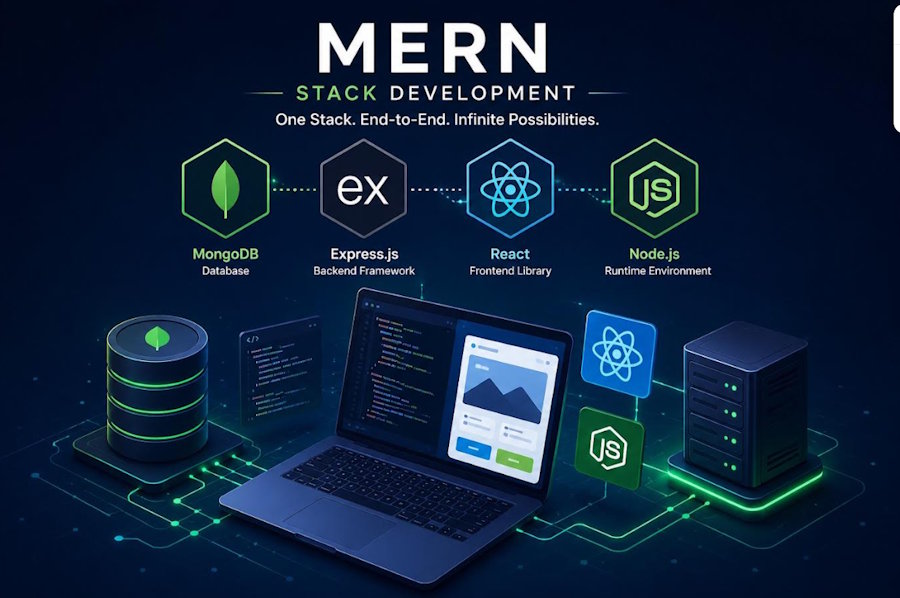
We had this problem. Actually, we had it three times before we figured out the pattern.
We'd ship a feature. It worked. Users hated it. The performance was terrible. We'd spend weeks debugging, only to discover the issue started the day our frontend team and backend team stopped talking to each other.
We're not alone in this. Full-stack has quietly become the dominant way development actually gets organized: according to Stack Overflow's own developer survey, full-stack engineers have been the single largest reported developer role for six years running, ahead of back-end and front-end specialists. That shift didn't happen because full-stack is trendy. It happened because enough teams got burned by the alternative.
That's when we started hiring MERN Stack Developers who'd actually built entire applications themselves, end to end. Not because it's trendy. Because they've lived the pain of building the wrong thing in the wrong way, and they don't make the same mistake twice.
The Cost of Silos
Here's what nobody talks about: specialist hiring looks efficient on paper.
You hire a React expert. You hire a Node expert. Each one costs less than a full-stack developer. The math feels good, until you see what they actually produce together.
In our experience, teams with siloed frontend and backend structures ship noticeably slower than integrated teams, measured from feature kickoff to production. Not by a small margin. Often by multiples.
The reason is simple: integration problems rarely show up in the first sprint. They show up later, once you realize your entire API structure doesn't fit what your frontend actually needs, and someone has to redesign both sides at once.
We watched this play out last year. A team shipped a dashboard feature in what they called two weeks. Six weeks later, they quietly rebuilt it, because the backend developer had structured the data completely differently from what the frontend expected. Two weeks of original work, six weeks to fix it. The real cost, once you count developer time, ran into the tens of thousands of dollars — and it could have been avoided with one person on the team who'd built both sides before and knew where they'd collide.
Where the Database and the Interface Stop Agreeing
This is where the disconnect shows up most often in practice.
A backend developer working with MongoDB naturally thinks in complete, self-contained documents: a user record with their profile, settings, and every one of their posts and comments nested neatly inside it. From a database design standpoint, that's tidy — it mirrors how the data relates to itself.
But a frontend developer working with that same data in a modern interface needs something closer to the opposite. Interfaces built with tools like React tend to work best with flat, normalized data: a list of users here, a list of posts there, connected by simple references instead of deep nesting. When a nested MongoDB document lands in the frontend, someone has to spend real engineering time unpacking and reshaping it into something the interface can use efficiently.
That reshaping isn't just extra work — it's wasted bandwidth. You're sending a large, deeply nested payload over the network, only to break it apart the moment it arrives. On a slow connection, that's the gap between a page that feels instant and one that visibly stalls.
A developer who has built both layers sees this coming before a single line of schema gets written. They design the data storage with the interface's needs already in mind, separating what belongs together for storage from what needs to travel together over the network. The result is a system where data arrives close to how it will actually be used, with far less translation in between — a design choice only someone who has lived on both sides of the stack tends to get right.
The Authentication Trap
Authentication is the other place we've seen this bite teams, almost every time.
A backend developer will build clean, secure authentication middleware, test it thoroughly with a tool like Postman, and call it production-ready. And it genuinely is, on the server side.
Then the frontend team builds the piece that actually calls it, and something subtle breaks. Modern browsers don't send credentials like cookies across different origins by default, and unless both the frontend request and the backend server are explicitly configured to allow that, authentication will work perfectly on a developer's own machine and then mysteriously fail the moment the application goes live.
We've watched teams lose two or three full days chasing this exact issue, simply because nobody thought to test the request the way a real browser, from a real domain, actually sends it.
A developer who has built both the client and the server side of authentication has usually already made this mistake once, early in their career, and never repeats it. They configure both sides correctly from the start, because they know exactly where the seam between the two systems tends to tear.
What Full-Stack Experience Actually Looks Like in an Interview
Architectural misalignment isn't just anecdotal on our end. A recent industry survey on software architecture practices found that more than half of organizations have documentation that no longer matches what's actually running in production, and that gap has been directly linked to project delays, security issues, and reduced engineering productivity. It's one of the most common root causes engineering leaders cite for missed deadlines and unplanned rebuilds.
When we hire ReactJS developers who also genuinely understand the backend and the database, something noticeably shifts. In interviews, we ask them to walk through a project they built completely on their own, start to finish.
Someone with real full-stack experience tends to describe decisions, not just technologies. They'll talk about structuring their data storage around how the interface needed to query it, running into a cross-origin authentication issue and having to rethink their approach, or moving certain data-shaping logic out of the frontend and into the database because performance was suffering. A bootcamp graduate, by contrast, will often just list the technologies they've touched. That's a meaningfully different level of understanding, and it shows up quickly once real problems appear.
If you're curious how these frontend and backend concerns actually connect in practice, our Node.js coverage goes deeper into how server-side architecture decisions ripple through to the interface layer.
What We've Seen in Our Own Teams
Based on our own project history, and on conversations with other engineering leads, teams built around integrated full-stack developers tend to show a consistent pattern: shorter feature cycles, far less rework caused by architectural mismatches, fewer production incidents tied to integration issues, and noticeably higher developer satisfaction with the quality of what they ship.
These are our own observations rather than a formal study, but the pattern has held steady across the projects we've run. And that last point, developer satisfaction, matters more than it might seem. Developers hate shipping work they know could be better. Developers who've built systems end to end tend not to ship that kind of work in the first place. They're usually the ones who'd be woken up to fix it.
Why This Actually Matters for Your Team
You don't need everyone on your team to be full-stack. But the people designing your APIs and your component structures, the architects and feature leads, need to genuinely understand the complete loop from database to screen.
Because the decision made in the first sprint is the one that costs you money in the eighth.
We've watched teams hire genuinely talented people, hand them real problems, and still end up with solutions that technically work but architecturally fail somewhere down the line. Not because those developers were careless. Because they couldn't see the problems they were creating in layers of the system they didn't fully understand.
Full-stack developers see those problems coming before they happen. That's the real advantage.

