

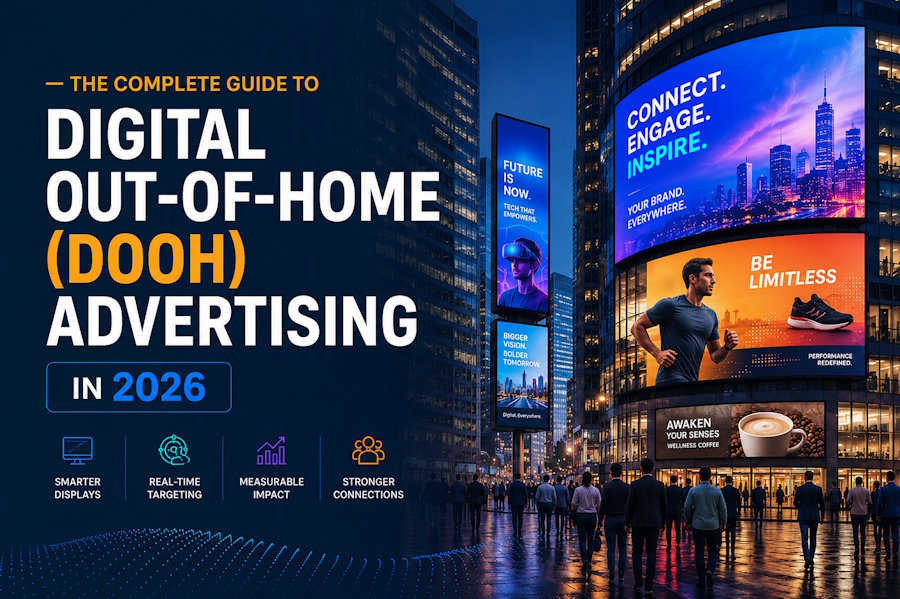
Digital advertising has become increasingly crowded, making it more difficult for brands to capture attention across websites, social media, and streaming platforms. Consumers now ignore many online ads through banner blindness, ad blockers, or simple fatigue. As a result, marketers are once again investing in channels that deliver high visibility without interrupting the user experience.
One of the fastest-growing solutions is digital out-of-home, which combines the broad reach of traditional outdoor advertising with the flexibility and precision of digital technology. Whether displayed on roadside billboards, shopping malls, airports, transit stations, or retail environments, DOOH campaigns enable advertisers to deliver dynamic, location-aware messaging that resonates with audiences at the right place and time.
In 2026, advances in programmatic buying, artificial intelligence, audience analytics, and real-time content updates have made DOOH one of the most effective channels for increasing brand awareness, supporting omnichannel marketing, and improving campaign performance. This guide explains how DOOH works, why businesses are adopting it, and how to create campaigns that generate measurable results.
Understanding Digital Out-of-Home (DOOH) Advertising
Digital Out-of-Home (DOOH) advertising refers to digital screens placed in public environments where businesses can display dynamic advertisements. Unlike traditional printed billboards that remain unchanged for weeks, DOOH content can be updated instantly to reflect changing promotions, weather conditions, traffic patterns, local events, or specific times of day.
Modern DOOH networks include:
- Digital billboards
- Shopping mall displays
- Airport advertising screens
- Transit shelters
- Stadium displays
- Digital kiosks
- Retail in-store screens
- Elevator displays
The biggest advantage of DOOH is flexibility. Advertisers no longer need to print new creative every time a campaign changes. Instead, messaging can be adjusted in real time based on audience behavior and campaign objectives.
For example, a restaurant can display breakfast promotions during morning hours, lunch specials around noon, and dinner offers during the evening—all on the same screen.
A Step-by-Step Strategy for Successful DOOH Campaigns
Creating an effective DOOH campaign requires more than simply placing an advertisement on a digital screen. Every campaign should begin with a clear marketing objective.
Step 1: Define Campaign Goals
Determine exactly what success looks like.
Common objectives include:
- Increasing brand awareness
- Promoting a product launch
- Driving website traffic
- Increasing store visits
- Supporting local events
- Reinforcing digital marketing campaigns
Having measurable goals makes campaign evaluation much easier.
Step 2: Understand Your Audience
Location plays a major role in DOOH performance.
A business targeting professionals may prioritize business districts or transportation hubs, while family-oriented brands may perform better near shopping centers or entertainment venues.
Consider audience demographics, commuting patterns, purchasing habits, and peak traffic times before selecting display locations.
Step 3: Create Simple, High-Impact Creative
People often have only a few seconds to view a DOOH advertisement.
Effective creative usually includes:
- A short headline
- Large readable typography
- High contrast
- One clear message
- Minimal distractions
- Strong branding
Avoid overcrowding screens with excessive text or multiple calls to action.
Step 4: Use Dynamic Content
One of DOOH's greatest strengths is real-time adaptability.
Campaigns can automatically change based on:
- Weather conditions
- Time of day
- Local sports events
- Traffic congestion
- Holidays
- Inventory availability
For example, an ice cream company can automatically promote frozen desserts when temperatures exceed a certain threshold.
Step 5: Measure Performance
Modern DOOH platforms provide insights beyond simple impressions.
Useful performance metrics include:
- Estimated audience reach
- Screen impressions
- Campaign frequency
- Geographic performance
- Lift in branded search volume
- Store visit increases
- Website traffic trends
Many organizations also combine DOOH with mobile analytics to understand how exposure influences customer behavior. For marketers looking to activate DOOH at scale, AdQuick combines campaign planning, inventory booking, programmatic activation, and measurement in one workflow. Its team can source and negotiate placements across more than 1.6 million out-of-home locations in 38 countries, while its platform supports programmatic DOOH across 3 million-plus screens in over 100 countries. This helps align audience targeting, location selection, and performance measurement with campaign goals.
Real-World Applications Across Industries
DOOH has become valuable across numerous industries because it reaches consumers while they are actively moving through daily life.
Retail brands often promote limited-time offers near shopping districts to encourage immediate purchases.
Healthcare providers use digital displays to raise awareness about seasonal services and public health campaigns.
Real estate companies showcase new developments in high-growth neighborhoods where potential buyers already spend time.
Universities advertise enrollment deadlines near transportation routes used by prospective students.
Entertainment companies promote concerts, movie releases, and live events using countdown timers and dynamic scheduling.
These practical applications demonstrate why DOOH continues to grow as an essential part of integrated marketing strategies.
Common Challenges and Mistakes
Although DOOH is highly effective, many campaigns fail because of avoidable planning mistakes.
One common issue is treating digital billboards like printed advertisements. Since viewers have limited attention, long paragraphs and complex messaging reduce effectiveness.
Another mistake is ignoring audience context. A campaign that performs well in a shopping mall may not achieve similar results on a busy highway because viewing behavior differs significantly.
Some marketers also neglect campaign optimization. Since DOOH supports real-time updates, creative should be refined based on performance instead of remaining static throughout the campaign.
Finally, businesses sometimes evaluate DOOH using only direct sales. In reality, DOOH frequently contributes to brand awareness, online searches, social engagement, and customer consideration before conversion occurs.
Expert Tips for Better Results
Successful advertisers approach DOOH as part of a broader marketing ecosystem rather than an isolated channel.
Maintain consistent branding across outdoor displays, websites, social media, and paid advertising to strengthen brand recognition.
Use geographic targeting to tailor messaging for local audiences instead of showing identical advertisements everywhere.
Keep headlines concise enough to be understood within seconds.
Refresh creative regularly to prevent audience fatigue.
Coordinate DOOH campaigns with seasonal promotions, product launches, or community events for greater relevance.
When possible, combine DOOH insights with website analytics and CRM data to better understand customer journeys across multiple touchpoints.
Small improvements in creative timing, placement, and messaging often produce meaningful gains in campaign effectiveness.
Conclusion
Digital Out-of-Home advertising has evolved far beyond traditional billboards. In 2026, it delivers real-time messaging, location-based relevance, measurable performance, and seamless integration with digital marketing strategies. Businesses that understand audience behavior, create simple yet compelling creative, and continuously optimize campaigns are well positioned to maximize the value of this rapidly expanding advertising channel.
As with any marketing investment, success depends on careful planning, ongoing measurement, and continuous improvement. Evaluating the performance of your landing pages and website after running a DOOH campaign is equally important. Tools like AudEsto can help analyze SEO performance, generate white-label website audit reports, and identify opportunities to improve the user experience once visitors arrive from your marketing campaigns.

