

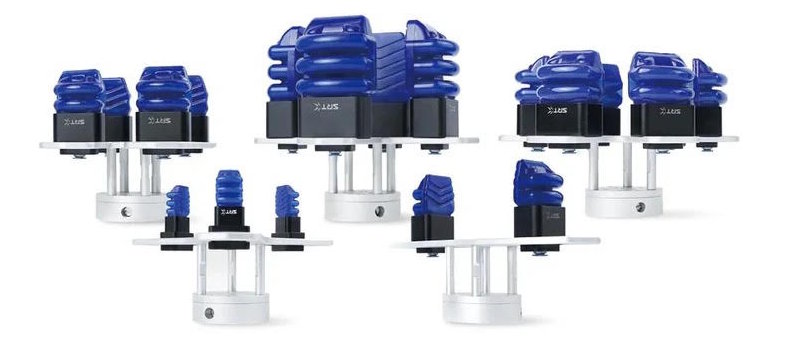
Automation used to mean rigid metal jaws clamping down on parts with brute force. That approach works fine for uniform, sturdy items, but it falls apart the moment a product is fragile, irregularly shaped, or varies from piece to piece. This is exactly the gap that soft gripper technology was built to fill, and it's why manufacturers across electronics, food processing, medical devices, and logistics are rethinking how their robots pick, hold, and place objects.
What Is a Soft Gripper?
A soft gripper is an end-of-arm tool built from flexible, elastomeric materials rather than hard metal components. Instead of applying fixed-position mechanical force, a soft gripper conforms to the shape of whatever it's holding — much like a human hand wrapping around an object rather than squeezing it between two flat plates.
This shape-adapting behavior means a single soft gripper can often handle dozens of different product types without needing a tooling change. A soft gripper designed for irregular items might pick up a curved plastic component, a delicate piece of fruit, and a small electronic assembly, all with the same set of fingers and without reprogramming a new grip position for each one. That flexibility is the core reason soft grippers have moved from a research curiosity into mainstream industrial automation over the past decade.
The materials used in soft grippers are typically food-grade or medical-grade silicone and rubber compounds, chosen specifically because they're safe for direct contact with consumables and sensitive components. Combined with sensors that provide feedback on grip force and position, modern soft grippers can adjust their hold in real time, applying just enough pressure to secure an object without crushing or scratching it.
The Role of Soft Robotics Inc and the Broader Industry
The soft robotics field owes a lot of its early momentum to companies like Soft Robotics Inc, which helped popularize the use of soft, air-powered end effectors in commercial automation, particularly within food handling and e-commerce fulfillment. Their work — along with a growing number of manufacturers now producing similar systems globally — demonstrated that soft, adaptive grasping wasn't just a lab experiment. It could run reliably on a production line, cut damage rates, and reduce the need for custom tooling across product lines.
Since those early efforts, the soft robotics industry has expanded rapidly. What started as a niche solution for a handful of use cases is now a competitive global market, with manufacturers refining materials, actuation methods, and sensor integration to push soft grippers into more demanding environments — from cleanrooms to high-speed 3C electronics assembly. Buyers today aren't just evaluating a single company's technology; they're comparing gripper designs, finger materials, actuation types, and integration support across an entire ecosystem of suppliers.
Understanding the Soft Robotic Finger
At the heart of every soft gripper is the soft robotic finger — the individual flexible element that does the actual grasping. Unlike a rigid gripper jaw, a soft robotic finger bends and curls around an object's contours when it's actuated, distributing contact pressure across a much larger surface area than a hard, flat surface ever could.
Most soft robotic fingers are modular. Manufacturers typically offer finger modules in a range of sizes and stiffness levels, allowing an integrator to configure a two-finger, three-finger, or multi-finger gripper depending on the payload and the geometry of the target object. Heavier or bulkier items generally call for grippers with more fingers or larger finger modules, while lightweight, delicate components — think small medical parts or thin electronic components — are better suited to compact, low-force finger designs.
This modularity is a major advantage over traditional rigid tooling. When a product line changes, instead of machining a brand-new gripper, an operator can often simply swap finger modules or adjust the spacing and configuration of the existing gripper body. That translates directly into lower changeover costs and less production downtime.
How Pneumatic Grippers Power the Motion
Most soft grippers on the market today are pneumatic gripper, meaning they're actuated using compressed air rather than electric motors or hydraulic fluid. Air is pumped into internal chambers within the soft finger, causing it to curl and close around an object. Releasing the pressure lets the finger relax and open again.
Pneumatic actuation suits soft gripper design particularly well for a few reasons:
- Simplicity and reliability. Pneumatic systems have fewer moving parts than electromechanical alternatives, which generally means less maintenance and fewer points of failure.
- Natural compliance. Air pressure inherently provides a softer, more forgiving force curve compared to rigid electric actuators, which pairs naturally with the elastomeric materials used in soft fingers.
- Speed. Pneumatic pressure can be applied and released quickly, which matters in high-throughput environments like packaging lines or electronics assembly, where cycle time is critical.
- Dual-mode operation. Some newer pneumatic gripper designs use both positive and negative pressure — positive pressure to open the gripper quickly for fast positioning, and negative (vacuum) pressure to close it gently around delicate items. This dual-pressure approach helps balance speed with the gentle handling that fragile products require.
Pneumatic gripper systems do require a compressed air supply and appropriate valves and regulators, which is a consideration for facilities without existing pneumatic infrastructure. But for most industrial settings that already run air-powered equipment, integrating a pneumatic soft gripper is a relatively straightforward addition.
Where Soft Grippers Are Making the Biggest Impact
Food and agriculture. Fresh produce, baked goods, and packaged foods vary enormously in shape, size, and firmness. A soft gripper's ability to conform to each item without bruising or crushing it has made it a natural fit for sorting, packing, and palletizing tasks in this sector.
3C electronics. Phone components, circuit boards, and other small electronic parts are often delicate and irregularly shaped. Soft grippers with anti-static finger materials can pick and place these components at speed without risking electrostatic damage or physical marring.
Medical device manufacturing. Precision and cleanliness matter enormously here. Soft grippers built with medical-grade materials can handle small, delicate components in cleanroom conditions while meeting strict contamination and traceability requirements.
Logistics and e-commerce fulfillment. Warehouses handle an almost unlimited variety of SKUs, many of which arrive in irregular packaging. A soft gripper reduces the need for item-specific tooling, which is essential when a single fulfillment line might process thousands of different product types.
Automotive components. Soft grippers are increasingly used for handling injection-molded parts and other automotive components that are awkward to grip with rigid tooling but still need to be moved quickly and consistently.
Choosing the Right Soft Gripper for Your Application
Not every soft gripper is built the same way, and selecting the right one depends on a few key factors:
- Payload weight. Lighter items can typically be handled with smaller grippers with fewer fingers, while heavier loads need larger gripper bodies with more fingers or reinforced actuation.
- Object shape and fragility. Irregular or delicate items benefit most from soft, conforming fingers, while more robust items may not need the same level of compliance.
- Environmental conditions. Dust, oil, liquid exposure, or cleanroom requirements all influence which materials and sealing designs are appropriate.
- Cycle speed requirements. High-speed applications need grippers and pneumatic control systems capable of rapid open/close cycles without sacrificing grip reliability.
- Integration compatibility. The gripper should be compatible with your existing robotic arm, control system, and air supply infrastructure to avoid costly retrofits.
Working with a supplier who can walk through these variables — rather than offering a single one-size-fits-all product — usually leads to a better long-term fit, especially for facilities running multiple product lines through the same automation cell.
Beyond the gripper itself, robotics sheet metal parts such as controller housings, sensor brackets and protective covers should be specified against the automation cell's mounting, cable-routing and maintenance requirements.
Looking Ahead
Soft gripper technology is still evolving quickly. Sensor integration is becoming more sophisticated, giving grippers the ability to detect slip, estimate object weight, and adjust grip force dynamically. Materials science continues to improve the durability and chemical resistance of finger elastomers, extending gripper lifespan in harsh industrial environments. And as more manufacturers enter the space, competition is driving down costs while pushing up performance, making soft grippers accessible to a wider range of businesses that previously couldn't justify the investment.
For companies weighing whether to move from rigid automation tooling to a soft gripper solution, the calculation increasingly comes down to flexibility versus specialization. A soft gripper won't always outperform a purpose-built rigid tool on a single, unchanging task — but for facilities that handle variable products, need quick changeovers, or work with fragile items, the adaptability of a soft robotic finger paired with reliable pneumatic actuation is hard to beat.
As the technology matures, soft grippers are likely to become a default choice rather than a specialty one, particularly as more industries recognize that flexibility on the production floor is no longer optional — it's a competitive necessity.

