

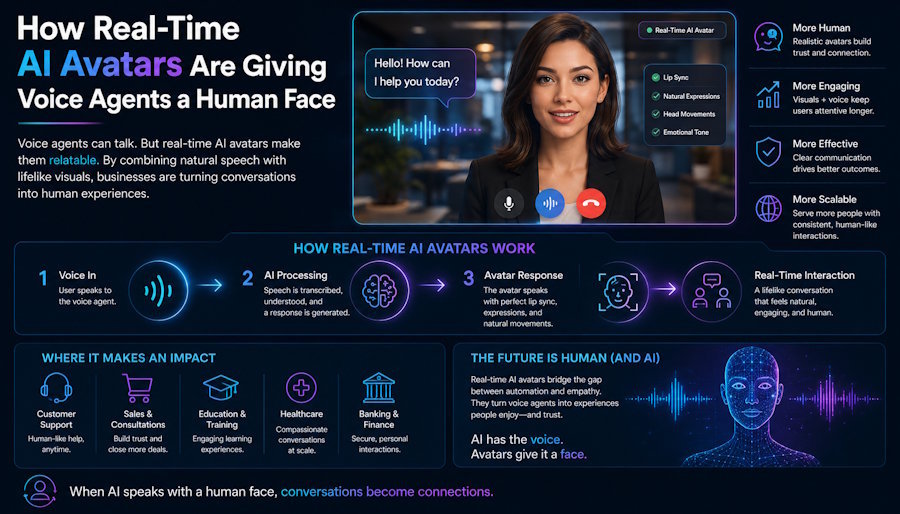
Voice assistants and AI agents are becoming increasingly capable, but many still lack a visual presence. Although a voice can answer questions and complete tasks, adding an expressive digital character can make the interaction feel more engaging, intuitive and memorable.
Protoface helps businesses and developers add real-time AI avatars to conversational experiences. The technology combines voice-based artificial intelligence with animated characters that react during live conversations. Instead of communicating through a chatbot window or listening to a disembodied voice, users can interact with a visual representative that gives the conversation a recognizable identity.
This approach has potential across customer service, education, sales and digital onboarding. A business might use an avatar to welcome website visitors, explain products or guide customers through a service. Educational platforms could use digital characters to present lessons, while developers could add a visual identity to an existing voice agent without treating the avatar as a completely separate system.
Visual cues can also make AI conversations easier to follow. Facial movement and other reactions can help indicate when an assistant is listening, processing information or preparing to respond. These signals may be particularly useful during demonstrations, guided learning and other situations where users benefit from understanding the flow of a conversation.
Another advantage is consistency. A digital representative can maintain the same appearance, communication style and brand identity across numerous interactions. This allows organizations to create a recognizable AI personality while allowing employees to focus on conversations requiring specialist knowledge, personal judgment or empathy.
However, businesses should use AI avatars thoughtfully. Users should understand when they are interacting with artificial intelligence rather than a human representative. Accessibility, privacy and clear disclosure should be considered from the beginning, especially when avatars are used in customer-facing services.
As conversational AI develops beyond text boxes and voice-only interfaces, visual identity is likely to become a more important part of the experience. Real-time avatars offer businesses a way to make automated conversations easier to understand and more consistent with their brands.
Developers and organizations exploring this technology can learn more about Protoface’s real-time AI avatar API.

