

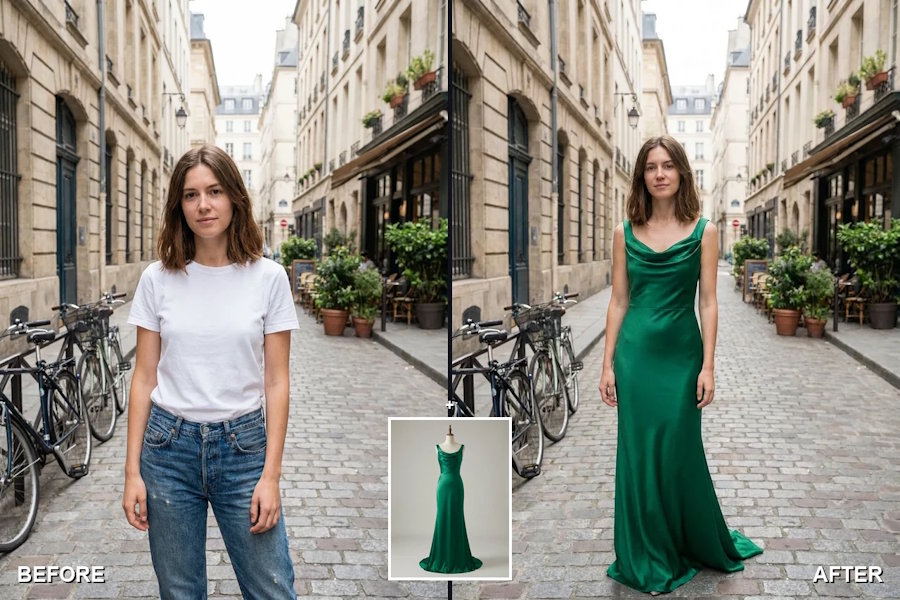
The fashion industry has always adapted to new technology, from online shopping and digital catalogs to augmented reality and personalized recommendations. Today, artificial intelligence is taking this transformation even further by changing how people visualize, experiment with, and present clothing online.
One of the most interesting developments is AI-powered clothing transformation. Instead of physically changing outfits, arranging a professional photoshoot, or purchasing multiple garments just to see how they might look, users can now generate realistic clothing variations from a single photograph.
This technology combines computer vision, generative AI, and image processing to create new fashion visuals while maintaining important elements of the original image. The result is a faster and more flexible way to explore personal style, create marketing content, and develop e-commerce visuals.
What Is AI-Powered Virtual Clothing?
AI-powered virtual clothing technology allows software to digitally modify the clothing shown in an image. A user can provide a portrait or full-body photograph and then select another garment, describe an outfit, or provide a clothing reference image.
The AI analyzes the original photograph and identifies important visual elements such as the person's body position, facial features, proportions, lighting, and background. It then generates an alternative outfit designed to fit naturally within the existing image.
Unlike traditional photo editing, this process does not necessarily require manually cutting, masking, resizing, or retouching every part of the photograph. Modern AI models can automate much of this work, making virtual fashion experimentation accessible to people without advanced graphic-design skills.
How AI Clothes Changing Technology Works
Although the user experience can be simple, several technical processes can happen behind the scenes.
First, the system needs to understand the uploaded photograph. Computer vision models can identify the person, body structure, clothing region, pose, and surrounding environment. This information provides a foundation for generating the new outfit.
Next, the system interprets the desired clothing. This can come from a reference image or a written description such as “black formal suit,” “casual denim jacket,” or “summer dress.”
The AI then generates clothing that matches the requested style while attempting to maintain consistency with the original person and scene. Advanced systems can also account for folds, shadows, perspective, and lighting so that the replacement garment looks more natural.
This combination of image understanding and generative technology is what makes AI virtual fashion different from conventional image editing.
The Benefits of an AI Clothes Changer
For users who regularly create fashion content, AI clothing transformation can significantly reduce the time required to produce different outfit concepts. An AI Clothes Changer can allow users to upload a portrait, provide clothing references or describe a desired style, and generate realistic outfit variations while preserving key elements of the original image.
This can be useful for personal styling, social media content, fashion campaigns, product marketing, and e-commerce.
For example, someone preparing for an event could experiment with several formal and casual styles before deciding what type of outfit to purchase. A content creator could create multiple fashion concepts without organizing separate photoshoots. A retailer could also explore different presentation ideas for product campaigns.
The technology is especially valuable when speed and visual experimentation are important.
Virtual Try-On Without a Physical Changing Room
Traditional clothing shopping requires customers to imagine how a garment might look on them. Physical stores solve part of this problem with changing rooms, but online shoppers do not have the same experience.
AI can help bridge this gap through virtual try-on technology.
With Virtual Try-On Clothes Online, users can explore different outfits digitally without physically changing clothes or arranging another photoshoot. A photograph can be combined with garment references or text instructions to create visualizations of dresses, suits, casual clothing, and other fashion styles.
This approach gives shoppers an additional way to evaluate potential outfits before making purchasing decisions. While an AI-generated image should not replace information such as sizing charts and garment measurements, it can provide useful visual inspiration.
Applications in E-Commerce
E-commerce businesses are among the biggest potential beneficiaries of AI-generated fashion imagery.
Creating product photography can be expensive and time-consuming. Businesses may need professional models, photographers, studios, lighting equipment, multiple outfits, and different locations. AI can reduce the need for some of these resources by helping teams produce additional clothing visuals digitally.
For example, an online clothing store could create variations of a product image showing different styling concepts. Marketing teams could use these visuals for advertisements, social media campaigns, landing pages, or seasonal promotions.
AI-generated visuals can also support faster experimentation. Instead of committing to one concept, a marketing team can test several outfit presentations and determine which style works best for its target audience.
Helping Fashion Creators Work Faster
Fashion influencers, bloggers, designers, and social media creators constantly need fresh visual content. Producing new photographs for every outfit can require significant time and resources.
AI clothing tools provide another creative option. A creator can start with an existing photograph and experiment with different styles, colors, or garment types. This makes it easier to develop mood boards, campaign concepts, and social media ideas.
Designers can also use generated visuals during the early stages of creative development. Before producing a physical sample, they may want to visualize how different clothing concepts could appear on a person. AI can help turn these ideas into visual references quickly.
Preserving More Than Just the Outfit
One of the most important challenges in AI image generation is maintaining consistency.
Simply replacing clothing is not enough if the person's face changes, the pose becomes distorted, or the background looks unnatural. A useful virtual fashion system needs to understand the relationship between the garment and the rest of the image.
Modern AI-based clothing tools therefore focus on preserving important characteristics of the original photograph. These can include facial identity, body proportions, pose, lighting, and background details.
Better preservation creates a more convincing final image and makes the technology more practical for real-world applications.
The Importance of Responsible AI Image Generation
As AI-generated fashion imagery becomes more common, responsible use is equally important. Users should understand that generated images are visual representations rather than guarantees of how a real garment will look or fit.
Businesses should also be transparent when AI-generated content is used in advertising or product presentation where appropriate. Images should not mislead customers about the actual appearance, material, color, or fit of a product.
Privacy is another important consideration. Users should carefully consider where personal photographs are uploaded and how image data is handled. Platforms offering AI image-generation services should provide clear information about data usage and security.
The Future of Digital Fashion
AI-powered clothing transformation is still developing, and future systems are likely to become more accurate and interactive. Users may eventually be able to make detailed changes to outfits through simple conversational instructions while maintaining highly consistent images.
For e-commerce, this could lead to more personalized shopping experiences. Customers might visualize clothing combinations based on their preferences, while retailers could create diverse product presentations without producing every variation through traditional photography.
For creators and designers, AI may become another standard tool for visual experimentation, similar to photo-editing and design software today.
Conclusion
Artificial intelligence is changing fashion by making clothing visualization faster, more flexible, and more accessible. AI-powered virtual clothing tools can help users experiment with outfits, create marketing visuals, develop fashion concepts, and improve online shopping experiences.
From personal styling to e-commerce photography, the technology demonstrates how computer vision and generative AI can solve practical creative challenges. As these systems continue to improve, virtual fashion may become an increasingly common part of the way people discover, design, and experience clothing online.

