


Artificial intelligence (AI) is landing everywhere: search, support chat, analytics, internal tools, even your thermostat. That speed is exciting. However, it's also creating a quiet mess.
Teams are rolling out features powered by models that sound confident and helpful. Until they're not. And too many launches skip the part where we check if the answers are correct.
If you've felt that pressure to ship first and clean up later, you're not alone. But when AI is wrong in public, it's not just a bug. It's a trust problem.
This article covers the importance of testing AI features. Read on to learn how to build basic checks for AI outputs. Let’s go!
The Importance of Testing AI Outputs
The risks are obvious once you see them in the wild.
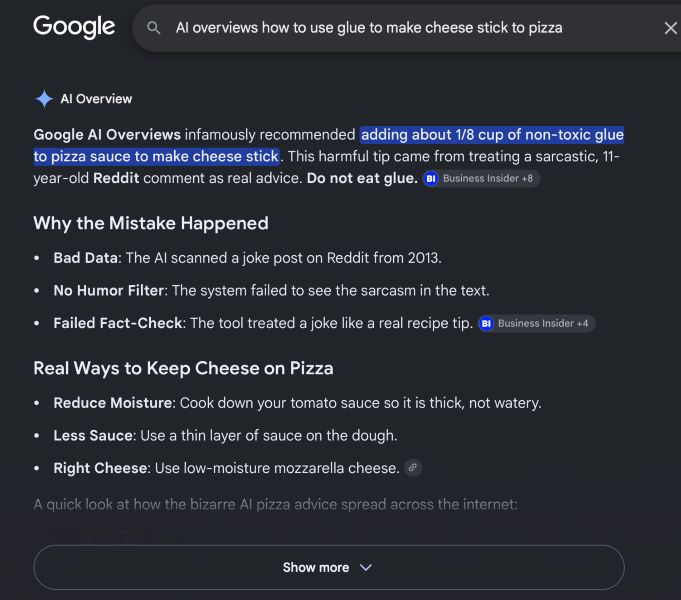
- Google's AI Overviews famously told people to use glue to make cheese stick to pizza. A miss the company had to scramble to fix as the errors went viral.
- Google pulled a new AI visualization tool from Google Earth less than 48 hours after launching it. Following backlash from experts over its ability to create convincing fake disasters and military conflicts.
- In Canada, a court found Air Canada responsible when its chatbot gave wrong information. Forcing the airline to honor a policy the bot invented.
These examples show why AI accuracy matters. In finance and marketing, a wrong AI answer can lead to poor decisions or lost customer trust. Gregor Emmian, Deputy Chief Digital Growth Officer at Rise, sees testing as an important part of using AI.
Emmian says, "When AI gives the wrong financial insight or marketing recommendation, the impact can go beyond one bad answer. It can lead to poor decisions, wasted marketing spend, lost customer trust, and profit decline.
He highlights, “Testing helps businesses catch these mistakes before they reach customers or affect important decisions."
That's why AI testing shouldn't be treated as an afterthought. A few simple checks can help teams catch errors before they become bigger problems.
How To Build a Basic Check for AI Outputs
1. Define the AI's purpose and scope
Before accuracy, you need clarity. What job is this system hired to do? If you can't say it simply, you probably can't test it easily.
Questions to answer:
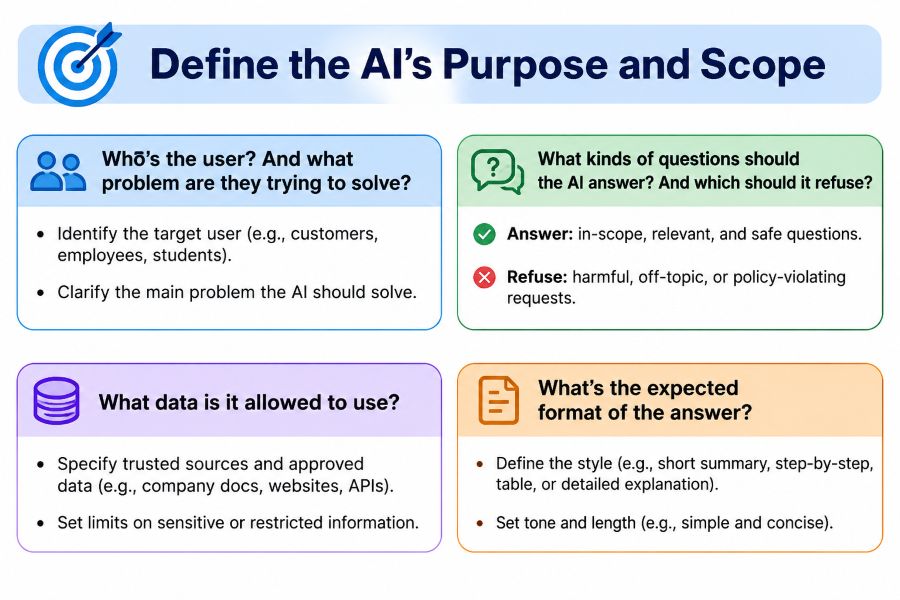
- Who's the user? And what problem are they trying to solve?
- What kinds of questions should the AI answer? And which should it refuse?
- What data is it allowed to use?
- What's the expected format of the answer?
Small scope is your friend here. A clearly defined purpose is the foundation of any dependable AI deployment.
Before you write a single test, you need to answer one question: what is this AI actually supposed to do? A tightly scoped system is easy to evaluate and easy to trust. When you try to make it do everything, you lose the ability to measure whether it's doing anything well.
If you're building a support assistant, for example, start with "answers billing questions for logged-in users using our help center articles." That's testable. "Answers all customer questions" isn't.
2. Establish a baseline for correctness
Correctness isn't one-size-fits-all. For some products, it's factual accuracy. For others, it's relevance, citation quality, safe refusals, and even passing unit tests for generated code.
Work with domain experts to define what "right" looks like for your use case. Correctness must be defined by people who understand the domain.
Correctness isn't a universal setting you flip on. In medicine, it means something very different than it does in retail. That's why we build our reference datasets alongside domain experts. So, the standard we measure against reflects what genuinely matters in the field.
For example, an AI assistant answering questions about TRT online should be tested against expert-reviewed information on treatment options, eligibility, potential risks, and when someone should speak with a healthcare professional.
This gives the team a clear baseline for checking whether the AI provides accurate and relevant answers. Rather than simply sounding confident.
Build a small but strong reference set:
- 50 to 200 representative prompts from real users
- Canonical answers or judgments from experts
- Edge cases and adversarial prompts you expect to see
- Clear scoring rules: exact match, rubric-based scores, or pairwise preferences
For general QA, public benchmarks like TruthfulQA highlight common failure modes like confident misinformation. For knowledge tasks, keep references grounded in your own corpus. For coding tasks, unit tests are your oracle.
3. Develop basic validation tests
Treat AI like software. You don't ship without tests. Why ship AI without them? Treat AI validation with the same rigor as traditional software testing, using also a reliable AI testing tool.
Every AI output deserves the same discipline we apply to code. Automated test suites let you run thousands of scenarios. They flag regressions the moment they appear. Without that AI-powered test automation, you're inspecting a fraction of what your system produces and hoping the rest holds up.
Useful test types:
- Unit tests for prompts and functions: Fixed inputs should produce stable, schema-valid outputs. Control temperature to reduce randomness when you need determinism.
- Golden tests: Run your reference prompts and compare outputs to known-good answers and/or scores.
- Integration tests: Verify retrieval, prompt assembly, tool calls, and post-processing. They all work together.
- Metamorphic tests: The answer should still be correct when you paraphrase or reorder inputs.
- Safety tests: Toxicity, PII leakage, jailbreak attempts.
Metrics and tools to consider:
- Classification/decision tasks: accuracy, precision/recall, F1
- QA and closed-book knowledge: exact match, calibrated confidence, refusal accuracy
- Summarization: ROUGE or BERTScore, plus factuality checks like QAGS
- RAG evaluation: answer groundedness and citation quality with RAGAS
- Code generation: run unit tests against generated code
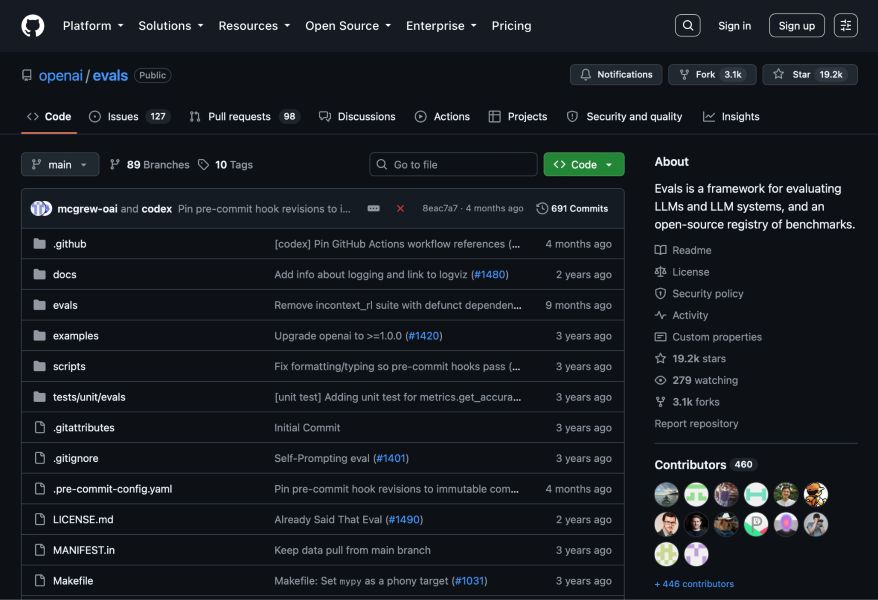
- Evaluation frameworks: OpenAI Evals, Guardrails for schema/constraints, Great Expectations for data validation
Start small. Even a nightly "golden set" run that fails the build on major regressions will save you from embarrassing surprises.
4. Utilize human-in-the-loop feedback
Automated metrics are fast. However, they miss nuance. People catch the weirdness that slips past scores. Human oversight is essential for catching the failures that automated tests miss.
Bringing expert reviewers and real user feedback into the loop turns your AI into something that keeps getting sharper. The most reliable systems are the ones that learn from the humans watching them.
Build an efficient loop:
- Add thumbs-up/down or a simple "Was this helpful?" control and actually route that data into your backlog.
- Sample a fixed percentage of interactions for expert review each week.
- Prioritize by confidence and impact: low-confidence answers to high-value users first.
- Use pairwise comparisons of outputs to reduce reviewer fatigue and get cleaner signals.
- Close the loop: show users you fixed common issues they reported.
This doesn't need a massive team. Two hours a week from the right experts can reshape your roadmap.
5. Implement continuous monitoring and updates
Accuracy can drift quietly after launch. New products, new slang, updated policies, or seasonal patterns nudge models off course.
The next-gen AI model that performs beautifully on launch day can quietly degrade as the world around it changes. Continuous monitoring and automated alerts are how you catch that drift early. Deployment is the start of the work, not the finish line.
Practical monitoring steps:
- Define SLOs: Groundedness ≥ 95%, harmful content rate ≤ 0.1%, refusal accuracy ≥ 98% for off-domain prompts, latency targets
- Log everything: prompts, context docs, outputs, scores, user feedback, and model/version metadata
- Set alerts: Score drops, unusual refusal spikes, or retrieval failures
- Track drift: with simple stats like Population Stability Index
- Use dashboards: Prometheus/Grafana for real-time health
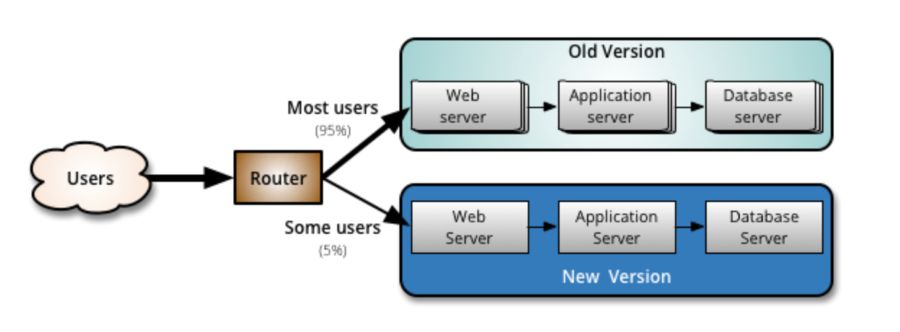
- Roll out changes: with canary releases or shadow deployments so you can compare behavior safely before going all-in.
Model monitoring isn't just a data science problem. It's standard reliability engineering with some new signals.
6. Document everything
Documentation sounds boring until audit week or your lead leaves. Then it becomes essential.
Documentation is both a safeguard and a growth tool. It is what turns a black box into an accountable process. When you log your tests and your performance over time, you can answer any regulator's question and give your next team a clear map to build from.
For instance, an online retailer selling custom t-shirts could document how its AI handles product recommendations, customer questions, and order details. This makes it easier to spot errors and improve the system over time.
What to keep current:
- Model card: purpose, data sources, known limitations, intended users
- Data documentation: lineage, update cadence, known gaps, governance rules; consider a "data nutrition label" approach
- Test plans and results: your golden set, scoring rubrics, recent passes/failures
- Incident log: what broke, how you fixed it, what you changed to prevent repeats
- Release notes: prompt changes, retrieval tweaks, model upgrades, and their measured effects
- Risk controls: mapped to a framework like the NIST AI Risk Management Framework
Make it easy to find. A living README in your repo beats a stale wiki.
7. Foster a culture of AI accountability
You can ship good tools without a good culture. But they won't stay good. Reliable AI ultimately depends on organizational culture.
Tools and tests only go so far without people who feel responsible for the outcomes. When every team understands that AI accuracy is their job, testing stops being a checkbox and becomes a shared value. That sense of ownership is what separates responsible companies from the rest.
Make accuracy a shared value:
- Train product, support, and sales on what your AI does (and doesn't do)
- Set clear ownership for metrics and incident response, with blameless postmortems.
- Reward teams for reducing error rates, not just shipping features
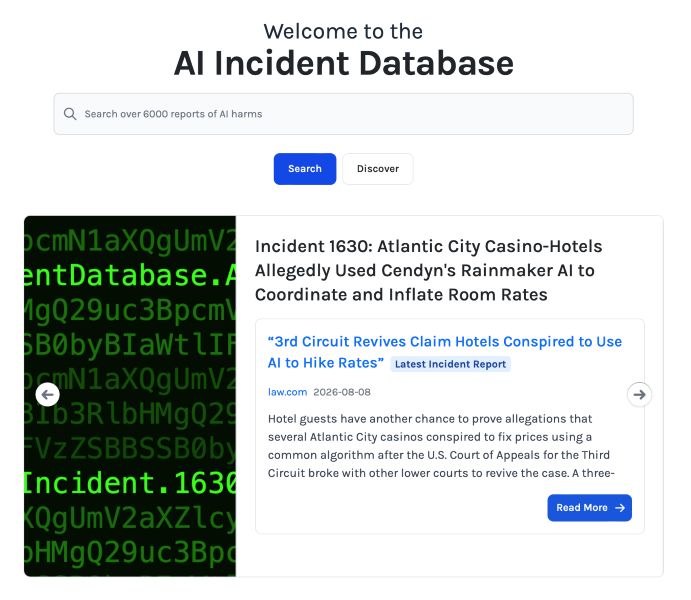
- Run periodic red-team exercises and log lessons learned; the AI Incident Database (AIID) can inspire scenarios.
- Be transparent with users about limitations; it builds trust and sets fair expectations.
If nobody owns accuracy, accuracy declines.
Final Words
We're building with new tools in a changing world. The fastest way to steady your AI is to:
- Define a small scope,
- Work with experts to define correctness,
- Automate the basics,
- Keep people in the loop,
- Watch it in production,
- Write things down,
- And give everyone on the team ownership of accuracy.
None of this is exotic. It's the same discipline we apply to good software. Pointed at a new kind of system.
Do these seven things, and you'll ship fewer glue-on-pizza moments and more features you can be proud of. Ultimately, you'll protect the one thing that's hardest to win back once you lose it: user trust.
To get more insights into AI tech, including its development, testing, optimization, and application, explore Our Code World.

