

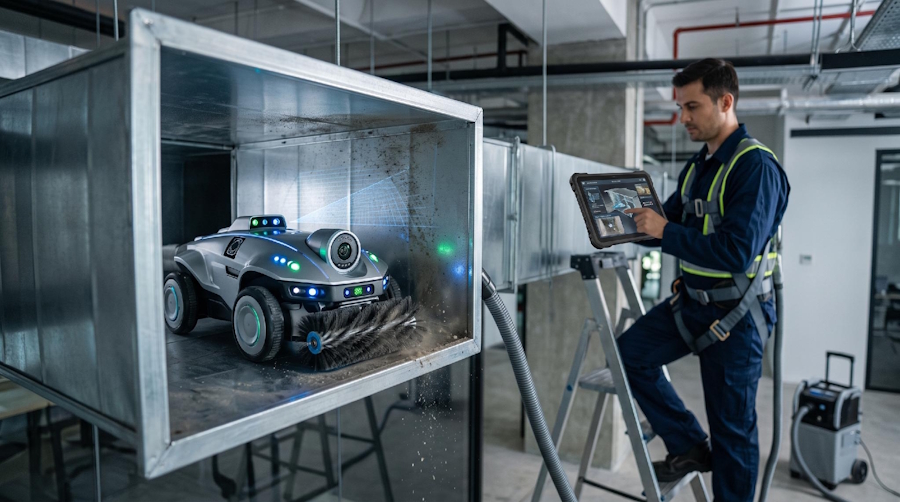
Artificial intelligence is changing the way people maintain everything from cars and appliances to buildings and heating and cooling systems. The HVAC industry is also beginning to benefit from smarter technology, and ac vent cleaning is one area where AI can make maintenance more efficient and data-driven.
Traditional vent cleaning often depends on scheduled maintenance and visual inspections. While these methods are still useful, newer technologies can help identify potential problems earlier and provide technicians with more information about the condition of an HVAC system.
How AI Is Being Used in HVAC Maintenance
Artificial intelligence works by analyzing data and identifying patterns. In HVAC systems, this data can come from sensors that monitor factors such as temperature, airflow, humidity, pressure, and system performance.
Instead of simply waiting for a problem to become noticeable, AI-based systems can analyze changes in these measurements and potentially alert building owners or technicians when something appears unusual.
This approach can help move HVAC maintenance from a purely reactive process toward a more predictive one.
Smarter Detection of Airflow Problems
Airflow is an important part of an efficient HVAC system. When vents or ductwork become restricted by dust or debris, airflow can change.
AI-powered monitoring systems can compare current airflow data with previous performance and identify unusual changes. While technology cannot replace a professional inspection, these insights may help technicians determine where they should investigate further.
For larger buildings, this can be particularly useful because checking every vent manually can take considerable time.
Predictive Maintenance and AC Vents
One of the biggest advantages of AI is its ability to support predictive maintenance.
Traditional maintenance often follows a fixed schedule. For example, a property manager may arrange an inspection every few months regardless of the actual condition of the system.
With predictive technology, maintenance decisions can instead be influenced by real-time information. If sensors detect unusual airflow, increasing pressure, or other changes, the system may indicate that a particular area needs attention.
This could eventually make ac vent cleaning more targeted, helping technicians focus on areas that show signs of developing problems.
AI-Powered Inspection Tools
AI can also be combined with cameras and imaging technology. During an HVAC inspection, cameras can capture images from difficult-to-reach areas inside vents or ductwork.
Computer vision systems can potentially analyze these images to identify visible dust accumulation, debris, corrosion, or other abnormalities.
Rather than replacing technicians, these tools can act as an additional source of information. A professional can review the findings and decide whether cleaning or another form of maintenance is appropriate.
Improving Maintenance Efficiency
Large commercial properties can have extensive ventilation networks with hundreds or even thousands of individual vents. Manually inspecting every section can be time-consuming.
AI-based monitoring can help prioritize areas that require closer attention. By analyzing information from multiple sensors and components, building operators may be able to identify unusual patterns without physically checking every location at the same time.
This can make maintenance planning more organized and potentially reduce unnecessary inspections.
Smart Buildings and Indoor Air Quality
AI is also becoming part of the wider smart-building movement. Modern buildings can use connected sensors to monitor indoor environmental conditions, including temperature, humidity, carbon dioxide levels, and other air-quality indicators.
These systems can provide building managers with a broader understanding of indoor conditions.
It is important to remember that air-quality readings do not automatically mean that vents need cleaning. Many factors can affect indoor air quality. However, combining environmental data with HVAC performance information can help professionals make better-informed maintenance decisions.
Will AI Replace HVAC Technicians?
Probably not. AI can process large amounts of data quickly, but it cannot replace the practical knowledge and judgment of an experienced HVAC professional.
A technician still needs to inspect equipment, identify the cause of a problem, determine whether cleaning is necessary, and safely carry out the work.
The more realistic future is one where AI and technicians work together. Technology can provide alerts, data, and visual information, while professionals use their expertise to interpret that information and perform the required maintenance.
What This Means for Property Owners
For homeowners and building managers, the growing use of AI could make HVAC maintenance more proactive.
Instead of waiting until airflow becomes noticeably weak or an unpleasant odor appears, smart monitoring systems may eventually help identify changes before they become obvious.
However, basic maintenance should not be ignored simply because a property has smart technology. Filters still need appropriate care, HVAC equipment requires professional servicing, and vents should be inspected when there are signs of dust buildup, restricted airflow, or other problems.
The Future of AC Vent Cleaning
As AI technology continues to develop, HVAC maintenance is likely to become increasingly connected and data-driven. Sensors, computer vision, predictive analytics, and smart building systems could all play a role in determining when and where maintenance is needed.
For ac vent cleaning, this could mean moving away from a one-size-fits-all approach toward maintenance based more closely on the actual condition and performance of a ventilation system.
The technology is still developing, and not every property needs sophisticated AI monitoring. For many homes, regular inspections and professional maintenance remain perfectly practical.
Final Thoughts
Artificial intelligence is not replacing traditional HVAC maintenance, but it is creating new ways to monitor and understand ventilation systems. By analyzing airflow, environmental conditions, sensor data, and visual information, AI can help professionals identify potential issues and plan maintenance more effectively.
As smart-building technology becomes more common, ac vent cleaning could become more precise, proactive, and data-driven. The combination of AI technology and experienced HVAC professionals may ultimately provide property owners with a smarter approach to keeping their ventilation systems operating properly.

